Vitalik Buterin Puts 90% of His Net Worth on the Line to Refute AI-Driven Bitcoin Crash Theory
Ethereum co-founder Vitalik Buterin has pushed back against predictions that artificial intelligence will trigger a major Bitcoin crash, revealing that roughly 90% of his net worth is tied to crypto asset resilience.
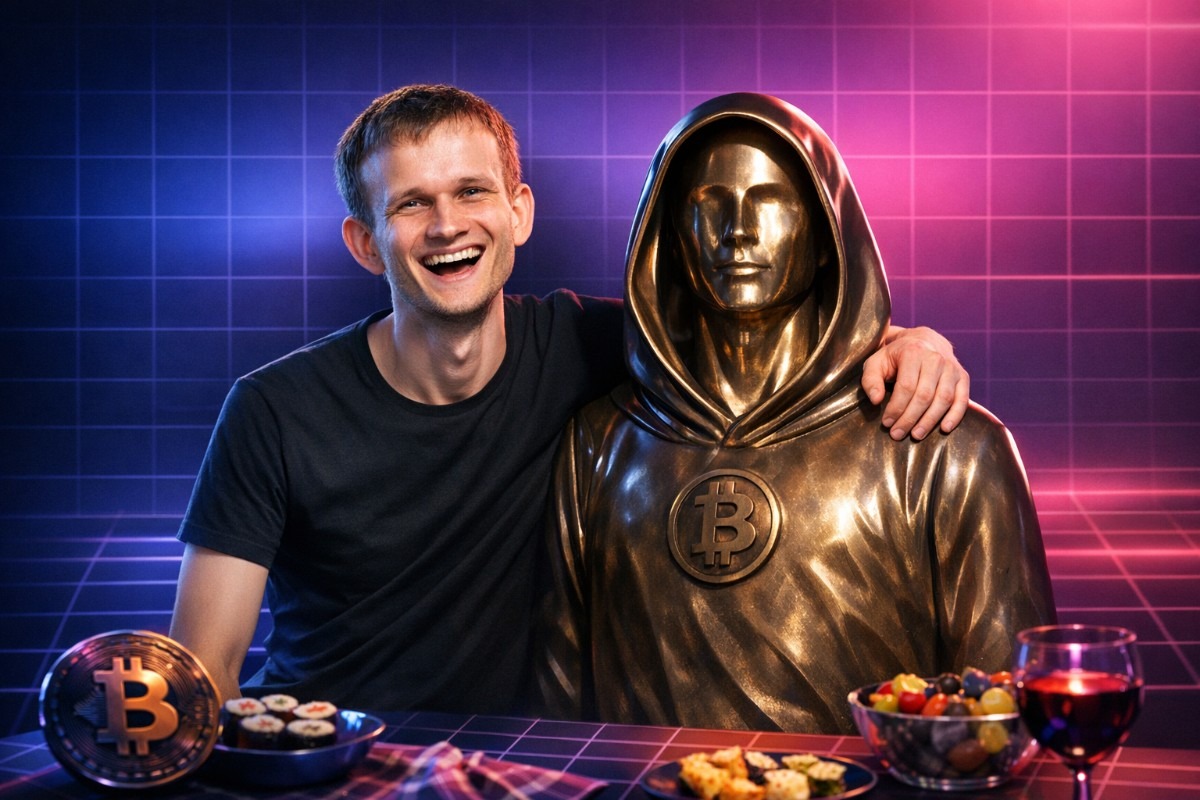
Source image: cryptonews.com
cryptonews.comChallenging the AI Threat Narrative
As artificial intelligence continues to advance at an unprecedented pace across global technology sectors, market analysts have increasingly scrutinized its intersection with decentralized financial infrastructure. Recently, Silicon Valley investor and commentator Liron Shapira sparked intense debate by assigning a 50% confidence level to the hypothesis that AI could undermine Bitcoin's fundamental security guarantees, forecasting a potential asset price crash exceeding 50% within a two-year timeframe.
Addressing these claims directly, Ethereum co-founder Vitalik Buterin firmly rejected the pessimistic outlook. Buterin argued that while cybersecurity paradigms are shifting rapidly alongside machine learning maturation, the actual risk of AI successfully compromising core cryptographic primitives like hash algorithms (SHA-256) or proof-of-work (PoW) security models remains minuscule.
Cryptographic Resilience and Network Adaptability
Dissecting the mechanics of blockchain defense mechanisms, Buterin emphasized that foundational protocols possess inherent flexibility to absorb and neutralize external technical shocks. He noted that Bitcoin and similar decentralized networks are structurally equipped to handle network-layer threats through localized patches, client-side updates, and collaborative adjustments among mining pools—interventions that do not necessitate sprawling social consensus.
Key technical factors mitigating long-term AI disruption include:
- Cryptographic Overhead: Standard hashing functions utilized across major distributed ledgers maintain an exponential difficulty curve that outpaces near-term computational acceleration.
- Decentralized Upgrades: Mining infrastructure and core developer nodes can rapidly deploy security patches for localized network vulnerabilities.
- Adaptive Cybersecurity: The continuous evolution of defensive software architecture runs parallel to offensive AI advancements.
Skin in the Game: 90% Exposure
Underscoring his absolute conviction in the structural integrity of digital assets, Buterin revealed the scale of his personal market alignment. While discussing potential formal wagers on the future trajectory of digital currencies, he noted that formal betting constructs are effectively redundant. Given that approximately 90% of his total net worth remains directly exposed to the crypto ecosystem—predominantly via Ethereum holdings that share parallel cryptographic foundations with Bitcoin—his entire financial standing serves as an ongoing endorsement of decentralized security.
Broader Market Implications and Investor Outlook
The debate arrives at a critical juncture for digital asset markets, with Bitcoin trading near the $80,000 threshold following aggressive institutional inflows and macroeconomic adjustments. While institutional investors evaluate long-term systemic risks—ranging from AI-driven infrastructure competition for data centers and electricity to hypothetical credit shocks voiced by figures like Arthur Hayes—Buterin’s stance reinforces the narrative that foundational protocol security will withstand technological disruption.
What investors should monitor moving forward:
- Post-Quantum and Advanced AI Research: Ongoing academic breakthroughs in quantum computing and machine learning cryptographic decryption.
- Developer Activity: The responsiveness and agility of core protocol maintainers in rolling out proactive security enhancements.
- Capital Allocation Trends: How institutional capital balances massive infrastructural investments in artificial intelligence relative to digital asset treasuries.
Continue reading
Related coverage in Crypto
cointelegraph.com
Trump Schedules Third Memecoin Holder Dinner Amid Growing Corruption Scrutiny
President Trump is set to host his third exclusive memecoin dinner for top token holders at his Washington, DC golf club, drawing renewed ethical and market scrutiny.
3 min read
cointelegraph.com
50,000 Europeans Petition EU to Relax MiCA Stablecoin Reward Restrictions
A new 50,000-letter campaign is urging Brussels to ease stablecoin rewards restrictions during the MiCA review, aligning with broader central bank pushes.
2 min read
cryptonews.com
Dogecoin Eyes $1 Milestone as DogeOS Testnet Launch Sparks Utility Speculation
Dogecoin trades at $0.09447 as the DogeOS testnet goes live. Traders eye the $0.098 resistance and psychological $0.10 mark amid fresh utility potential.
2 min read
decrypt.co
Bitcoin Enters 'Uptober' Amid Fed Rate Hike Pressures and 5.3% Treasury Yields
Bitcoin enters its historically strongest month following a record September, yet rising Federal Reserve rate hike fears and 5.3% Treasury yields present major hurdles.
2 min read