US Rebrands Lake Ontario as 'Lake America' Amid Escalating Economic War With Canada
President Trump has signed an executive order renaming Lake Ontario to Lake America on federal maps, escalating a bitter trade standoff with Canada.
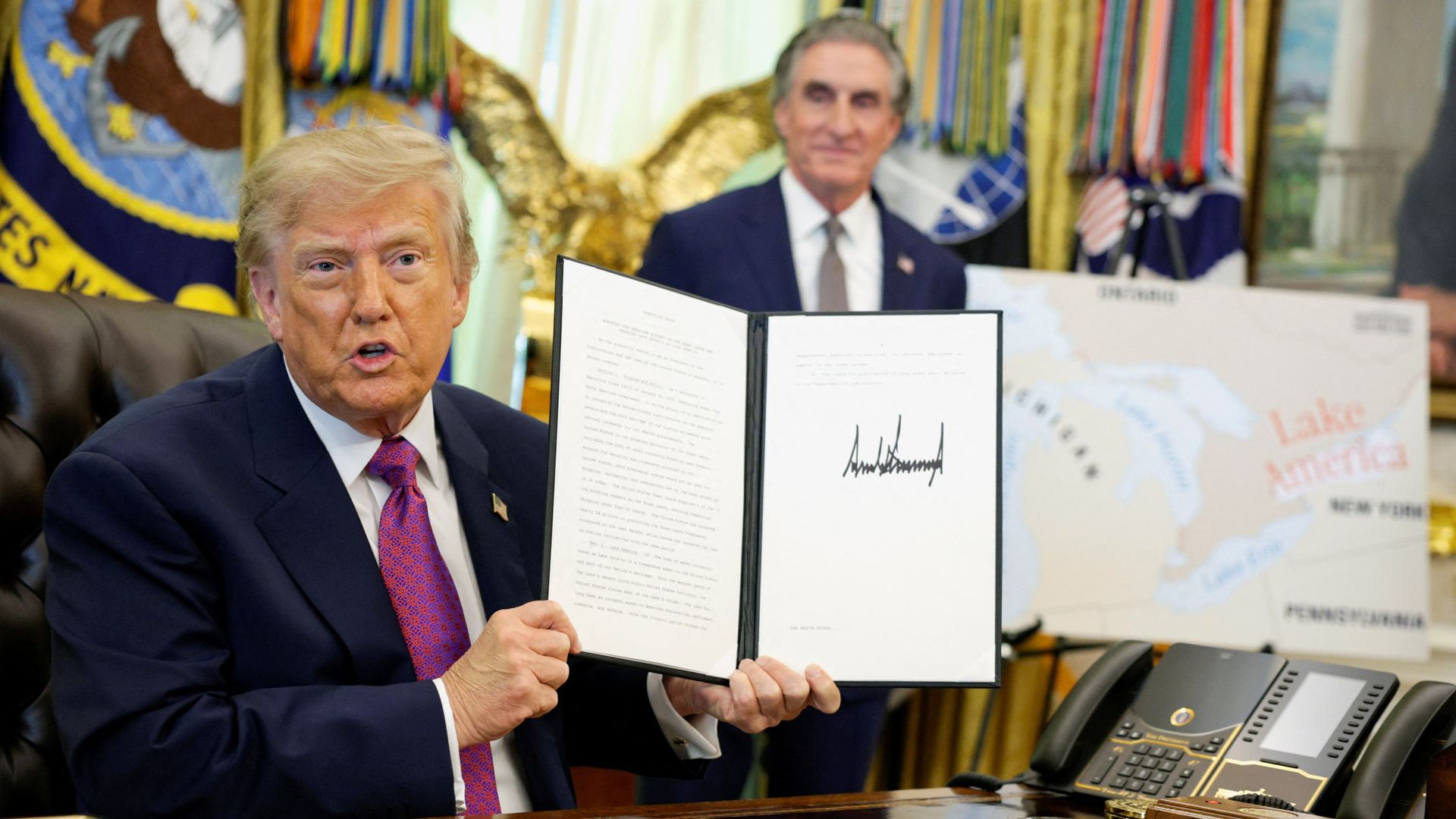
Source image: skynews.com
skynews.comGeopolitical Friction Deepens North American Trade Tensions
The White House has officially escalated its ongoing economic dispute with Canada by targeting one of the region's most prominent shared natural landmarks. President Donald Trump signed an executive order instructing the Department of the Interior and federal mapping authorities to alter the designation of Lake Ontario to Lake America across all official United States documents and digital databases.
This symbolic rebranding follows the collapse of high-stakes trade talks between Washington and Ottawa, which triggered an exchange of aggressive protectionist measures. The United States recently instituted 50% tariffs on approximately $20 billion worth of Canadian imports, prompting swift retaliatory duties from Canadian Prime Minister Mark Carney on American steel, automotive components, and agricultural machinery.
Economic Implications for Cross-Border Industries
For executives, investors, and supply chain managers, the ongoing diplomatic rupture between the U.S. and its northern neighbor carries profound financial consequences. Decades of frictionless trade built under regional agreements are facing unprecedented strain, raising operational costs for multinational manufacturers who rely on seamless component transit across the border.
Key economic sectors facing immediate disruption include:
- Automotive Manufacturing: Integrated supply chains spanning Ontario and midwestern U.S. states face mounting cost pressures from prospective 50% tariffs on vehicles and auto parts.
- Energy and Utilities: Energy exports and cross-border power grids are increasingly weaponized through retaliatory provincial surcharges and regulatory friction.
- Agriculture and Consumer Goods: Producers of dairy, steel, and manufactured commodities face compressed margins as both nations defend domestic industries with steep protective barriers.
Market Significance and Investor Outlook
While executive orders altering geographic nomenclature primarily impact domestic federal data portals and hold no sway over international mapmakers or Canadian sovereignty, they serve as a clear indicator of a hardening protectionist stance. Financial markets are increasingly pricing in the structural risks of prolonged bilateral trade friction, which analysts warn could add inflationary pressures and squeeze corporate profitability in export-heavy industries.
Investors should closely monitor several critical indicators in the coming weeks:
- Further tariff announcements or targeted exemptions regarding automotive and steel supply chains.
- Legislative or legal challenges from Great Lakes state governors and local stakeholders rejecting federal mapping updates.
- Potential escalation or de-escalation signals from upcoming diplomatic engagements between Washington and Ottawa.
As the trade dispute enters uncharted territory, corporate leadership must implement robust contingency planning to navigate volatile input costs, shifting regulatory compliance, and a fundamentally transformed geopolitical landscape in North America.
Continue reading
Related coverage in Business
nytimes.com
David Ellison Targets CNN Leadership Continuity in Paramount Merger Talks
David Ellison is currently negotiating to retain CNN CEO Mark Thompson without oversight from CBS editor in chief Bari Weiss as parent companies navigate merger plans.
2 min read
bbc.com
Decoding Nike’s Slump: How Strategic Missteps Cost the Sportswear Titan Its Edge
Explore the factors behind Nike's dramatic market decline. Industry analysts dissect the self-inflicted strategic errors that shook the sportswear giant.
3 min read
bbc.com
Treasury Committee Directs HMRC to Investigate Tax Implications of Manchester City Case
The UK Treasury Committee has called on HMRC to closely examine potential tax ramifications arising from the high-profile Manchester City legal verdict.
3 min read
nytimes.com
US Imposes Sanctions on Russian Firm A7 Over Global Shell Company Evasion Schemes
The United States targets Russian financial firm A7 with new sanctions following reports of utilizing global shell companies to bypass existing economic restrictions.
3 min read