Unprecedented Regulatory Nod for Trump-Linked Crypto Venture Sparks Urgent Systemic Risk and Conflict Debates
Federal regulators have granted preliminary bank charter approval to a Trump family-backed crypto venture, intensifying fierce debates over financial oversight and systemic risk.
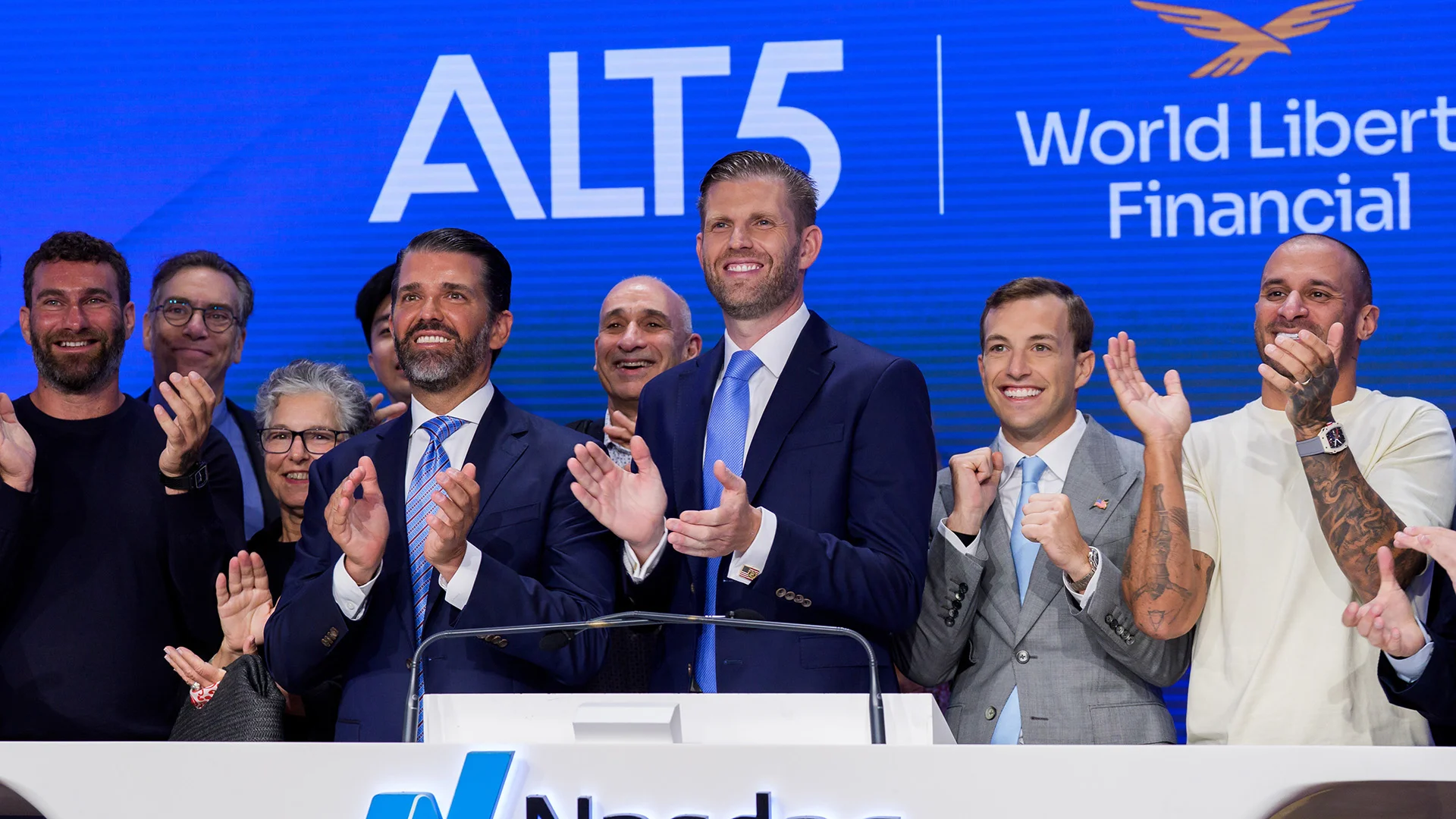
Source image: inc.com
inc.comA Watershed Regulatory Milestone with Deep Political Implications
In a development that has sent ripples through both traditional financial institutions and the digital asset ecosystem, federal regulators have extended preliminary approval for a trust bank charter to World Liberty Trust Company. The firm, closely tied to World Liberty Financial and the Trump family, cleared a vital hurdle overseen by the Office of the Comptroller of the Currency (OCC). This milestone provides the enterprise with a direct path toward institutional legitimacy, allowing it to handle its proprietary digital assets, oversee reserves, and issue its dollar-pegged stablecoin, USD1, without relying on third-party custodians.
However, the decision has immediately reignited intense debates surrounding institutional governance, executive power, and the intersection of politics and banking regulation. Because members of the president's family retain a substantial ownership stake in the holding structure, financial watchdogs and lawmakers have raised urgent alarms about potential conflicts of interest. Critics argue that granting federal banking credentials to an enterprise directly linked to sitting executive leadership tests the absolute boundaries of regulatory independence and public trust.
Dissecting the Business Model: Trust Bank vs. Traditional Banking
To understand the true market significance of this preliminary approval, financial analysts emphasize the distinct operational model of World Liberty Trust Co. Unlike commercial institutions that accept traditional public deposits and issue consumer loans, trust banks operate under a specialized charter tailored for asset management, custody services, and fiduciary oversight.
- Stablecoin Management: The institution is designed to issue, redeem, and manage the USD1 stablecoin, bridging decentralized finance protocols with traditional monetary touchpoints.
- Exclusion from Deposit Insurance: Under the framework of the GENIUS Act, stablecoin activities are explicitly barred from being classified as traditional deposits, meaning they do not carry standard government-backed deposit insurance.
- Reduced Intermediary Friction: By securing its own charter, the venture cuts out third-party digital asset custodians, capturing operational margins internally and scaling its cross-jurisdictional capabilities.
Systemic Risks and the Shadow of Bailout Precedents
The core anxiety among macro-economists and institutional risk officers centers on systemic exposure and moral hazard. While the regulatory framework dictates that stablecoin reserves must remain compliant with statutory guidelines and lack direct federal deposit safety nets, market participants remain hyper-sensitive to systemic contagion.
History demonstrates that when digital asset structures achieve critical mass—often scaling into multi-billion-dollar valuations—any sudden liquidity squeeze or asset-backing failure can threaten broader financial stability. Executives and risk managers are forced to question what mechanisms would activate if a politically connected financial institution faced catastrophic capital shortfalls. The implicit backing perceived by markets when high-profile political figures are tied to commercial ventures introduces severe pricing distortions across risk assets.
Legislative Pushback and Governance Reform
In response to the OCC's conditional green light, congressional opposition has materialized rapidly. Lawmakers, led by senior members of the Senate Banking Committee, have introduced targeted legislative measures aimed at barring the president, vice president, and immediate family members from owning or operating federally chartered banks. While these bills face an uphill battle in a divided legislature, they highlight the escalating political friction surrounding executive entanglement in financial sector regulation.
What Investors and Executives Should Watch Next
As World Liberty Trust Co. works toward fulfilling final operational requirements—including mandatory capital thresholds and internal audit structures—market participants should monitor several critical indicators:
- Regulatory Compliance Audits: Closely track how strictly the OCC monitors the venture's adherence to the GENIUS Act and underlying stablecoin reserve transparency.
- Legislative Momentum: Assess whether congressional oversight bills gain bipartisan traction, which could introduce sudden compliance hurdles or operational restrictions.
- Institutional Adoption: Evaluate how major corporate partners and institutional liquidity providers interact with a federally chartered crypto entity carrying such high political visibility.
Ultimately, the advancement of World Liberty Trust Co. represents a profound stress test for modern financial regulation. For executives and investors navigating the intersection of policy and capital markets, the situation underscores the growing necessity of separating political influence from the architecture of monetary oversight.
Continue reading
Related coverage in Business
nytimes.com
David Ellison Targets CNN Leadership Continuity in Paramount Merger Talks
David Ellison is currently negotiating to retain CNN CEO Mark Thompson without oversight from CBS editor in chief Bari Weiss as parent companies navigate merger plans.
2 min read
bbc.com
Decoding Nike’s Slump: How Strategic Missteps Cost the Sportswear Titan Its Edge
Explore the factors behind Nike's dramatic market decline. Industry analysts dissect the self-inflicted strategic errors that shook the sportswear giant.
3 min read
bbc.com
Treasury Committee Directs HMRC to Investigate Tax Implications of Manchester City Case
The UK Treasury Committee has called on HMRC to closely examine potential tax ramifications arising from the high-profile Manchester City legal verdict.
3 min read
nytimes.com
US Imposes Sanctions on Russian Firm A7 Over Global Shell Company Evasion Schemes
The United States targets Russian financial firm A7 with new sanctions following reports of utilizing global shell companies to bypass existing economic restrictions.
3 min read