UK National Crime Agency Elevates Crypto Threat Level as Launderers Deploy Advanced Tactics
The UK's National Crime Agency has ranked digital assets as a top-tier economic crime priority, warning that illicit actors are leveraging cutting-edge crypto tools to launder funds.
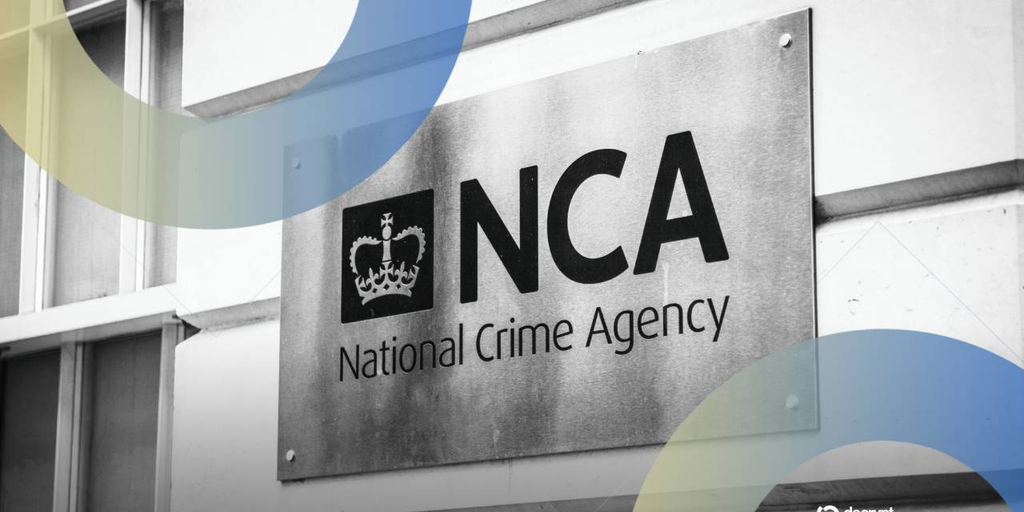
Source image: decrypt.co
decrypt.coUK Authorities Sound Alarm on Sophisticated Crypto Laundering Networks
The landscape of financial crime in the United Kingdom is undergoing a profound transformation. According to the latest annual threat assessment published by the National Economic Crime Centre (NECC)—a vital division operating under the National Crime Agency (NCA)—organized criminal syndicates are increasingly relying on advanced, unconventional crypto-asset mechanisms to obfuscate fund trails and transfer illicit capital across borders on an unprecedented scale.
This evaluation highlights a structural shift in how illegal enterprises operate. Rather than managing localized laundering operations independently, sophisticated syndicates now frequently outsource these complex financial layers to dedicated, specialized cross-border networks. These networks seamlessly blend novel decentralized technologies with legacy financial channels, moving value concurrently through legitimate and illicit systems to confuse forensic investigators.
Strategic Prioritization and Proactive Enforcement
In response to these rapidly evolving methodologies, UK authorities have formally elevated digital assets within the national security framework. Cryptoassets now occupy the third-highest position among the nine core economic crime priorities agreed upon by the NECC, the Financial Conduct Authority (FCA), the Home Office, and His Majesty's Treasury. This ranking places digital asset scrutiny ahead of several traditional financial threat vectors, signifying a resolute policy stance.
Crucially, the NCA is transitioning its operational posture. Moving away from a historically reactive stance—where law enforcement merely responded to external referrals or reports—the agency is actively building an intelligence-led capability designed to generate its own investigative targets. This proactive stance was previewed during cross-border operations like Operation Atlantic, which collaborated with international law enforcement and major digital asset exchanges to freeze millions in illicitly obtained funds.
Market Implications and Institutional Compliance
For fintech firms, digital asset exchanges, and institutional investors operating within or alongside the UK regulatory perimeter, the NECC's updated framework carries profound operational implications. Key considerations include:
- Heightened Compliance Scrutiny: Regulated entities must anticipate stricter supervisory mandates concerning transaction monitoring and counter-illicit-finance protocols.
- Advanced Forensic Tracking: As law enforcement deploys sophisticated internal capabilities to trace illicit flows, compliant platforms are expected to integrate equally robust analytics tools.
- Cross-Border Collaboration: Joint interventions between global agencies and crypto exchanges will likely become more frequent, impacting liquidity and user verification standards.
What Investors and Executives Should Watch
As regulatory bodies tighten the net around sophisticated financial crime, market participants must remain vigilant. Investors should monitor upcoming regulatory guidance from the FCA regarding compliance expectations for decentralized finance (DeFi) interfaces and privacy-enhancing technologies. Furthermore, corporate executives must audit their internal risk assessment models to ensure complete alignment with the NCA's elevated threat priorities. The era of loose oversight is definitively over, replaced by an environment defined by proactive intelligence and uncompromising enforcement.
Continue reading
Related coverage in Crypto
cointelegraph.com
Trump Schedules Third Memecoin Holder Dinner Amid Growing Corruption Scrutiny
President Trump is set to host his third exclusive memecoin dinner for top token holders at his Washington, DC golf club, drawing renewed ethical and market scrutiny.
3 min read
cointelegraph.com
50,000 Europeans Petition EU to Relax MiCA Stablecoin Reward Restrictions
A new 50,000-letter campaign is urging Brussels to ease stablecoin rewards restrictions during the MiCA review, aligning with broader central bank pushes.
2 min read
cryptonews.com
Dogecoin Eyes $1 Milestone as DogeOS Testnet Launch Sparks Utility Speculation
Dogecoin trades at $0.09447 as the DogeOS testnet goes live. Traders eye the $0.098 resistance and psychological $0.10 mark amid fresh utility potential.
2 min read
decrypt.co
Bitcoin Enters 'Uptober' Amid Fed Rate Hike Pressures and 5.3% Treasury Yields
Bitcoin enters its historically strongest month following a record September, yet rising Federal Reserve rate hike fears and 5.3% Treasury yields present major hurdles.
2 min read