Trezor Faces Fresh Security Crisis as Third-Party Email Breach Sparks Sophisticated Phishing Attacks
Hardware wallet leader Trezor warns users of a major third-party email provider breach that enabled hackers to launch convincing phishing campaigns leveraging false chip security alerts.
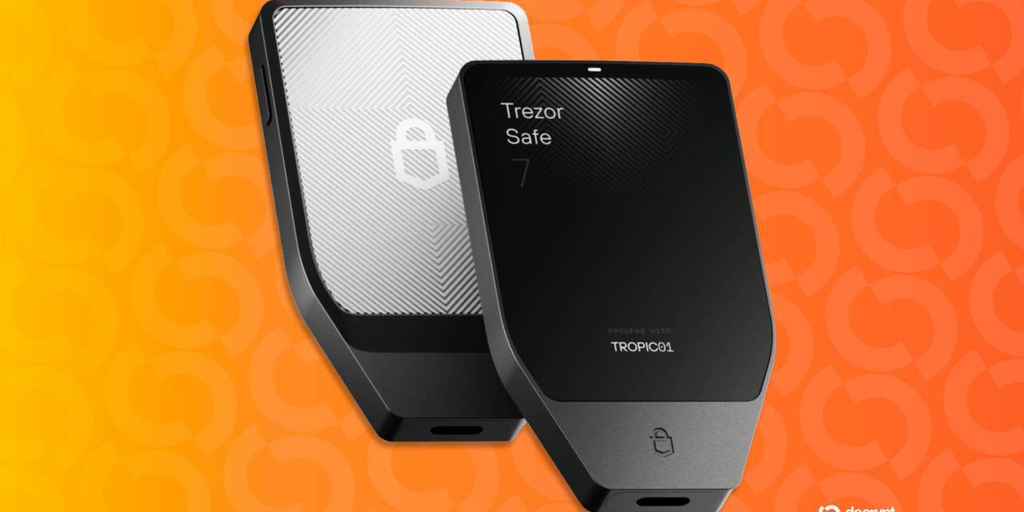
Source image: decrypt.co
decrypt.coThird-Party Vulnerability Exposes Communication Channels
In the digital asset ecosystem, the weakest link is rarely the core cryptography; it is almost invariably the human element and third-party vendor infrastructure. Cryptocurrency hardware wallet pioneer Trezor has once again found itself battling the fallout of an external vendor failure after a breach at its third-party email service provider. Unauthorized actors gained access to communication channels, allowing them to dispatch highly targeted and deceptive phishing emails directly from legitimate domains to unsuspecting users.
The fraudulent campaign centered around an alarming subject line: "Critical Security Alert: STM32 Entropy Vulnerability." By invoking STM32—the specific family of microcontrollers utilized inside Trezor hardware devices—and referencing entropy, which governs the cryptographic randomness of wallet recovery phrases, the attackers engineered a sophisticated narrative designed to induce immediate panic.
Anatomizing the Threat: Why the Lure Succeeds
For high-net-worth investors, institutional participants, and retail crypto enthusiasts alike, a purported vulnerability involving hardware entropy represents a worst-case scenario. Entropy is the foundational randomness used to construct 24-word recovery backups. If an entropy flaw were genuinely discovered, it could theoretically jeopardize the security of seed phrases generated on the device.
However, Trezor was quick to issue categorical denials, reassuring its global customer base that the advisory was entirely fabricated. In official statements, the company clarified:
- No Core Compromise: Trezor's proprietary firmware, supply chain manufacturing processes, and internal systems remain completely secure and untouched.
- Uncompromised Keys: Private keys and recovery seeds are generated entirely offline on local hardware devices and are never transmitted or stored on external servers.
- Immediate Remediation: The company successfully dismantled the rogue domains utilized in the attack and initiated a comprehensive forensic investigation alongside its service providers.
The Broader Market Significance: Supply Chain Risk in Web3
This email infrastructure breach does not occur in a vacuum; it arrives on the heels of a troubling string of third-party vendor complications for the hardware manufacturer. Recent incidents involving logistics and fulfillment partners, such as ShipMonk, previously exposed customer names, shipping addresses, and contact details. While these logistics leaks did not expose financial assets or wallet keys, they provided malicious actors with the precise data needed to orchestrate multi-vector social engineering attacks, including fraudulent emails, scam phone calls, and physical mailers.
For the broader cryptocurrency sector, these developments underscore a critical operational lesson: security extends far beyond code. As hardware wallet manufacturers scale to meet institutional and retail demand, their reliance on third-party SaaS providers, customer relationship management (CRM) tools, and logistics vendors creates an expanded attack surface. Malicious actors increasingly bypass robust on-chain security by targeting the administrative and communications layer instead.
Strategic Takeaways and What Investors Should Watch
For executives, investors, and active cryptocurrency participants, high-profile social engineering campaigns demand heightened vigilance. Market participants must maintain strict operational security protocols:
- Verify Through Official Channels: Never act upon unsolicited security warnings received via email or text message without independently verifying them through official corporate blogs or verified social channels.
- Absolute Seed Protection: Legitimate hardware manufacturers will never ask you to input, type, or upload your recovery seed phrase into a website, desktop application, or digital form.
- Monitor Vendor Resilience: Industry observers and investors should closely monitor how hardware wallet providers vet and audit their third-party software and logistics partners moving forward.
Ultimately, while Trezor devices continue to provide robust cryptographic protection against remote digital thefts, the human factor remains a primary vector for exploitation. As threat actors leverage sophisticated data leaks to craft hyper-personalized scams, market participants must adopt a zero-trust mindset toward all unsolicited digital communications.
Continue reading
Related coverage in Crypto
cointelegraph.com
Trump Schedules Third Memecoin Holder Dinner Amid Growing Corruption Scrutiny
President Trump is set to host his third exclusive memecoin dinner for top token holders at his Washington, DC golf club, drawing renewed ethical and market scrutiny.
3 min read
cointelegraph.com
50,000 Europeans Petition EU to Relax MiCA Stablecoin Reward Restrictions
A new 50,000-letter campaign is urging Brussels to ease stablecoin rewards restrictions during the MiCA review, aligning with broader central bank pushes.
2 min read
cryptonews.com
Dogecoin Eyes $1 Milestone as DogeOS Testnet Launch Sparks Utility Speculation
Dogecoin trades at $0.09447 as the DogeOS testnet goes live. Traders eye the $0.098 resistance and psychological $0.10 mark amid fresh utility potential.
2 min read
decrypt.co
Bitcoin Enters 'Uptober' Amid Fed Rate Hike Pressures and 5.3% Treasury Yields
Bitcoin enters its historically strongest month following a record September, yet rising Federal Reserve rate hike fears and 5.3% Treasury yields present major hurdles.
2 min read