Travel Icon Rick Steves Acquires Historic 103-Year-Old Hometown Cinema for $2 Million
Renowned travel guru Rick Steves has purchased his hometown's 103-year-old single-screen theater for $2 million, prioritizing cultural legacy over commercial dividends.
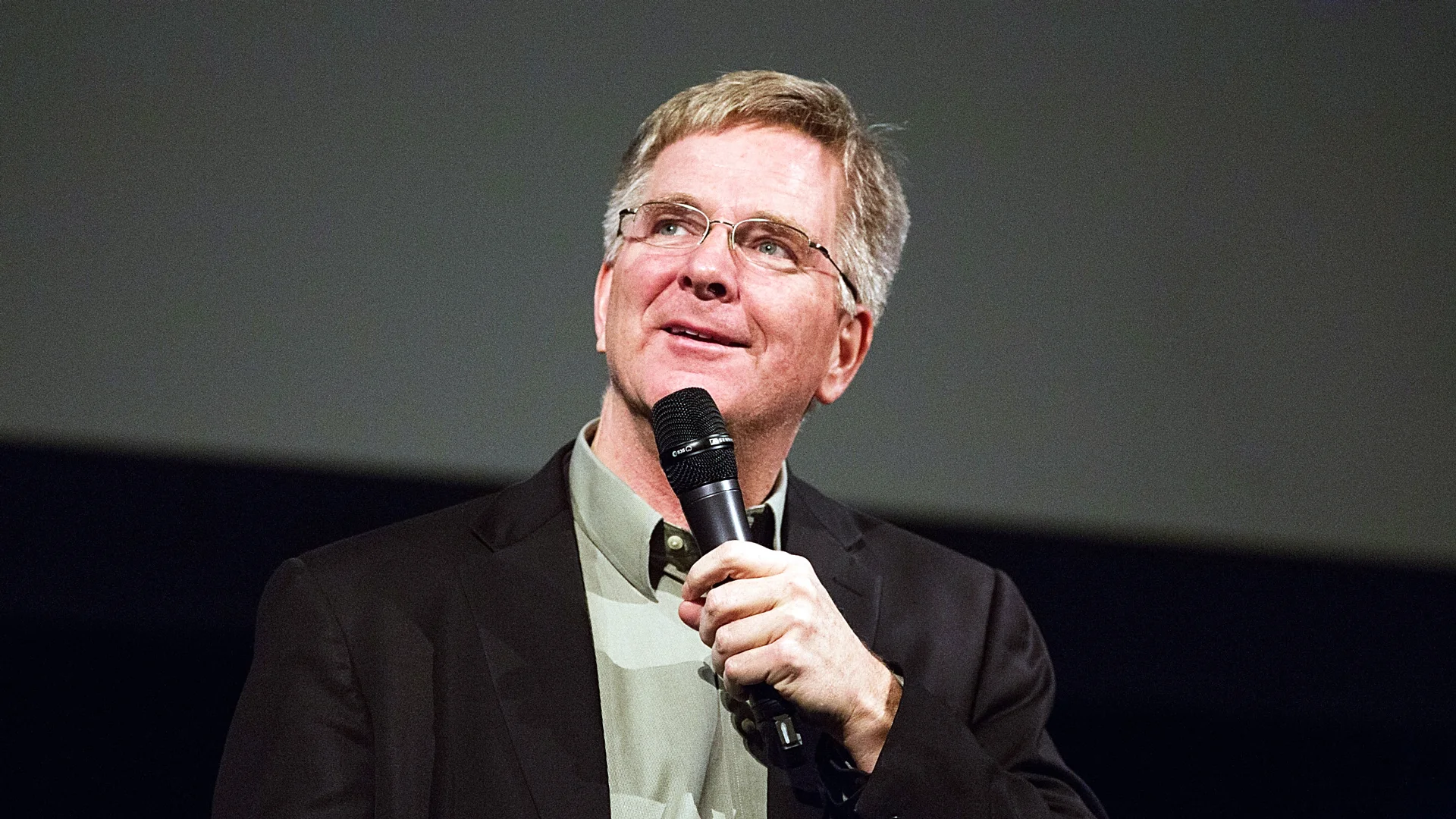
Source image: inc.com
inc.comReimagining Capital Allocation for Community Preservation
In an era dominated by hyper-scalable tech ventures and high-yield asset classes, renowned travel expert and entrepreneur Rick Steves has chosen a remarkably traditional vehicle for his latest capital deployment: a 103-year-old, single-screen movie theater in his hometown of Edmonds, Washington. Steves finalized the acquisition of the Edmonds Theater for just over $2 million, stepping in after the passing of its longtime owner to ensure the landmark's survival.
For traditional institutional investors, a single-screen cinema operating in a digital landscape represents a precarious balance sheet item. However, Steves has made it clear that standard metrics of return on investment (ROI) do not apply. Rather than targeting corporate growth or immediate profitability, his thesis centers on community resilience, historical preservation, and intangible civic equity.
The Economics of Single-Screen Cinemas
Independent, single-screen movie theaters have faced compounding structural pressures over the last decade, ranging from the steep capital expenditures required for digital projection upgrades to pandemic-era disruptions and rising real estate valuations. Data indicates that fewer than 60 independent single-screen venues remain operational across the United States, positioning them as an endangered class of cultural infrastructure.
Steves noted that his financial expectations for the property are modest at best. Breaking even would be a welcome outcome, but the core objective remains safeguarding a Main Street anchor that fosters human connection. Key aspects of his turnaround and operational strategy include:
- Art Deco Restoration: Allocating capital toward architectural touch-ups to restore the historic venue's visual splendor.
- Nonprofit Utility: Opening the physical space to local civic organizations and community groups during off-hours to maximize utility.
- Preserving Local Character: Maintaining the theater's role as a first-run movie house while safeguarding its historical footprint on Main Street.
- Guerrilla Philanthropy: Employing private capital strategically to solve localized infrastructure and social challenges without relying on bureaucratic public funding.
Market Implications and the Rise of Altruistic Real Estate
The transaction reflects a broader, evolving trend among high-net-worth entrepreneurs and philanthropists who are deploying private capital into community-centric real estate. Rather than liquidating historic downtown properties for commercial redevelopment or mixed-use luxury housing, investors are increasingly recognizing the long-term social value of legacy assets.
For executives and wealth managers, this points to a growing intersection between private enterprise and local stewardship. While municipal budgets face constraints, high-net-worth individuals are uniquely positioned to act as buyers of last resort for community-critical infrastructure, protecting local economies from sterile commercial homogenization.
What Investors and Observers Should Watch
As Steves transitions into his role as a theater proprietor, market observers and community leaders should monitor several key performance indicators regarding the future of the Edmonds Theater:
- Operational Sustainability: Whether community-driven programming and localized loyalty can offset the systemic overhead costs facing independent cinemas.
- Model Replication: If high-profile private buyouts of historic cultural assets will inspire similar philanthropic real estate maneuvers in secondary and tertiary US markets.
- Civic Engagement Metrics: The success of integrating daytime nonprofit utility with traditional evening cinema screenings to maximize asset utilization.
Ultimately, Steves’ acquisition serves as a case study in redefining asset performance. In a market fixated on compressed timelines and exponential yield, his $2 million outlay demonstrates that some investments yield their highest dividends in the currency of community trust and cultural continuity.
Continue reading
Related coverage in Business
nytimes.com
David Ellison Targets CNN Leadership Continuity in Paramount Merger Talks
David Ellison is currently negotiating to retain CNN CEO Mark Thompson without oversight from CBS editor in chief Bari Weiss as parent companies navigate merger plans.
2 min read
bbc.com
Decoding Nike’s Slump: How Strategic Missteps Cost the Sportswear Titan Its Edge
Explore the factors behind Nike's dramatic market decline. Industry analysts dissect the self-inflicted strategic errors that shook the sportswear giant.
3 min read
bbc.com
Treasury Committee Directs HMRC to Investigate Tax Implications of Manchester City Case
The UK Treasury Committee has called on HMRC to closely examine potential tax ramifications arising from the high-profile Manchester City legal verdict.
3 min read
nytimes.com
US Imposes Sanctions on Russian Firm A7 Over Global Shell Company Evasion Schemes
The United States targets Russian financial firm A7 with new sanctions following reports of utilizing global shell companies to bypass existing economic restrictions.
3 min read