The Great Compute Pivot: Why Bitcoin Miners Are Abandoning Crypto for the AI Gold Rush
Faced with compressed margins and surging demand for artificial intelligence, major cryptocurrency mining enterprises are actively repurposing their massive data centers to capture lucrative AI contracts.
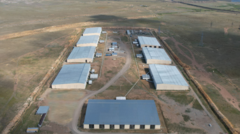
Source image: bbc.com
bbc.comThe Paradigm Shift in Digital Infrastructure
For over a decade, industrial-scale cryptocurrency miners defined the outer limits of energy consumption and hardware deployment, filling sprawling warehouses with specialized rigs designed exclusively to secure the Bitcoin blockchain. Today, however, a profound strategic realignment is sweeping through the sector. Attracted by the booming economics of artificial intelligence and large-scale machine learning, prominent crypto mining firms are rapidly pivoting their operations toward high-performance computing and AI data center hosting.
This structural transformation is not merely a temporary hedge against market fluctuations; it represents a fundamental migration from proof-of-work validation to proof-of-compute monetization. As top-tier technology giants scramble to secure scarce electrical grid capacity and physical data center footprint, crypto miners find themselves sitting on precisely the assets most coveted by the AI ecosystem.
Economics Driving the Migration
Several converging macroeconomic and structural pressures have accelerated this exodus away from pure-play Bitcoin mining:
- Diminishing Block Rewards: Following successive halving events, the protocol-mandated reduction in Bitcoin issuance has continuously compressed mining margins, forcing operators to look for alternative revenue streams.
- Energy and Infrastructure Advantage: Mining facilities are uniquely engineered with direct access to high-voltage substations, massive cooling frameworks, and robust fiber-optic connections—the exact prerequisites required for modern AI server clusters.
- Revenue Predictability: Traditional crypto mining is inherently volatile, tied directly to digital asset price swings and network difficulty adjustments. In contrast, AI hosting contracts offer multi-year, fixed-rate lease agreements with hyperscale technology companies.
Industry analysts note that on a per-megawatt basis, enterprise AI contracts can generate significantly higher and more predictable cash flows than traditional cryptographic hashing. Consequently, corporate boardrooms across the sector are reallocating capital expenditure away from next-generation mining application-specific integrated circuits (ASICs) and toward enterprise-grade graphics processing units (GPUs) and scalable server racks.
Market Implications and Financial Re-rating
The financial markets have begun to re-rate these hybrid infrastructure companies accordingly. Firms that successfully negotiate multi-billion-dollar AI compute agreements are trading at valuations traditionally reserved for enterprise data center operators rather than speculative digital asset plays. This transition successfully de-risks their balance sheets, insulating them from the cyclical nature of cryptocurrency bear markets.
Furthermore, this trend is reshaping power markets globally. Because crypto miners historically established operations in remote regions with cheap, abundant electricity—often near stranded hydro, wind, or nuclear assets—they offer immediate plug-and-play solutions for power-hungry AI training centers that face severe grid interconnection delays in major metropolitan tech hubs.
What Investors Should Monitor Closely
For institutional investors, venture capitalists, and market strategists, navigating this evolving landscape requires tracking several critical performance indicators:
- Contract Backlog and Counterparties: Evaluate the total dollar value of signed AI/HPC lease agreements and the creditworthiness of the tech enterprise tenants involved.
- Power Capacity Allocation: Monitor the precise megawatt breakdown dedicated to AI workloads versus legacy Bitcoin mining across major enterprise portfolios.
- Capital Expenditure Discipline: Assess management execution regarding the costly procurement of advanced GPUs and the physical retrofitting of existing facilities.
- Regulatory and Energy Dynamics: Keep a close eye on local grid regulations, environmental compliance, and power-purchase agreements that dictate long-term operational margins.
Ultimately, the intersection of artificial intelligence and digital asset infrastructure marks a mature turning point for the sector. As the boundaries between high-performance computing and crypto mining continue to blur, companies that execute this dual-track strategy effectively are poised to dominate the next era of digital infrastructure economics.
Continue reading
Related coverage in Technology
techcrunch.com
OpenAI Integrates Virtual Try-On and Shopping Features into ChatGPT
OpenAI introduces new shopping capabilities to ChatGPT, allowing users to virtually try on apparel and accessories using personal photos and save favorites.
3 min read
techcrunch.com
Google Launches First Advanced Chip for Space Data Centers as SpaceX Launch Demands Mount
Google has launched its first advanced chip into orbit to pave the way for space data centers, though executives estimate SpaceX's Starship must fly 1,800 times first.
2 min read
techcrunch.com
Fervo Energy Completes World's First Enhanced Geothermal Power Plant in Record 23 Months
Fervo Energy has successfully completed the world's first enhanced geothermal power plant in under two years, signaling a major breakthrough for clean energy infrastructure.
3 min read
techcrunch.com
Opus 5.5 AI Writing Tells Reveal Unique Statistical Signatures for Investors and Executives
New research into Opus 5.5's generated text uncovers distinct linguistic signatures, such as the frequent overuse of the word dependable, signaling major shifts in content identification.
3 min read