The Billionaire’s Mindset: Why Warren Buffett Rejected a 1,000-to-1 Payout and What It Teaches Executive Leaders
Discover why legendary investor Warren Buffett famously declined a favorable 1,000-to-1 odds bet on a golf course, and what this critical lesson reveals about corporate discipline.
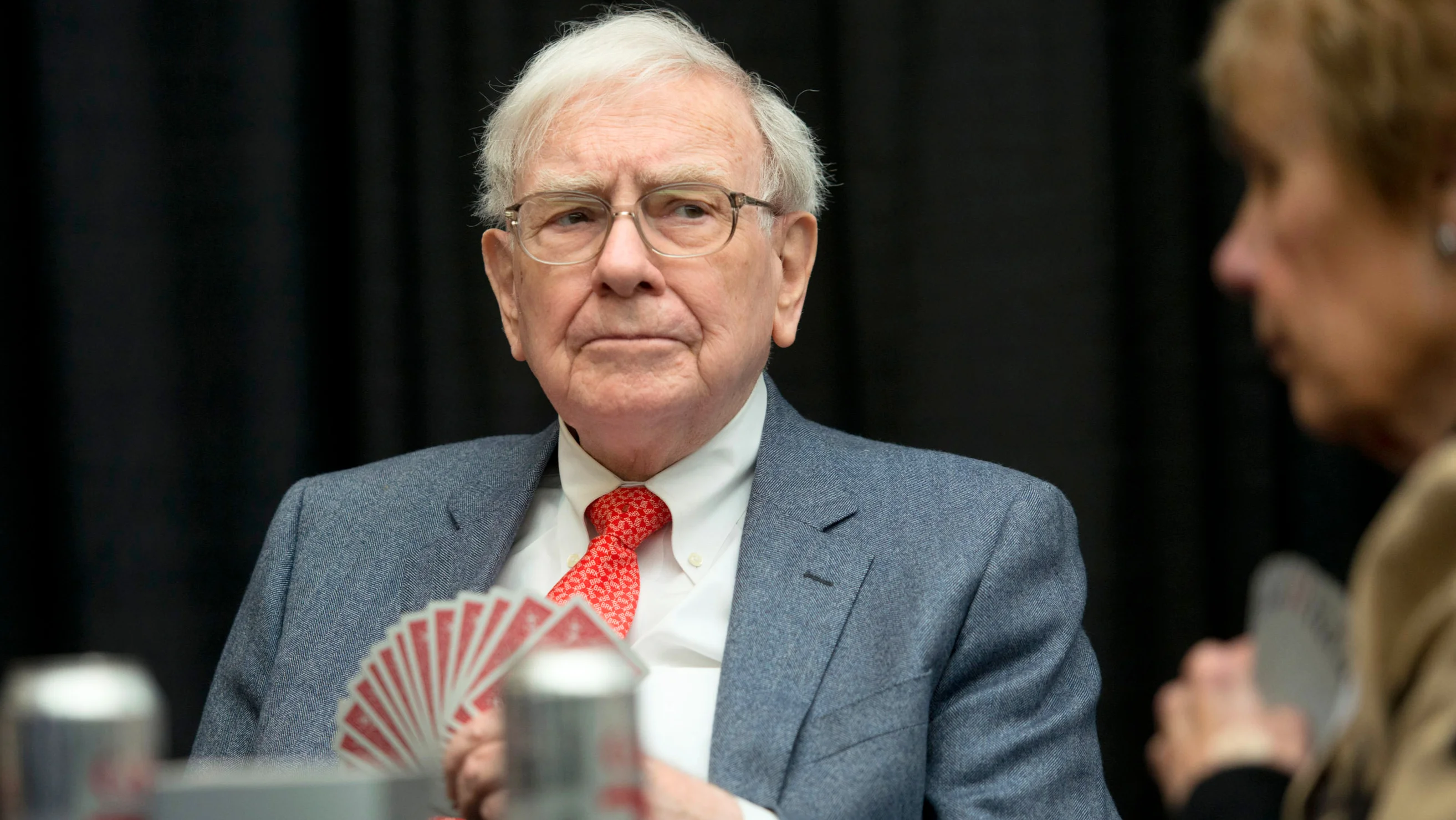
Source image: inc.com
inc.comThe Anatomy of a Legendary Rejection
In the upper echelons of global finance, few figures command the reverence and analytical awe of Warren Buffett. Tales of his investment prowess, patient capital allocation, and folksy wisdom are legendary. However, one of the most revealing anecdotes regarding the Oracle of Omaha does not stem from a multi-billion-dollar corporate acquisition or a complex equity swap on Wall Street. Instead, it unfolded quietly on the manicured greens of the Pebble Beach golf course.
As recounted by fellow financial minds, Buffett was playing a round alongside close peers, including legendary investor Charlie Munger and insurance executive Jack Byrne. During the game, one companion posed an intriguing proposition: if Buffett could sink a hole-in-one on the course, they would pay him $10,000. If he failed, Buffett would owe a mere $10. On paper, the mathematical asymmetry of the wager is striking. It represents a thousand-to-one payout for a negligible downside risk of pocket change.
The Core Philosophy: Discipline is Absolute, Not Situational
To the casual observer or an aggressive venture capitalist, refusing such a bet might seem counterintuitive or overly conservative. After all, the risk-to-reward ratio heavily favors taking a chance. Yet, Buffett immediately declined the offer. When pressed by his companions on why he would turn down an asymmetric upside where the maximum loss is virtually meaningless, Buffett offered a profound perspective: "If you are not disciplined in the little things, you won't be disciplined in the big things."
This philosophy serves as an essential blueprint for executive leadership and entrepreneurial success. In the world of high finance and corporate management, leaders frequently confront small ethical shortcuts, minor operational lapses, or insignificant deviations from rigorous risk parameters. The rationalization is often that the stakes are too low to matter. Yet, behavioral economics and corporate history demonstrate that institutional decay begins at the margins.
Market Implications and Corporate Governance
For investors and executive boards, Buffett’s golf course anecdote translates directly into how organizations manage risk, capital allocation, and compliance. Companies that tolerate minor infractions in internal controls or strategic discipline often find themselves vulnerable when macro-economic shocks or black swan events materialize.
- Risk Management Integrity: Risk parameters must remain absolute across all tiers of an organization, regardless of whether a transaction size is deemed immaterial.
- Cultural Consistency: Corporate culture is shaped by the smallest behaviors tolerated by leadership rather than grand mission statements printed on office walls.
- Long-Term Value Creation: Sustainable alpha generation requires systematic adherence to proven methodologies rather than chasing speculative, opportunistic anomalies.
What Investors and Executives Should Watch
As global markets navigate heightened regulatory scrutiny, shifting interest rate environments, and rapid technological disruption, market participants should closely evaluate how corporate management teams handle minor operational discrepancies. Organizations that prioritize rigorous baseline discipline across every department—from accounting minutiae to product compliance—consistently outperform peers who practice situational management.
Ultimately, Buffett’s refusal to take a 1,000-to-1 bet on a golf green is a masterclass in self-governance. For modern executives and investors aiming to build enduring legacies, the message is clear: protecting your downside begins with uncompromising adherence to core standards, no matter how small the distraction may appear.
Continue reading
Related coverage in Business
nytimes.com
David Ellison Targets CNN Leadership Continuity in Paramount Merger Talks
David Ellison is currently negotiating to retain CNN CEO Mark Thompson without oversight from CBS editor in chief Bari Weiss as parent companies navigate merger plans.
2 min read
bbc.com
Decoding Nike’s Slump: How Strategic Missteps Cost the Sportswear Titan Its Edge
Explore the factors behind Nike's dramatic market decline. Industry analysts dissect the self-inflicted strategic errors that shook the sportswear giant.
3 min read
bbc.com
Treasury Committee Directs HMRC to Investigate Tax Implications of Manchester City Case
The UK Treasury Committee has called on HMRC to closely examine potential tax ramifications arising from the high-profile Manchester City legal verdict.
3 min read
nytimes.com
US Imposes Sanctions on Russian Firm A7 Over Global Shell Company Evasion Schemes
The United States targets Russian financial firm A7 with new sanctions following reports of utilizing global shell companies to bypass existing economic restrictions.
3 min read