The Billion-Dollar Paradox: How In-N-Out Defies Industry Norms to Dominate the Fast-Food Landscape
In-N-Out Burger generates over $2 billion annually while routinely defying conventional fast-food scaling playbooks, achieving unmatched per-store productivity.
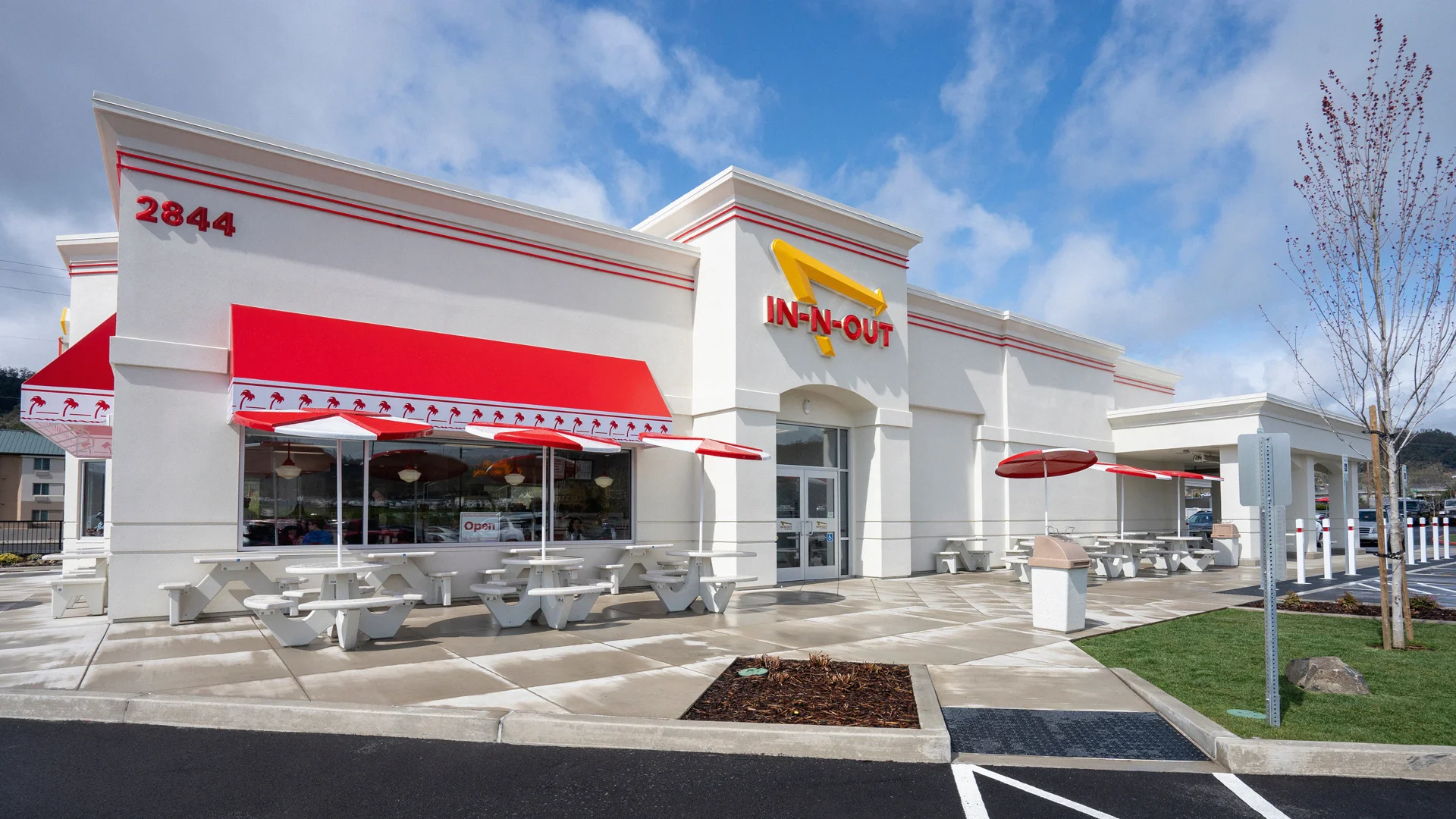
Source image: inc.com
inc.comThe Anatomy of a $2 Billion Quiet Giant
In an industry defined by endless corporate consolidation, hyper-aggressive global expansion, and frantic menu diversification, In-N-Out Burger remains an outlier. Operating just over 400 locations primarily concentrated in the American West, the privately owned chain commands an estimated $2 billion to $2.5 billion in annual sales. More impressively, the brand achieves this staggering revenue output without the aid of public shareholders, private equity backing, or franchise fees. For executive leadership and market analysts, In-N-Out represents a fascinating case study in defying conventional corporate scaling wisdom to maximize long-term enterprise value.
Challenging Conventional Fast-Food Economics
Traditional fast-food strategy relies on rapid footprint expansion, heavy debt utilization, and broad product proliferation to capture fragmented market share. In-N-Out systematically rejects every single one of these axioms.
- Refusal to Franchise: Every single In-N-Out restaurant is company-owned, allowing executive management to retain absolute operational control over food quality, customer service standards, and employee wages.
- Hyper-Restricted Supply Chains: The company refuses to use frozen patties, maintaining a strict operational rule that all restaurant locations must remain within a designated radius of its distribution facilities to ensure fresh meat delivery within 24 hours.
- Minimalist Menu Architecture: While competitors frequently cycle through seasonal novelties and expansive product lines, In-N-Out’s core menu has remained virtually unchanged for decades, drastically reducing inventory waste and kitchen friction.
Unprecedented Per-Store Productivity
The financial implications of In-N-Out's disciplined approach are profound. Industry metrics indicate that a typical In-N-Out location generates roughly $4.5 million in gross annual sales, nearly doubling the productivity of an average McDonald’s restaurant. Furthermore, the company’s customer traffic numbers dwarf sector averages, driven by an intensely loyal consumer base. Because In-N-Out owns its real estate outright and carries no external debt, its profit margins comfortably outpace many of its publicly traded fast-casual counterparts. This economic resilience demonstrates that capital efficiency can often supersede sheer physical expansion.
Market Implications and Strategic Takeaways
For investors, entrepreneurs, and corporate strategists, In-N-Out's ongoing success challenges the modern obsession with hyper-growth at all costs. The company proves that deep customer trust, operational focus, and brand integrity can generate higher economic returns than widespread geographic dilution. By protecting its margins rather than chasing sheer volume, In-N-Out has successfully insulated itself against inflationary shocks and economic downturns that typically plague the consumer discretionary sector.
What Investors and Executives Should Watch
As In-N-Out slowly expands its footprint into new geographic territories further east, market observers should monitor whether the company can successfully preserve its stringent supply chain logistics without compromising the quality controls that built its reputation. Maintaining a localized distribution network while entering distant markets remains the ultimate logistical hurdle for regional champions looking to scale nationally. For now, In-N-Out stands as a stark reminder that sometimes the most radical growth strategy in modern business is knowing precisely when to say no.
Continue reading
Related coverage in Business
nytimes.com
David Ellison Targets CNN Leadership Continuity in Paramount Merger Talks
David Ellison is currently negotiating to retain CNN CEO Mark Thompson without oversight from CBS editor in chief Bari Weiss as parent companies navigate merger plans.
2 min read
bbc.com
Decoding Nike’s Slump: How Strategic Missteps Cost the Sportswear Titan Its Edge
Explore the factors behind Nike's dramatic market decline. Industry analysts dissect the self-inflicted strategic errors that shook the sportswear giant.
3 min read
bbc.com
Treasury Committee Directs HMRC to Investigate Tax Implications of Manchester City Case
The UK Treasury Committee has called on HMRC to closely examine potential tax ramifications arising from the high-profile Manchester City legal verdict.
3 min read
nytimes.com
US Imposes Sanctions on Russian Firm A7 Over Global Shell Company Evasion Schemes
The United States targets Russian financial firm A7 with new sanctions following reports of utilizing global shell companies to bypass existing economic restrictions.
3 min read