Surveillance Backlash: Law Enforcement Fears Meta Smart Glasses Pose Covert Security Threats
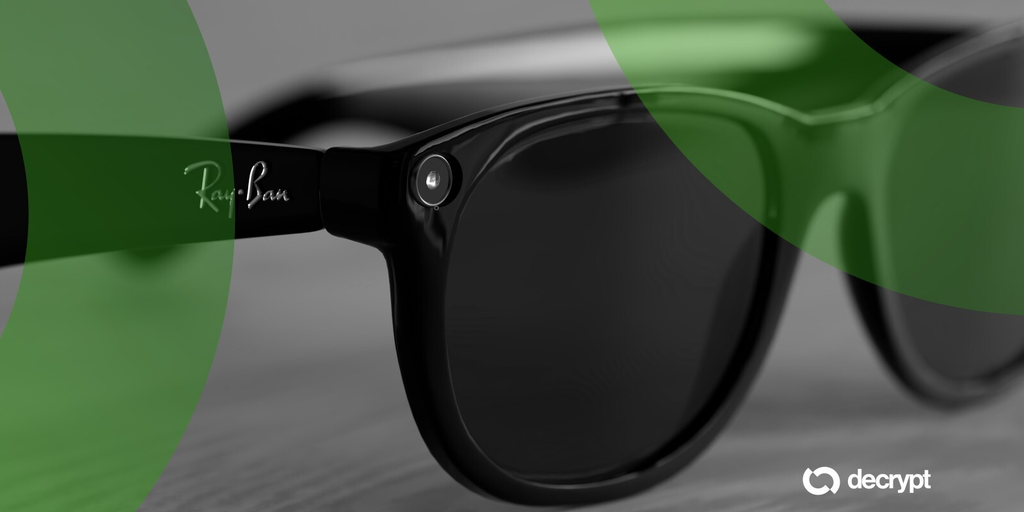
Internal memos reveal U.S. police agencies and federal bodies are cracking down on Meta's smart glasses, fearing covert surveillance inside secure facilities.
Source image: decrypt.co
decrypt.coThe Rise of Wearable Surveillance and Law Enforcement Anxiety
As consumer-facing artificial intelligence and wearable hardware continue to evolve, the intersection of privacy, security, and institutional control has reached a boiling point. Newly uncovered internal government documents reveal that law enforcement agencies across the United States—ranging from local metropolitan police departments to federal entities—are growing increasingly alarmed over the proliferation of Meta's camera-equipped smart glasses. Far from welcoming the consumer tech boom, authorities are treating these fashionable frames as potential counterintelligence and security threats.
According to freedom of information disclosures, memos circulated by units such as the New York Police Department's counterterrorism bureau warn that devices like the Ray-Ban Meta glasses can easily bypass standard visual inspections. Because they closely mimic ordinary prescription or designer eyewear, they allow wearers to capture high-definition video and audio covertly. For law enforcement executives, this capability transforms an ordinary consumer gadget into a clandestine recording tool capable of undermining physical security.
Key Concerns Highlighted in Internal Memos
- Compromised Facility Security: Authorities fear that detainees, visitors, or infiltrators could use smart glasses to map out secure holding cells, document internal camera placements, and record officer patrol routes.
- Pre-Attack Reconnaissance: Intelligence assessments have noted instances where suspects allegedly used smart glasses to conduct target reconnaissance prior to committing violent acts or security breaches.
- Federal Workplace Restrictions: Agencies like U.S. Immigration and Customs Enforcement (ICE) have formally barred staff from wearing smart glasses in federal workspaces, classifying them alongside restricted body-worn recording equipment.
- Information Leakage Risks: The ability of these devices to seamlessly stream or transmit media creates vulnerabilities regarding the inadvertent exposure of confidential law enforcement data.
Market Implications for Wearable AI and Meta Platforms
For investors tracking the consumer hardware and AI sectors, this institutional pushback underscores a complex regulatory and cultural hurdle for Meta Platforms. While Meta has positioned its smart glasses as a breakthrough lifestyle accessory integrated with generative AI features, the normalization of unnoticeable recording devices is triggering swift institutional resistance. When government bodies begin banning hardware from their facilities and mandating strict inspection protocols, it creates a reputational friction that can bleed into the broader consumer market.
Critics and digital rights advocates have pointed out the inherent irony of law enforcement agencies—which routinely deploy extensive public surveillance systems—expressing distress at being filmed themselves. However, the practical reality for technology manufacturers is clear: as augmented reality and smart eyewear become more pervasive, they will face rigorous scrutiny from both legislative bodies and security institutions concerned about unconsented surveillance.
What Investors and Industry Executives Should Watch
As the market for smart glasses expands, stakeholders should monitor several critical developments:
- Regulatory and Policy Shifts: Keep a close eye on upcoming municipal or federal legislation aimed at restricting where and how camera-embedded eyewear can be worn in public and semi-public spaces.
- Hardware Transparency Features: Watch for how tech giants respond to safety concerns. Future iterations of smart glasses may require more prominent, tamper-proof indicator lights or hardware modifications to satisfy privacy advocates and security agencies.
- Enterprise vs. Consumer Adoption: While consumer adoption is accelerating, resistance from institutional and corporate workplaces could limit the total addressable market for unshielded recording devices.
Ultimately, the friction between law enforcement and consumer tech highlights a defining challenge of the digital age. As hardware shrinks and intelligence capabilities grow, the boundary between being the observer and the observed is rapidly collapsing, forcing both governments and corporations to adapt to a hyper-transparent reality.
Continue reading
Related coverage in Crypto
cointelegraph.com
Trump Schedules Third Memecoin Holder Dinner Amid Growing Corruption Scrutiny
President Trump is set to host his third exclusive memecoin dinner for top token holders at his Washington, DC golf club, drawing renewed ethical and market scrutiny.
3 min read
cointelegraph.com
50,000 Europeans Petition EU to Relax MiCA Stablecoin Reward Restrictions
A new 50,000-letter campaign is urging Brussels to ease stablecoin rewards restrictions during the MiCA review, aligning with broader central bank pushes.
2 min read
cryptonews.com
Dogecoin Eyes $1 Milestone as DogeOS Testnet Launch Sparks Utility Speculation
Dogecoin trades at $0.09447 as the DogeOS testnet goes live. Traders eye the $0.098 resistance and psychological $0.10 mark amid fresh utility potential.
2 min read
decrypt.co
Bitcoin Enters 'Uptober' Amid Fed Rate Hike Pressures and 5.3% Treasury Yields
Bitcoin enters its historically strongest month following a record September, yet rising Federal Reserve rate hike fears and 5.3% Treasury yields present major hurdles.
2 min read