StarkWare Successfully Executes Bitcoin’s First Experimental Quantum-Safe Mainnet Transaction
StarkWare has completed Bitcoin's first quantum-safe transaction on the live mainnet, utilizing a novel method that bypasses the need for immediate protocol upgrades.
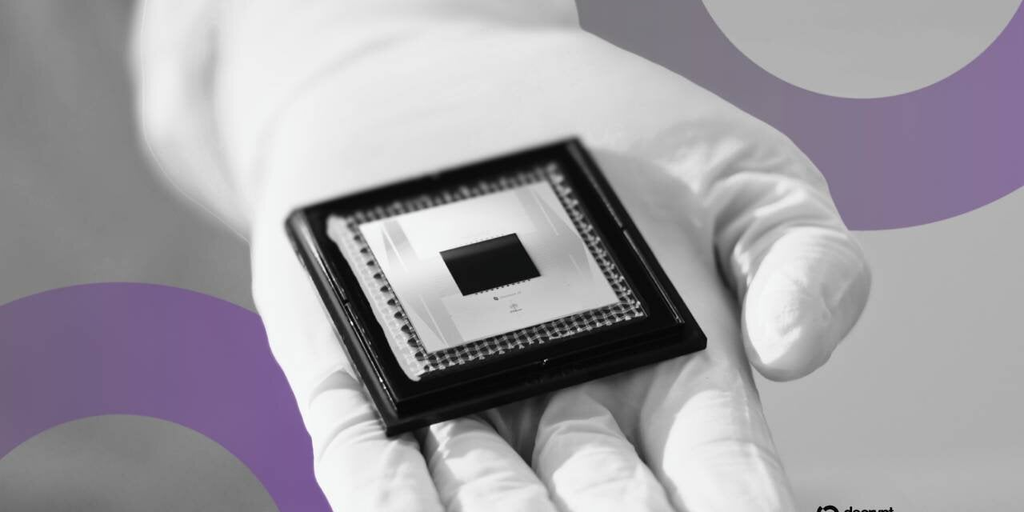
Source image: decrypt.co
decrypt.coA Major Leap for Post-Quantum Cryptography
In a milestone development for digital asset security, scaling technology firm StarkWare has successfully completed the first-ever quantum-safe transaction on the live Bitcoin mainnet. Confirmed in Bitcoin block 964,199, the transaction utilized a novel framework known as Quantum-Safe Bitcoin (QSB), engineered by StarkWare researcher Avihu Levy. This breakthrough demonstrates that individual Bitcoin holders can theoretically shield their assets from the threat of future quantum computing capabilities without waiting for a contentious protocol-wide soft fork.
The underlying vulnerability stems from Bitcoin’s reliance on elliptic-curve cryptography (ECC). Industry experts and recent cryptographic studies—including warnings from Google researchers—have highlighted that sufficiently advanced quantum computers utilizing Shor's algorithm could eventually derive private keys from exposed public keys within minutes during the transaction confirmation window. StarkWare’s QSB construction introduces an additional layer of security using hash-based one-time signatures and a technique called signature grinding, effectively mitigating this risk.
Overcoming Protocol Limitations via Private Relays
Executing a quantum-safe transaction on the legacy Bitcoin network presented unique structural hurdles. Because standard Bitcoin nodes and regular mempools do not recognize or support the non-standard cryptographic format utilized by QSB, the transaction could not be broadcast through traditional public channels.
To bypass this limitation, StarkWare coordinated directly with prominent Bitcoin miner MARA, leveraging its private 'Slipstream' service to route and mine the transaction directly into a block. This workaround underscores a crucial reality of the current blockchain landscape: while protocol rules technically permit certain non-standard outputs under specific conditions, operationalizing them requires specialized cooperation with network miners.
- No Soft Fork Required: Demonstrates that protective mechanisms can be deployed on an individual basis today.
- The Mempool Hurdle: Standard nodes reject non-standard transaction formats, necessitating direct miner participation.
- Computational Overhead: Generating a single quantum-resistant transaction currently demands significant off-chain resources and heavy GPU computation.
Economic Realities and Market Implications
Despite the historic nature of the mainnet demonstration, significant practical barriers remain before this technology can scale to retail or institutional volumes. StarkWare representatives noted that the experimental transaction incurred a computational cost roughly equivalent to $150 to $200 in specialized GPU resources, with the generation process taking multiple hours. For everyday users, these friction points render the current iteration economically unviable.
Furthermore, StarkWare’s leadership has emphasized that QSB is designed strictly as an interim safety net rather than a permanent substitute for a comprehensive protocol-level upgrade. Executives maintain that the Bitcoin network must eventually execute a coordinated soft fork to achieve native, network-wide quantum resistance.
What Investors Should Watch
For institutional investors, crypto executives, and network developers, this milestone triggers several key areas for ongoing analysis:
- Evolution of Layer-2 Defenses: Monitor how firms like StarkWare adapt these post-quantum methodologies for wrapped assets and scaling layers, such as strkBTC.
- Core Developer Sentiment: Track discussions surrounding potential future soft forks aimed at natively integrating quantum-resistant signature schemes into Bitcoin Core.
- Mining Infrastructure Trends: Evaluate the growing role of private transaction submission channels, such as MARA Slipstream, in accommodating complex, non-standard smart contracts and security updates.
As the timeline for quantum computing advancement continues to accelerate, experiments like StarkWare's QSB provide valuable empirical data, ensuring that the digital asset ecosystem explores proactive defensive strategies well ahead of systemic threats.
Continue reading
Related coverage in Crypto
cointelegraph.com
Trump Schedules Third Memecoin Holder Dinner Amid Growing Corruption Scrutiny
President Trump is set to host his third exclusive memecoin dinner for top token holders at his Washington, DC golf club, drawing renewed ethical and market scrutiny.
3 min read
cointelegraph.com
50,000 Europeans Petition EU to Relax MiCA Stablecoin Reward Restrictions
A new 50,000-letter campaign is urging Brussels to ease stablecoin rewards restrictions during the MiCA review, aligning with broader central bank pushes.
2 min read
cryptonews.com
Dogecoin Eyes $1 Milestone as DogeOS Testnet Launch Sparks Utility Speculation
Dogecoin trades at $0.09447 as the DogeOS testnet goes live. Traders eye the $0.098 resistance and psychological $0.10 mark amid fresh utility potential.
2 min read
decrypt.co
Bitcoin Enters 'Uptober' Amid Fed Rate Hike Pressures and 5.3% Treasury Yields
Bitcoin enters its historically strongest month following a record September, yet rising Federal Reserve rate hike fears and 5.3% Treasury yields present major hurdles.
2 min read