Senate Defeats Landmark Crypto Bill Over Presidential Ethics Disputes
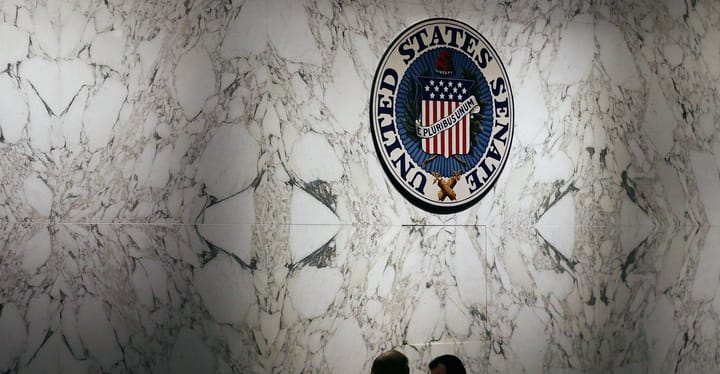
The U.S. Senate blocked a landmark digital asset market structure bill in a 49-50 procedural vote, dealing a major blow to crypto markets and industry lobbying efforts.
Source image: wealthmanagement.com
wealthmanagement.comSenate Rejects the Clarity Act in High-Stakes Vote
The U.S. Senate officially blocked a long-stalled, landmark digital asset market structure bill in a procedural vote that failed 49-50, falling well short of the 60 votes required to move the legislation forward. The proposed legislation, widely known as the Clarity Act, was designed to create a comprehensive regulatory framework for the $2.3 trillion cryptocurrency market, primarily shifting regulatory authority over digital assets to the Commodity Futures Trading Commission.
Despite heavy lobbying and substantial financial investments from the cryptocurrency sector into political campaigns, the bill hit an insurmountable wall over partisan and ethical divisions. Senate GOP leaders had released an updated version of the text late Sunday night, incorporating new measures intended to expand state attorneys' general enforcement abilities over ethics rules and introducing a Treasury Department "circuit-breaker" regarding stablecoin rewards. However, these late-hour concessions failed to appease a unified Democratic caucus.
The Core Conflict: Presidential Ethics and Stablecoin Yields
The primary point of contention centered on ethics provisions designed to address President Donald Trump's significant cryptocurrency business interests and multi-billion-dollar digital asset holdings accumulated while in office. Democrats argued that the proposed guardrails did not go far enough to prevent executive enrichment, pointing to assets like meme coins launched prior to his second term. Senators on the left emphasized that Congress should not pass sweeping digital asset legislation that enables high-ranking officials to profit personally while working families grapple with broader economic pressures.
Beyond ethics, the legislation was bogged down by fierce disputes between the crypto industry and traditional banking institutions. Banking trade groups aggressively opposed provisions allowing stablecoin issuers to offer rewards, interest, or yields to users, arguing that such features would trigger severe deposit flight from traditional banks and diminish lending capacity across the broader economy. These compounding friction points ultimately eroded bipartisan support, resulting in a strict party-line defeat with a few independent and skeptical Republican votes joining the opposition.
Immediate Market Implications and Industry Repercussions
Financial markets reacted swiftly and harshly to the legislative setback. Shares of major crypto exchange Coinbase Global Inc. experienced steep declines, while stablecoin issuer Circle Internet Group Inc. also saw sharp losses. Bitcoin, the world's largest cryptocurrency, dropped significantly below the $75,000 threshold following the failed vote. The market sell-off underscores how deeply investors and institutional players had priced in hopes of achieving regulatory clarity and institutional protection under federal law.
The failure represents a substantial reality check for crypto advocates and political action committees, which spent hundreds of millions of dollars attempting to secure durable, favorable rules. With comprehensive congressional action effectively sidelined just two months ahead of the midterm elections, the federal government's approach to digital assets is expected to shift back toward fragmented agency enforcement and executive branch initiatives.
What Investors and Executives Should Watch Next
For executives, founders, and institutional investors navigating the digital asset ecosystem, several critical developments warrant close monitoring in the wake of the Senate vote:
- Executive and Agency Action: With Congress at an impasse, the White House and federal financial regulators have signaled a readiness to pursue parts of their digital asset agenda through executive channels and existing agency mandates.
- Midterm Election Dynamics: As lawmakers pivot fully toward the November midterm elections, the political positioning of crypto as both a campaign finance issue and an ethics talking point will heavily influence future legislative viability.
- Banking and Stablecoin Battles: The ongoing turf war between traditional financial institutions and decentralized finance advocates over stablecoin yield generation will remain a central lobbying battleground in future congressional sessions.
- International Competitiveness: Industry stakeholders and administration officials continue to warn that prolonged domestic regulatory paralysis risks pushing fintech innovation, capital, and talent toward more accommodating foreign jurisdictions.
For further details on the legislative proceedings and compliance updates, read the original report on WealthManagement.com.
Continue reading
Related coverage in Banking
wealthmanagement.com
Orion Ascent 2027 Conference Announced: Focusing on AI and Household-Level Wealth Personalization
Orion has opened registration for Ascent 2027 in Orlando, focusing on practical AI workflows, household-level personalization, and scaling advisory capacity.
3 min read
wealthmanagement.com
Wealth Management CIOs Pivot to Short-Duration Bonds Amid Market Shudders
Rising bond yields are transforming fixed-income strategies, allowing wealth management chief investment officers to capture attractive yields at shorter durations with lower risk.
2 min read
wealthmanagement.com
IRS Guidance Prompts Compliance Experts to Warn RIAs Over Section 351 ETF Conversions
Compliance experts warn registered investment advisors to reconsider Section 351 ETF conversions for tax purposes following recent IRS guidance targeting tax avoidance.
3 min read
wealthmanagement.com
Fidelity Raises RIA Custody Minimum to $100M, Pressuring Smaller Advisory Firms
Fidelity Investments is raising its RIA custody asset minimum to $100 million, requiring existing advisors below the threshold to exit or transition off the platform by June 30, 2027.
3 min read