SEC Charges Florida Man Over Alleged Scheme Targeting Law Enforcement Investors
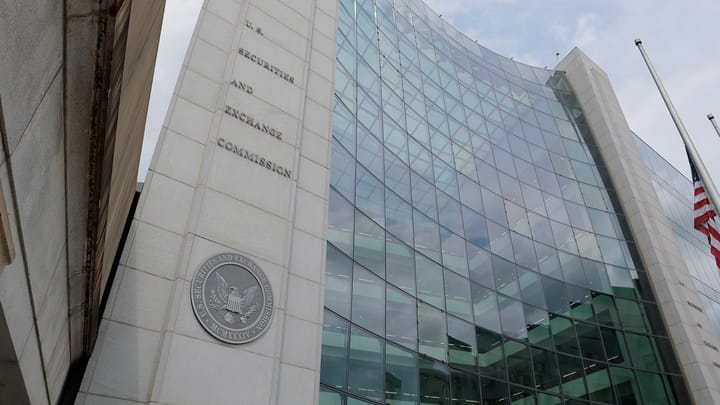
The SEC has charged Michael Williams and CMI Capital with defrauding South Florida law enforcement members through fake trading profits and misappropriated funds.
Source image: wealthmanagement.com
wealthmanagement.comOverview of the SEC Charges Against CMI Capital
The Securities and Exchange Commission formally announced charges against CMI Capital LLC and its founder and manager, Michael D. Williams, originating from Port St. Lucie, Florida. The regulatory enforcement action centers on an alleged fraudulent investment scheme that targeted a vulnerable and trusting demographic: current and retired law enforcement officers across South Florida. Operating between October 2023 and August 2024, Williams allegedly raised approximately $860,000 across two distinct funds under his control by leveraging personal professional connections. Many victims placed their trust in Williams because of his prior association with a third-party police and firefighter pension plan administration entity.
Mechanics of the Deception
According to the SEC's complaint filed in the U.S. District Court for the Southern District of Florida, Williams utilized sophisticated misrepresentations to lure investors. He marketed the funds as highly successful pooled vehicles utilizing proprietary trading strategies across stocks, options, and crypto assets that supposedly yielded extraordinary returns exceeding 140 percent with little to no risk. Investigators note that these claims were entirely fictitious; Williams lacked a proven trading strategy and possessed a history of severe trading losses. To maintain the illusion of success, the defendants routinely distributed fabricated investor letters, monthly reports, and cropped graphic screenshots showing exorbitant trading profits. Rather than investing the capital as promised, Williams allegedly misappropriated roughly $384,000 for personal expenditures, including high-end vacations, credit card balances, and a sports car. Following the detection of the scheme, records show Williams attempted partial remediation by repaying upwards of $375,000 to certain investors. The defendants have agreed to a bifurcated settlement subject to court approval.
Market Implications for Private Funds and Affinity Fraud
This enforcement action highlights persistent vulnerabilities regarding affinity fraud—where fraudsters exploit the trust within distinct community groups, such as law enforcement personnel, religious organizations, or professional associations. For institutional investors, wealth managers, and regulatory compliance professionals, the case underscores several critical considerations:
- Erosion of Retail Trust: Schemes targeting niche demographics damage overall market confidence, making individual retail investors more skeptical of legitimate alternative investment vehicles.
- Verification Failures: The ease with which cropped screenshots were used to deceive sophisticated or trusting individuals emphasizes the absolute necessity of independent, third-party custody and verified administrator reporting.
- Regulatory Scrutiny: The SEC continues to prioritize aggressive enforcement against unregistered entities and individuals peddling unregistered offerings with inflated, unrealistic performance metrics.
What Investors and Executives Should Watch
As this case proceeds through the U.S. District Court for the Southern District of Florida, market participants should monitor several key developments:
- Bifurcated Settlement Approval: Track the final court approval of the settlement terms agreed upon by Williams and CMI Capital.
- Asset Recovery and Disgorgement: Observe the extent to which remaining misappropriated funds are recovered and redistributed to affected law enforcement investors.
- Compliance Protocols: Financial institutions and fund administrators will likely face intensified demands for transparency, independent auditing, and stringent verification standards to protect client assets from deceptive actors.
Original source: Wealth Management
Continue reading
Related coverage in Banking
wealthmanagement.com
Orion Ascent 2027 Conference Announced: Focusing on AI and Household-Level Wealth Personalization
Orion has opened registration for Ascent 2027 in Orlando, focusing on practical AI workflows, household-level personalization, and scaling advisory capacity.
3 min read
wealthmanagement.com
Wealth Management CIOs Pivot to Short-Duration Bonds Amid Market Shudders
Rising bond yields are transforming fixed-income strategies, allowing wealth management chief investment officers to capture attractive yields at shorter durations with lower risk.
2 min read
wealthmanagement.com
IRS Guidance Prompts Compliance Experts to Warn RIAs Over Section 351 ETF Conversions
Compliance experts warn registered investment advisors to reconsider Section 351 ETF conversions for tax purposes following recent IRS guidance targeting tax avoidance.
3 min read
wealthmanagement.com
Fidelity Raises RIA Custody Minimum to $100M, Pressuring Smaller Advisory Firms
Fidelity Investments is raising its RIA custody asset minimum to $100 million, requiring existing advisors below the threshold to exit or transition off the platform by June 30, 2027.
3 min read