Ryanair CEO Michael O'Leary Issues Apology Over Controversial 'High-Fare Rapists' Remarks
Ryanair chief executive Michael O'Leary has issued a public apology, admitting his choice to describe competitor airlines as 'high-fare rapists' was careless and offensive.
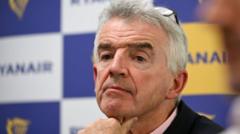
Source image: bbc.com
bbc.comContext and Background of the Controversy
Ryanair chief executive Michael O'Leary found himself at the center of a major public storm following remarks made ahead of the airline's annual general meeting in Dublin. While discussing market dynamics and the rising ticket prices of competitors such as Aer Lingus, Lufthansa, and British Airways, O'Leary used the phrase 'high-fare rapists' to characterize rival carriers. Initially, when pressed by journalists on whether the terminology was appropriate or if it trivialized sexual violence, O'Leary doubled down on his comments, defending them as an effective descriptor and insisting he would happily offend rival airlines.
The statements triggered an immediate and fierce backlash. High-profile figures, including political leaders in Ireland and the UK as well as advocacy organizations like the Dublin Rape Crisis Centre, condemned the rhetoric as lazy, uninformed, and deeply damaging to survivors of sexual violence. Despite initial resistance—during which O'Leary rejected calls for an apology and turned down an offer for educational training on sexual violence—mounting pressure and intense scrutiny forced a reversal.
The Apology and Reversal
In a video message broadcast publicly, O'Leary altered his stance entirely, offering a sincere and unreserved apology to survivors and anyone offended by his words. He stated that subsequent conversations with family, friends, and colleagues over a ten-day period helped him understand the profound hurt caused by his choice of language. Describing his previous comments as a careless use of words, the Ryanair boss promised that the mistake would not be repeated and expressed a commitment to doing better in the future.
Key elements of the fallout include:
- Severe condemnation from sexual violence charities and advocacy groups, including the Dublin Rape Crisis Centre.
- Direct criticism from prominent political figures in both Ireland and the UK, such as the UK Transport Secretary and Ireland's deputy premier.
- An initial refusal to apologize, followed by a complete reversal and public video apology acknowledging the severe offense caused.
Market Implications and Corporate Governance
For investors and corporate executives, this episode highlights the tangible risks associated with unscripted executive commentary and provocative public relations strategies. While Ryanair has historically built part of its brand identity on the outspoken, provocative persona of its leadership, crossing into comparisons involving violent crime carries heavy corporate reputation costs. Stakeholders are increasingly evaluating environmental, social, and governance (ESG) metrics, where executive conduct and corporate culture play pivotal roles in institutional investment decisions.
Although low-cost carriers rely heavily on price sensitivity and aggressive marketing to drive passenger volumes, alienating demographic segments—particularly female travelers and socially conscious consumers—can erode brand equity. Corporate governance experts will likely view this incident as a critical reminder of the need for strict communication guardrails, even for charismatic founders and chief executives whose personal brands are deeply intertwined with company identity.
What Readers and Investors Should Watch
As this situation develops, market watchers and industry analysts should monitor several critical indicators:
- Any potential impact on forward booking trends or customer sentiment metrics across Ryanair’s key European routes.
- Reactions from institutional investors regarding executive oversight and corporate communication policies at upcoming shareholder briefings.
- Broader regulatory or industry code-of-conduct discussions concerning executive accountability and public discourse in the aviation sector.
For more details on this unfolding story, read the original report on BBC News.
Continue reading
Related coverage in Rankings
bbc.com
Thames Water Issues Apology Following Major £145,000 Billing Error
Thames Water has issued a formal apology to a family after a severe customer billing mistake totaling £145,000, highlighting ongoing operational challenges.
3 min read
bbc.com
UK Engages EU Allies Over Emergency Diesel Stock Release Amid US Export Ban Threats
The UK is in talks with European partners to potentially release strategic fuel reserves as US President Donald Trump threatens a diesel export ban to curb domestic prices.
3 min read
bbc.com
Travelodge Under Fire After Review Reveals Systemic Safety Failures and Room Intrusions
A damning independent review reveals Travelodge failed a sexual assault victim at every turn, with unauthorized room intrusions still plaguing one in ten hotels.
3 min read
bbc.com
Trump's AI Rebrand Sparks Unprecedented Demand for Slovenian Domain Names
Donald Trump's proposed rebrand of artificial intelligence to super intelligence, or SI, has triggered a massive surge in demand for Slovenian website domains.
2 min read