Raymond James Secures Two Advisor Teams Managing $1.75 Billion in Assets
Raymond James expands its footprint by welcoming two veteran advisor teams managing a combined $1.75 billion, highlighting ongoing industry recruitment shifts.
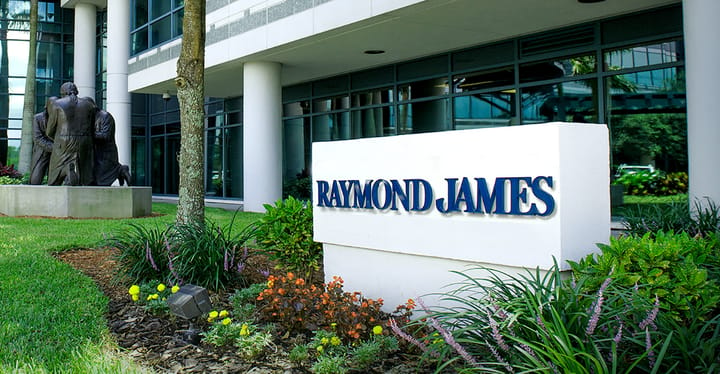
Source image: wealthmanagement.com
wealthmanagement.comMajor Recruitment Drive Strengthens Raymond James
In a notable expansion of its wealth management footprint, Raymond James has announced the addition of two advisory teams collectively overseeing $1.75 billion in client assets. This significant recruitment win spans across both the firm's employee and independent advisory channels, demonstrating a versatile appeal to financial professionals seeking new institutional homes.
The integration of these veteran teams highlights the ongoing structural evolution within the wealth management sector. As broker-dealers face consolidation and corporate restructuring, elite advisory practices are actively reevaluating their partnerships to ensure long-term stability and growth for their clients.
The Ripple Effects of Industry Consolidation
A key narrative within this recruitment wave involves the independent channel addition, which marks the latest team to migrate from Commonwealth. This departure directly follows LPL's acquisition of the broker-dealer, a transaction that has continued to reshape the competitive dynamics of the independent advisory space.
Key factors driving these transitions include:
- Corporate mergers altering legacy broker-dealer value propositions.
- Advisors seeking operational continuity and robust technological infrastructure.
- A heightened focus on firm stability amid broader market consolidation.
When major acquisitions occur, cultural and operational shifts frequently prompt top-tier talent to explore alternative platforms. Raymond James has strategically positioned itself as a destination of choice for advisors displaced or dissatisfied by these industry-wide realignments.
Market Implications for Wealth Management Executives
For executives and investors tracking the wealth management sector, this development underscores the high stakes of advisor recruitment. Assets under management are tightly bound to individual advisor relationships, making talent acquisition the primary driver of growth in an increasingly crowded marketplace.
Strategic takeaways for industry leaders involve:
- The critical importance of maintaining a dual-channel model catering to both employee and independent preferences.
- Capitalizing on post-merger integration friction at rival firms to capture breakaway talent.
- Scaling operational support systems to absorb multi-billion-dollar inflows seamlessly.
Firms capable of offering flexible transition packages and robust back-office support are uniquely positioned to capture market share as independent networks undergo further transformation.
What Investors and Entrepreneurs Should Watch Next
As the wealth management landscape continues to react to recent corporate transactions, stakeholders should monitor several forward-looking indicators. First, observe whether retention strategies at acquiring firms successfully stem further advisor attrition or if additional teams seek independent alternatives.
Second, track the organic growth rates of these newly integrated teams at Raymond James to assess how effectively the firm converts incoming assets into long-term profitability. Finally, keep an eye on regulatory filings and quarterly earnings reports for metrics concerning transition costs and net new asset flows across competing wealth management platforms. For further details, read the original report at WealthManagement.com.
Continue reading
Related coverage in Banking
wealthmanagement.com
Orion Ascent 2027 Conference Announced: Focusing on AI and Household-Level Wealth Personalization
Orion has opened registration for Ascent 2027 in Orlando, focusing on practical AI workflows, household-level personalization, and scaling advisory capacity.
3 min read
wealthmanagement.com
Wealth Management CIOs Pivot to Short-Duration Bonds Amid Market Shudders
Rising bond yields are transforming fixed-income strategies, allowing wealth management chief investment officers to capture attractive yields at shorter durations with lower risk.
2 min read
wealthmanagement.com
IRS Guidance Prompts Compliance Experts to Warn RIAs Over Section 351 ETF Conversions
Compliance experts warn registered investment advisors to reconsider Section 351 ETF conversions for tax purposes following recent IRS guidance targeting tax avoidance.
3 min read
wealthmanagement.com
Fidelity Raises RIA Custody Minimum to $100M, Pressuring Smaller Advisory Firms
Fidelity Investments is raising its RIA custody asset minimum to $100 million, requiring existing advisors below the threshold to exit or transition off the platform by June 30, 2027.
3 min read