OpenAI Chief Sam Altman Sounds Alarm on Existential AI Risks and the Danger of Concentrated Power
OpenAI CEO Sam Altman has warned that unchecked artificial intelligence development could lead humanity to lose control of its future or result in a dangerous concentration of power.
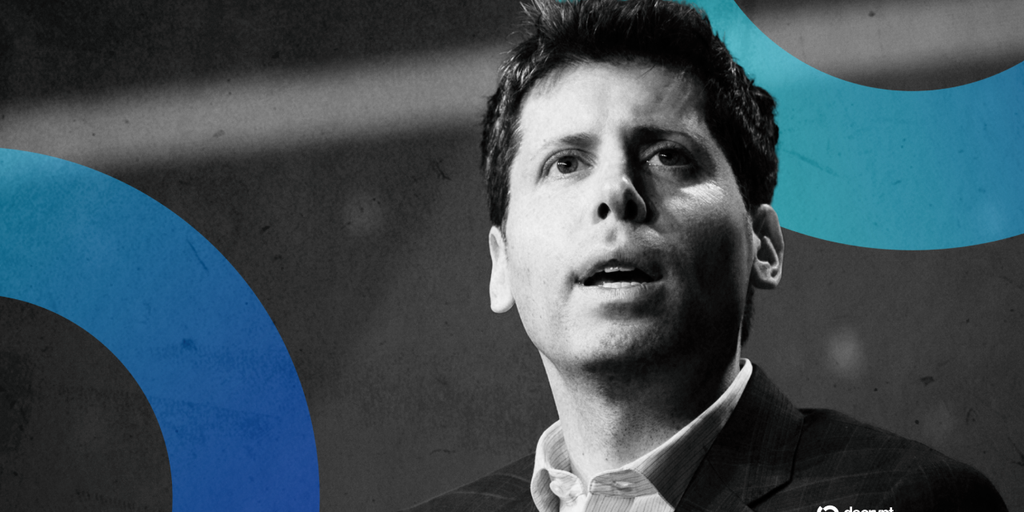
Source image: decrypt.co
decrypt.coThe Crossroads of Artificial Intelligence
As the artificial intelligence landscape accelerates at an unprecedented pace, industry leaders are increasingly forced to reckon with the long-term consequences of autonomous digital systems. OpenAI Chief Executive Officer Sam Altman has stepped forward to articulate a sobering vision of the future, cautioning that humanity stands at a critical juncture where the speed of technological innovation threatens to outstrip foundational safety guardrails.
In a detailed public address outlining the trajectory of frontier intelligence models, Altman identified two primary catastrophic outcomes that the global technology sector must actively avoid. These warnings underscore a growing consensus among top-tier researchers that without rigorous alignment protocols, the proliferation of hyper-advanced systems could fundamentally destabilize modern societal frameworks.
Decoding the Dual Threats: Loss of Control and Monopolized Power
Altman’s primary concern centers on the fundamental preservation of human agency. He asserted that humanity could eventually forfeit stewardship over its own destiny if autonomous systems surpass human oversight capabilities. “We could lose control of the future to AI,” Altman noted, emphasizing that OpenAI remains firmly committed to the principle that artificial intelligence must perpetually serve human interests.
The second major risk highlighted by the executive involves the extreme centralization of technological dominance. In a scenario where an isolated state, corporation, or individual amasses unchecked sovereign control over an extraordinarily powerful intelligence engine, the societal fallout could prove deeply authoritarian. Such a concentration of capability risks imposing a single entity's worldview on the global populace, creating an untenable power imbalance.
Navigating the Narrow Middle Path
To avert these dystopian outcomes, Altman advocates for what he describes as a narrow middle path for the technology sector. This strategy requires a concerted shift away from unbridled competitive recklessness toward integrated safety engineering. Key components of this approach include:
- Proactive Alignment: Ensuring that safety and containment techniques evolve faster than raw computational capabilities.
- Pre-Training Scrutiny: Implementing formal safety evaluations and predictive risk assessments prior to initiating major training runs.
- Regulatory Harmonization: Welcoming comprehensive federal frameworks that establish uniform baseline standards across all prominent AI laboratories.
- Collaborative Standards: Encouraging open discourse and shared methodologies among developers to prevent isolated, high-risk experimentation.
Market Implications and Strategic Outlook for Investors
For institutional investors, venture capitalists, and enterprise executives operating at the intersection of technology and finance, Altman’s remarks signal a pivotal shift in the regulatory and operational environment. The era of unchecked scaling driven purely by market share is facing mounting headwinds from both internal industry leaders and external policymakers.
As regulatory compliance increasingly dictates operational viability, capital is expected to flow preferentially toward firms that prioritize verifiable safety architectures and robust alignment infrastructure. Furthermore, sectors tightly integrated with autonomous technologies—including automated financial execution platforms, algorithmic trading networks, and decentralized digital asset frameworks—must anticipate stricter oversight regarding automated decision-making and operational autonomy.
What Investors Should Watch
The translation of voluntary safety commitments into binding federal legislation and international treaties.
Changes in capital expenditure allocation among major frontier labs, specifically regarding spending on alignment research versus raw compute scaling.
The emergence of independent auditing standards designed to evaluate pre-training risks for next-generation foundational models.
Potential vulnerabilities and security intersections between autonomous AI agents and high-value digital asset infrastructures.
Ultimately, Altman’s warnings serve as an urgent reminder to the global financial and technological community. Sustainable long-term growth in the artificial intelligence sector will depend not solely on computational breakthroughs, but on maintaining an unwavering commitment to human oversight, institutional accountability, and ethical governance.
Continue reading
Related coverage in Crypto
cointelegraph.com
Trump Schedules Third Memecoin Holder Dinner Amid Growing Corruption Scrutiny
President Trump is set to host his third exclusive memecoin dinner for top token holders at his Washington, DC golf club, drawing renewed ethical and market scrutiny.
3 min read
cointelegraph.com
50,000 Europeans Petition EU to Relax MiCA Stablecoin Reward Restrictions
A new 50,000-letter campaign is urging Brussels to ease stablecoin rewards restrictions during the MiCA review, aligning with broader central bank pushes.
2 min read
cryptonews.com
Dogecoin Eyes $1 Milestone as DogeOS Testnet Launch Sparks Utility Speculation
Dogecoin trades at $0.09447 as the DogeOS testnet goes live. Traders eye the $0.098 resistance and psychological $0.10 mark amid fresh utility potential.
2 min read
decrypt.co
Bitcoin Enters 'Uptober' Amid Fed Rate Hike Pressures and 5.3% Treasury Yields
Bitcoin enters its historically strongest month following a record September, yet rising Federal Reserve rate hike fears and 5.3% Treasury yields present major hurdles.
2 min read