Nvidia Shatters Wall Street Estimates with $96 Billion Quarter as AI Infrastructure Demand Accelerates
Nvidia posted a record-breaking $96.2 billion quarterly revenue, doubling year-over-year figures as global enterprise and hyperscaler demand for AI hardware surges unchecked.
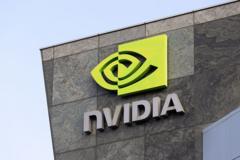
Source image: bbc.com
bbc.comNvidia Delivers Record-Breaking $96.2 Billion Quarter
Nvidia Corporation has once again defied market gravity, reporting an astounding fiscal second-quarter revenue of $96.2 billion. This figure represents a phenomenal 106% surge year-over-year, comfortably outstripping consensus Wall Street estimates and reinforcing the company's status as the definitive bellwether for the artificial intelligence boom. Net income skyrocketed to nearly $59.7 billion, fueled by robust operating margins and unabated enterprise appetite for cutting-edge semiconductor solutions.
The primary driver behind this historic financial milestone was Nvidia's Compute and Networking segment, which encompasses its market-leading data center hardware. Data center revenue climbed to an unprecedented $89.0 billion, marking a 117% increase from the prior year. As hyperscalers, sovereign entities, and emerging AI startups race to secure foundational computing power, Nvidia's hardware remains the absolute gold standard for training and deploying large-scale frontier models.
The Broader Market Context and Economic Implications
The sheer scale of Nvidia’s financial expansion reflects a fundamental structural shift in global enterprise IT spending. Major technology platforms, including Microsoft, Amazon Web Services, Alphabet, and Meta, continue to commit massive capital expenditures toward next-generation data center infrastructure. According to company leadership, the artificial intelligence landscape has matured past its initial exploratory phase and entered a profound commercial inflection point.
- Infrastructure Scale: Multiple frontier AI labs and cloud providers are scaling computing clusters in parallel to meet expanding commercial utility.
- Ecosystem Expansion: Demand is no longer concentrated within a single dominant player, but is instead supported by a diversified ecosystem of open-source initiatives and enterprise adopters.
- Forward Guidance: Nvidia's management projected third-quarter revenue of approximately $108 billion, signaling that momentum will continue to accelerate.
Strategic Outlook and Supply Chain Dynamics
Despite the overwhelmingly positive earnings report, market analysts and institutional investors remain vigilant regarding potential operational bottlenecks. Executive leadership noted during the earnings call that overall revenue growth is currently constrained more by supply limitations than by any softening of end-user demand. As production scales up for next-generation architectures like Vera Rubin, securing adequate manufacturing capacity across advanced packaging nodes remains critical to maintaining Nvidia's trajectory.
Furthermore, questions have occasionally been raised regarding the circular nature of tech ecosystem financing, where hardware suppliers take equity stakes in emerging AI startups that subsequently purchase their equipment. However, management has forcefully defended these strategic allocations, characterizing them as generational opportunities to solidify long-term network effects across the technology sector.
What Investors Should Monitor Closely
As the market digests these record figures, stakeholders should evaluate several core vectors moving forward:
- Gross Margin Sustainability: Monitoring whether Nvidia can maintain its impressive 75% gross margins as production ramps up for newer, highly complex processor lines.
- Hyperscaler Capital Expenditure Plans: Tracking quarterly spending updates from major cloud providers to gauge the long-term runway of enterprise AI adoption.
- Geopolitical and Regulatory Headwinds: Assessing potential impacts from export controls and international trade policies governing high-performance computing distribution in key overseas markets.
Ultimately, Nvidia's latest financial disclosure demonstrates that the commercialization of artificial intelligence is translating directly into tangible, massive corporate revenue. For enterprise leaders and investors alike, the primary challenge is no longer questioning whether the AI revolution is real, but adapting fast enough to keep pace with its rapid evolution.
Continue reading
Related coverage in Technology
techcrunch.com
OpenAI Integrates Virtual Try-On and Shopping Features into ChatGPT
OpenAI introduces new shopping capabilities to ChatGPT, allowing users to virtually try on apparel and accessories using personal photos and save favorites.
3 min read
techcrunch.com
Google Launches First Advanced Chip for Space Data Centers as SpaceX Launch Demands Mount
Google has launched its first advanced chip into orbit to pave the way for space data centers, though executives estimate SpaceX's Starship must fly 1,800 times first.
2 min read
techcrunch.com
Fervo Energy Completes World's First Enhanced Geothermal Power Plant in Record 23 Months
Fervo Energy has successfully completed the world's first enhanced geothermal power plant in under two years, signaling a major breakthrough for clean energy infrastructure.
3 min read
techcrunch.com
Opus 5.5 AI Writing Tells Reveal Unique Statistical Signatures for Investors and Executives
New research into Opus 5.5's generated text uncovers distinct linguistic signatures, such as the frequent overuse of the word dependable, signaling major shifts in content identification.
3 min read