Nvidia Crushes Wall Street Expectations With $96B Revenue as CEO Declares AI Golden Age
Nvidia reports record quarterly revenue of $96.2 billion, soaring 106% year-over-year and reinforcing the unstoppable momentum of global artificial intelligence infrastructure.
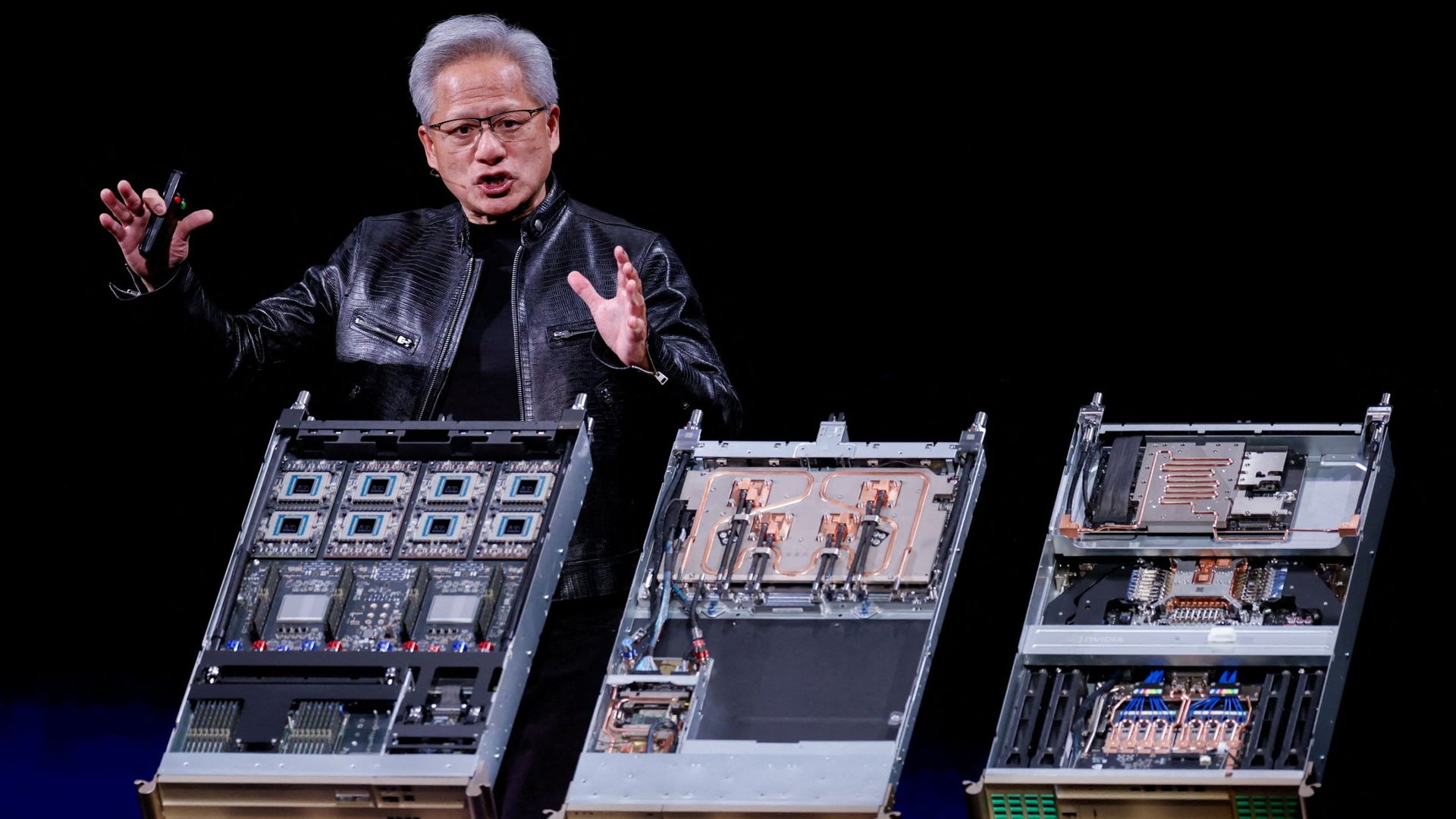
Source image: skynews.com
skynews.comNvidia Shatters Forecasts With a Staggering $96.2 Billion Quarter
In a financial showing that once again underscores its unparalleled dominance in the modern technology landscape, Nvidia has reported a breathtaking second-quarter revenue of $96.2 billion, representing a phenomenal 106% increase compared to the same period last year. Wall Street analysts, who had already set elevated bars for the semiconductor leader, watched as actual figures comfortably outpaced consensus projections of roughly $92 billion. Net income experienced a parallel surge, climbing to $59.7 billion, while adjusted earnings per share reached $2.22, surpassing expectations of $2.09.
Speaking to investors and analysts during the earnings call, Chief Executive Officer Jensen Huang characterized the current market landscape as a definitive inflection point for enterprise technology. According to Huang, artificial intelligence has successfully transitioned from experimental deployments into practical, highly profitable operations where compute capacity directly translates into revenue generation.
Data Center Dominance and the Infrastructure Super-Cycle
The primary driver behind Nvidia's meteoric financial performance remains its powerhouse data center segment. Generating a record-shattering $89 billion during the quarter, the division experienced a 117% year-over-year expansion. This segment has become the foundational backbone for the global artificial intelligence boom, supplying elite graphics processing units and comprehensive networking architectures to hyperscale cloud providers and emerging AI labs alike.
Key performance drivers underpinning this vertical include:
- Massive capital expenditure commitments from major cloud service providers expanding their AI clusters.
- Expanding enterprise adoption of agentic AI frameworks and specialized computational workloads.
- Strategic infrastructure partnerships, including expanded deployments with global cloud infrastructure giants.
- Continued international momentum outside of traditional restricted regional markets.
Robust Forward Guidance and Margin Management
Looking ahead, Nvidia leadership provided a fiscal outlook that further alleviated anxieties regarding a potential deceleration in technology spending. The company projected third-quarter revenue of approximately $108 billion, eclipsing the average analyst forecasts. Furthermore, management indicated that fiscal-year growth trajectories are tracking significantly higher than initial consensus estimates suggested.
However, executives addressed underlying cost pressures transparently. Extreme spikes in global memory component costs have created supply-chain bottlenecks, prompting management to reset expectations regarding near-term gross margins. While adjusted gross margins stood strong at 75% for the reported quarter, executives project a temporary dip before recovering as upcoming production ramps take full effect.
Market Implications and What Investors Should Watch
As a company commanding a market capitalization hovering around $5 trillion, Nvidia's quarterly disclosures function as a macroeconomic proxy for the entire artificial intelligence trade. These stellar results effectively quiet immediate fears of an imminent market correction or a bursting tech bubble, demonstrating that end-user monetization of AI tokens is moving forward at an accelerated pace.
For institutional investors, venture capitalists, and corporate executives, several critical vectors require close observation moving forward:
- The progression and yield rates of next-generation hardware architectures entering full production cycles.
- The sustainability of capital expenditure budgets among major hyperscale tech platforms.
- Fluctuations in gross margins as component cost inflation and specialized memory pricing evolve.
- The pace at which enterprise customers successfully scale productive, revenue-generating AI applications.
Ultimately, Nvidia's latest performance cements its status not merely as a hardware vendor, but as the central architect of the contemporary digital economy. While supply constraints and margin pressures will require careful navigation, the sheer velocity of global demand ensures that the company remains firmly at the epicenter of enterprise innovation.
Continue reading
Related coverage in Business
nytimes.com
David Ellison Targets CNN Leadership Continuity in Paramount Merger Talks
David Ellison is currently negotiating to retain CNN CEO Mark Thompson without oversight from CBS editor in chief Bari Weiss as parent companies navigate merger plans.
2 min read
bbc.com
Decoding Nike’s Slump: How Strategic Missteps Cost the Sportswear Titan Its Edge
Explore the factors behind Nike's dramatic market decline. Industry analysts dissect the self-inflicted strategic errors that shook the sportswear giant.
3 min read
bbc.com
Treasury Committee Directs HMRC to Investigate Tax Implications of Manchester City Case
The UK Treasury Committee has called on HMRC to closely examine potential tax ramifications arising from the high-profile Manchester City legal verdict.
3 min read
nytimes.com
US Imposes Sanctions on Russian Firm A7 Over Global Shell Company Evasion Schemes
The United States targets Russian financial firm A7 with new sanctions following reports of utilizing global shell companies to bypass existing economic restrictions.
3 min read