Nike’s S&P 100 Exit Marks the End of an Era as the Swoosh Faces Its Ultimate Survival Test
Nike is set to exit the S&P 100 index after nearly 18 years, highlighting a dramatic erosion in market capitalization as the sportswear icon navigates a severe strategic turnaround.
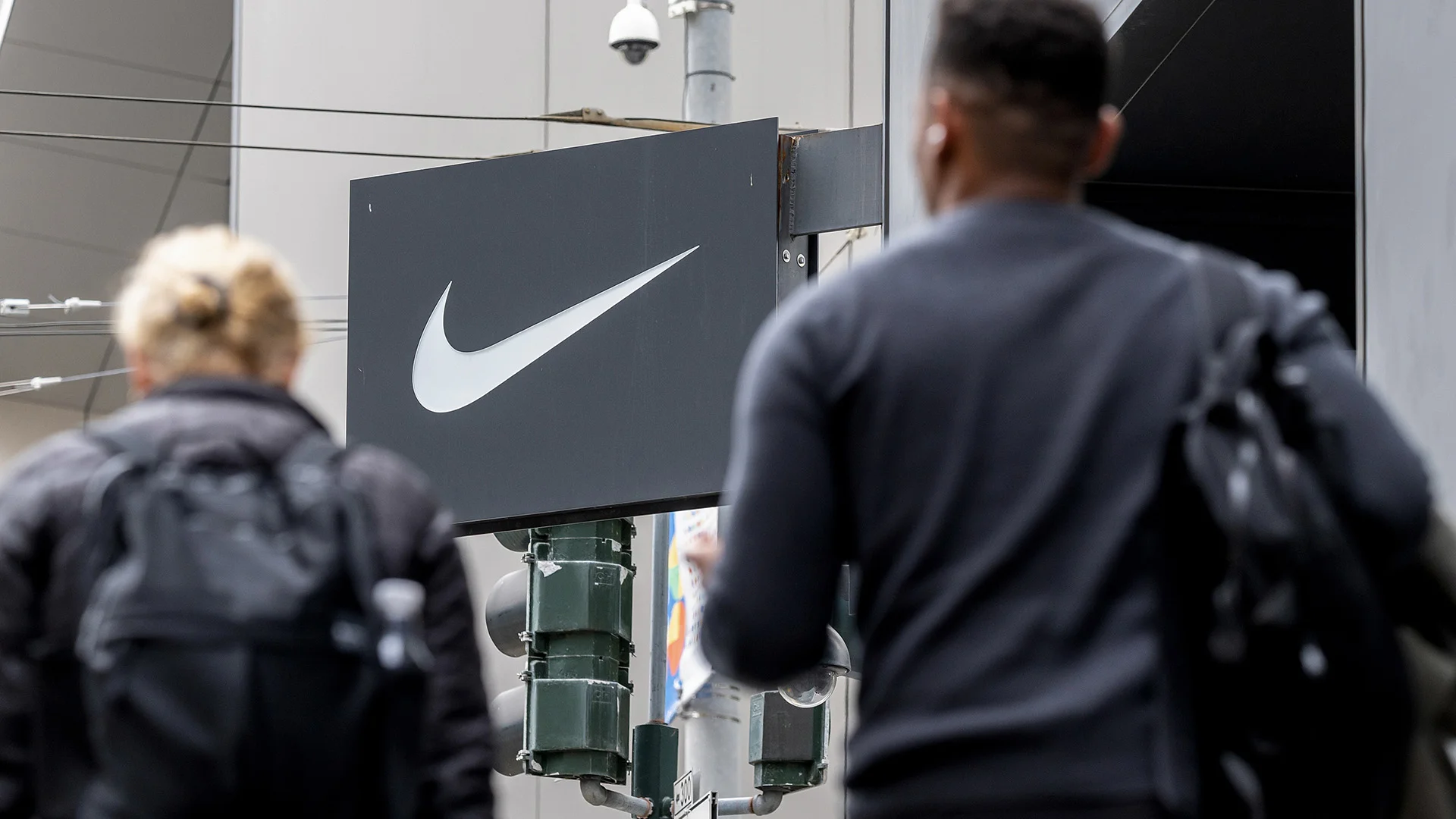
Source image: inc.com
inc.comThe Demotion of a Blue-Chip Icon
S&P Dow Jones Indices announced a sweeping quarterly rebalance that includes a major symbolic blow to American corporate royalty: Nike will be removed from the prestigious S&P 100 index. Having maintained its membership for nearly 18 years, the athletic footwear and apparel giant will officially exit the elite tier of mega-cap blue chips. While Nike will retain its positions in the broader S&P 500 and the Dow Jones Industrial Average, the index demotion brings sharp focus to the immense wealth destruction the company has experienced over recent years.
The decision by index providers reflects a persistent downward re-rating of Nike’s market value, which has plummeted roughly 78% from its historical peak. Once treated as an infallible growth engine capable of compounding indefinitely, Nike now trades with the profile of a high-stakes turnaround play. Information technology leaders such as Palo Alto Networks and Dell Technologies are slated to step into the vacancies left by departing legacy giants, illustrating a broader market rotation away from traditional consumer discretionary names and toward tech-heavy infrastructure.
An Anatomy of Decline: Strategic Miscalculations
The roots of Nike’s current predicament run deep, tracing back to a series of aggressive strategic pivots enacted under former leadership. Most notably, the company’s heavy-handed pivot toward a direct-to-consumer (DTC) model backfired. By pulling key product lines from foundational wholesale partners like Foot Locker and Dick's Sporting Goods to drive traffic to its proprietary ecosystem, Nike inadvertently surrendered prime retail shelf space.
Agile competitors such as On Running, Hoka, and New Balance eagerly rushed to fill the void, capturing significant market share among performance-driven consumers. Furthermore, Nike’s innovation pipeline stalled significantly, leaving its lifestyle and performance categories vulnerable. Compounding these domestic missteps, the company faced prolonged operational headwinds in international markets—most notably in Greater China, where sales have endured multiple consecutive quarters of contraction.
The Burden of Endorsements and Margin Pressure
As revenues leveled off and digital growth sputtered, Nike’s cost structures remained heavily front-loaded. Financial disclosures highlight a striking imbalance: the company carries approximately $15.5 billion in long-term endorsement commitments, representing an alarming percentage of its compressed market capitalization. These multi-million dollar contracts with elite global athletes, clubs, and federations were negotiated during an era of peak valuation, leaving current management with rigid financial obligations against a much leaner revenue base.
- Massive Capital Shifting: Tech-focused indices absorb capital while traditional consumer discretionary powerhouses face mandatory institutional rebalancing.
- Wholesale Reconciliation: Leadership is actively repairing relationships with multi-brand retailers to reclaim lost floor space.
- Endorsement Ratio Strain: Fixed sponsorship liabilities demand rigorous ROI scrutiny as overall enterprise value contracts.
Market Implications and What Investors Should Watch
The immediate mechanical fallout from the S&P 100 exit is largely contained, as funds tracking the broader S&P 500 will not be forced sellers. However, the psychological and signaling impact is profound. Institutional investors are shifting from passive optimism to demanding empirical evidence of operational recovery under new leadership.
Key indicators to monitor in coming quarters include gross margin stabilization, inventory health, the velocity of new product innovations, and real traction in rebuilding wholesale partnerships. While the depressed valuation may eventually attract deep-value contrarians, the overarching narrative remains clear: Nike’s turnaround is a marathon, not a sprint, and the market will no longer award premium pricing based on legacy reputation alone.
Continue reading
Related coverage in Business
nytimes.com
David Ellison Targets CNN Leadership Continuity in Paramount Merger Talks
David Ellison is currently negotiating to retain CNN CEO Mark Thompson without oversight from CBS editor in chief Bari Weiss as parent companies navigate merger plans.
2 min read
bbc.com
Decoding Nike’s Slump: How Strategic Missteps Cost the Sportswear Titan Its Edge
Explore the factors behind Nike's dramatic market decline. Industry analysts dissect the self-inflicted strategic errors that shook the sportswear giant.
3 min read
bbc.com
Treasury Committee Directs HMRC to Investigate Tax Implications of Manchester City Case
The UK Treasury Committee has called on HMRC to closely examine potential tax ramifications arising from the high-profile Manchester City legal verdict.
3 min read
nytimes.com
US Imposes Sanctions on Russian Firm A7 Over Global Shell Company Evasion Schemes
The United States targets Russian financial firm A7 with new sanctions following reports of utilizing global shell companies to bypass existing economic restrictions.
3 min read