Nike’s Fall from Grace: What the S&P 100 Exit Reveals About Corporate Vulnerability
Nike is exiting the elite S&P 100 index after nearly two decades, capping off a staggering multi-year decline that has erased over $200 billion in market capitalization.
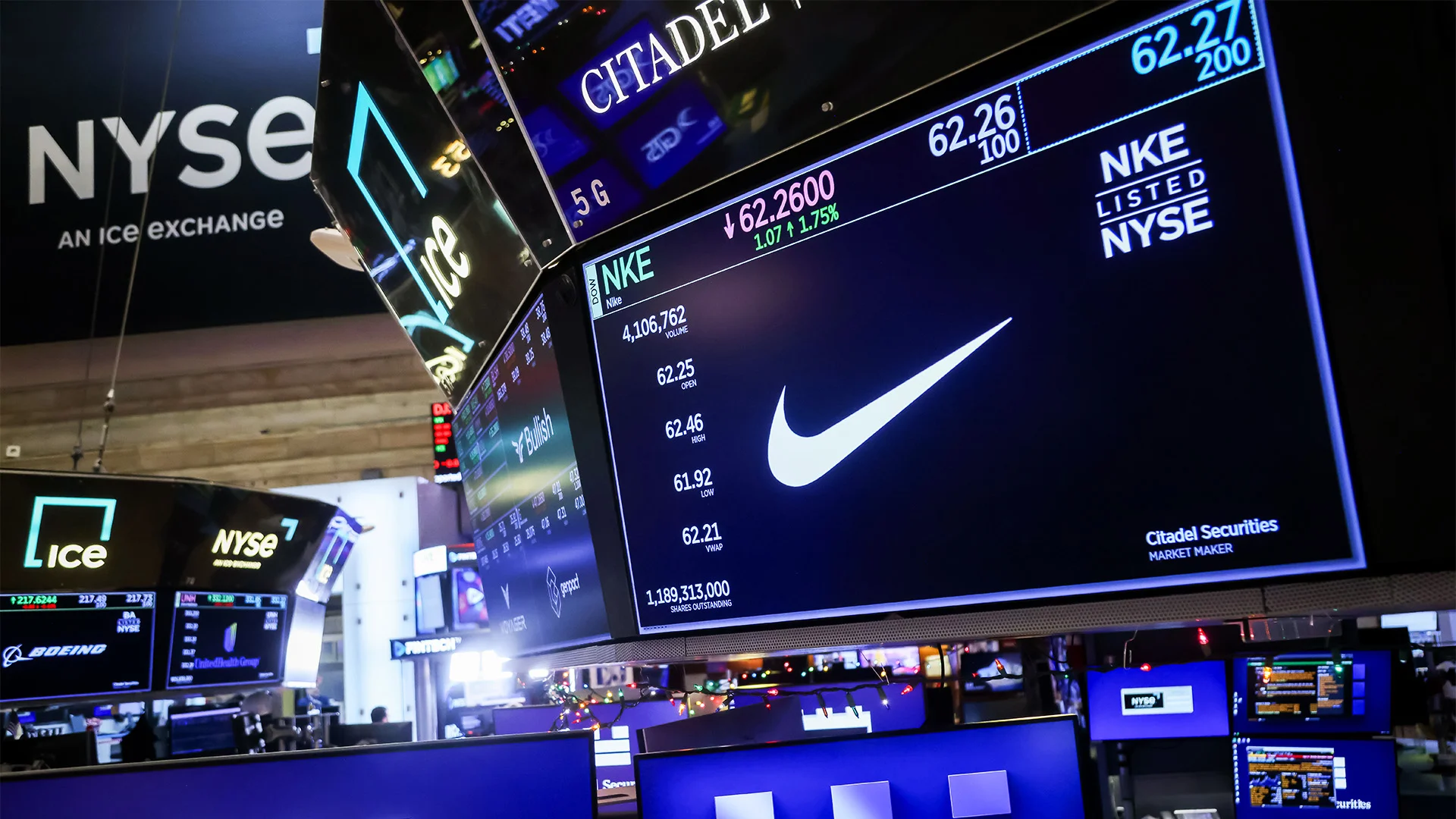
Source image: inc.com
inc.comA Watershed Moment for a Global Icon
The announcement by S&P Dow Jones Indices that Nike will be dropped from the elite S&P 100 index ahead of the September quarterly rebalance has sent shockwaves through the financial community. Having maintained its status as a cornerstone of American mega-cap blue chips for nearly 18 years, Nike’s departure is far more than a routine administrative adjustment. It is a glaring manifestation of a prolonged multi-year erosion that has witnessed the company's market capitalization collapse from a November 2021 peak of roughly $264 billion down to a fragile $57 billion.
While retail investors frequently panic over index rebalancing announcements, analysts emphasize that Nike will retain its positions in both the S&P 500 and the Dow Jones Industrial Average. Consequently, the mandatory passive fund liquidation will be relatively muted compared to what an exit from the broader market index would trigger. However, the psychological and reputational blow is profound. Nike is no longer deemed representative of the nation's premier tier of corporate heavyweights, exposing the stark reality of its long-term equity destruction.
Anatomy of a Slow-Motion Decline
The warning signs preceding Nike’s S&P 100 demotion were visible years in advance to astute market observers who looked past headline revenue figures. Under previous leadership, the company aggressively pivoted toward a direct-to-consumer (DTC) model while pulling back from critical wholesale relationships. This strategic miscalculation alienated core retail partners, left room for agile challenger brands to capture market share, and backfired severely as consumer traffic patterns shifted.
Compounding these domestic missteps were profound challenges overseas, particularly in Greater China. Once a robust engine of hyper-growth, Nike’s revenue in the region dropped nearly 30% over a five-year span, squeezed by shifting local consumer preferences, heightened domestic competition, and external geopolitical headwinds. Furthermore, sluggish innovation pipelines and a heavy reliance on legacy footwear lines left the brand vulnerable just as athletic apparel demands evolved toward fresh, disruptive market entrants.
- Market Capitalization Erosion: Plunged nearly 80% from its historic 2021 highs.
- Strategic Reversal: Current CEO Elliott Hill is actively working to repair neglected wholesale relationships and clear excess inventory.
- Geographic Headwinds: Deep revenue contractions in Greater China have crippled international growth targets.
- Index Status: Formally leaving the S&P 100 on September 21, though retention in the S&P 500 and Dow insulates it from catastrophic structural selling.
Market Implications and the Turnaround Horizon
As Nike enters a high-stakes turnaround phase under new leadership, the broader market implications extend well beyond athletic retail. The situation serves as an uncompromising reminder that premier brand equity and historical dominance do not insulate a corporation from structural complacency. Executives across all sectors are analyzing Nike's missteps as a masterclass in the dangers of ignoring early-stage operational friction while relying too heavily on historical momentum.
For investors, the central debate centers on whether Nike’s current valuation represents a compelling long-term entry point or a value trap. While turnaround efforts—such as rebuilding wholesale distribution channels and refocusing on core performance innovation—are underway, rebuilding structural margins will take quarters, if not years. The market must weigh the strength of Nike’s iconic global branding against the hard reality of diminished profitability and fierce competition.
What Investors and Executives Should Watch
As the dust settles on the S&P 100 exclusion, market participants should closely monitor several key performance indicators to gauge the efficacy of Nike’s ongoing restructuring initiatives:
- Wholesale Channel Recovery: Track the stabilization and growth metrics of revived multi-brand retail partnerships against direct-to-consumer declines.
- Inventory and Margin Health: Evaluate gross margin expansions and management's success in mitigating promotional discounting and tariff pressures.
- Greater China Trajectory: Monitor consumer sentiment and localized product acceptance metrics in the vital Asian market.
- Innovation Pipeline Velocity: Assess whether upcoming performance footwear and streetwear launches can successfully recapture cultural relevance from surging competitors.
Ultimately, Nike’s exit from the S&P 100 should be viewed not as an isolated tragedy, but as a textbook illustration of how financial markets eventually catch up to operational reality. For corporate leadership teams, the message is unequivocal: proactive adaptation must precede crisis, because lagging scorecards always arrive too late.
Continue reading
Related coverage in Business
nytimes.com
David Ellison Targets CNN Leadership Continuity in Paramount Merger Talks
David Ellison is currently negotiating to retain CNN CEO Mark Thompson without oversight from CBS editor in chief Bari Weiss as parent companies navigate merger plans.
2 min read
bbc.com
Decoding Nike’s Slump: How Strategic Missteps Cost the Sportswear Titan Its Edge
Explore the factors behind Nike's dramatic market decline. Industry analysts dissect the self-inflicted strategic errors that shook the sportswear giant.
3 min read
bbc.com
Treasury Committee Directs HMRC to Investigate Tax Implications of Manchester City Case
The UK Treasury Committee has called on HMRC to closely examine potential tax ramifications arising from the high-profile Manchester City legal verdict.
3 min read
nytimes.com
US Imposes Sanctions on Russian Firm A7 Over Global Shell Company Evasion Schemes
The United States targets Russian financial firm A7 with new sanctions following reports of utilizing global shell companies to bypass existing economic restrictions.
3 min read