Musk's Bold Starlink Vision: A Decade to Global Internet Dominance?
Elon Musk projects Starlink could provide the majority of the world's internet within a decade, signaling a potential paradigm shift in global connectivity.
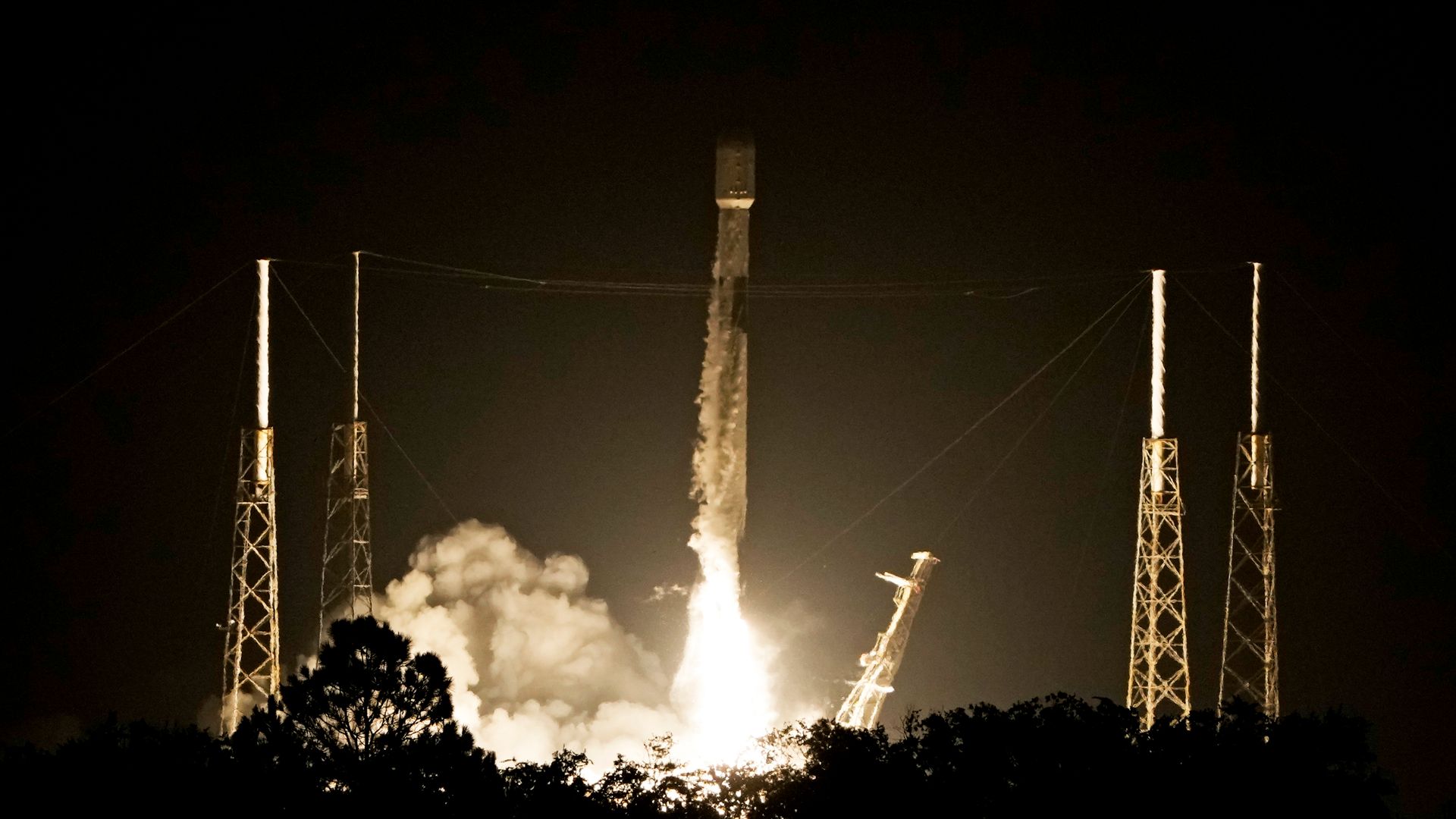
Source image: skynews.com
skynews.comMusk's Bold Starlink Vision: A Decade to Global Internet Dominance?
Elon Musk, the enigmatic CEO of SpaceX, has once again captured the attention of the global technology and financial communities with a audacious prediction: his satellite internet service, Starlink, could be providing the majority of the world's internet within the next decade. This isn't merely a technological aspiration; it's a declaration that, if realized, would fundamentally redraw the map of global connectivity and reshape the competitive landscape for internet service providers worldwide.
What Happened: A Vision for Ubiquitous Connectivity
Musk's assertion underscores the rapid expansion and increasing capabilities of the Starlink constellation. Comprising thousands of low Earth orbit (LEO) satellites, Starlink aims to deliver high-speed, low-latency internet access to virtually any location on Earth. The service has already made significant inroads, particularly in rural and remote areas where traditional broadband infrastructure is either nonexistent or inadequate. The ongoing deployment of more advanced satellites and ground stations, coupled with continuous technological refinements, positions Starlink as a formidable contender in the global internet market.
Why It Matters: Reshaping the Digital Divide and Market Dynamics
The significance of Musk's prediction cannot be overstated. Currently, a substantial portion of the world's population remains without reliable internet access. Starlink's ability to bypass traditional terrestrial infrastructure offers a compelling solution to bridge this digital divide, potentially unlocking economic and educational opportunities for billions. For businesses, this means expanded markets, new operational efficiencies, and a more globally interconnected workforce. For governments, it presents both opportunities for national development and challenges related to regulation and digital sovereignty.
Furthermore, this vision directly challenges the established order of telecommunications giants. Traditional ISPs, reliant on extensive fiber optic networks and ground-based infrastructure, could face unprecedented competition. While Starlink's initial focus has been on underserved areas, its increasing capacity and improving service quality could see it encroaching on urban markets, forcing incumbents to innovate and adapt at an accelerated pace.
Market Implications: Investment, Innovation, and Competition
The potential for Starlink to dominate global internet provision has several profound market implications:
- Increased Competition: Expect heightened competition in the telecommunications sector, potentially leading to lower prices and improved services for consumers globally.
- Infrastructure Investment Shift: While terrestrial infrastructure will remain crucial, a significant portion of future investment in internet connectivity could shift towards satellite technology and related ground infrastructure.
- Emerging Market Opportunities: Countries with underdeveloped internet infrastructure stand to benefit immensely, potentially accelerating their economic growth and integration into the global digital economy.
- Technological Advancements: The drive for global satellite internet dominance will undoubtedly spur further innovation in satellite technology, antenna design, and data transmission.
- Geopolitical Considerations: Control over global internet infrastructure carries significant geopolitical weight, raising questions about data privacy, censorship, and national security.
What Investors Should Watch: Key Indicators and Future Trends
For discerning investors, several key areas warrant close attention:
- Starlink's Subscriber Growth: Monitor the rate at which Starlink acquires new subscribers and expands its geographical coverage.
- Technological Developments: Keep an eye on advancements in satellite technology, including next-generation satellites and improvements in data throughput and latency.
- Regulatory Landscape: Changes in international and national regulations concerning satellite internet services will be crucial.
- Competitive Responses: Observe how traditional ISPs and other satellite internet providers (e.g., OneWeb, Amazon's Project Kuiper) respond to Starlink's expansion.
- Financial Performance of SpaceX: While Starlink is a division of SpaceX, its financial performance will be a critical indicator of its long-term viability and market impact.
Musk's ten-year timeline is ambitious, even for him. However, given SpaceX's track record of achieving what many deemed impossible, his prediction for Starlink should not be dismissed as mere hyperbole. It represents a potential future where internet access is truly ubiquitous, transforming economies, societies, and the very fabric of global communication. Executives, investors, and entrepreneurs must therefore closely monitor this evolving landscape, ready to adapt to the profound changes that Starlink's ascent could bring.
Continue reading
Related coverage in Business
nytimes.com
David Ellison Targets CNN Leadership Continuity in Paramount Merger Talks
David Ellison is currently negotiating to retain CNN CEO Mark Thompson without oversight from CBS editor in chief Bari Weiss as parent companies navigate merger plans.
2 min read
bbc.com
Decoding Nike’s Slump: How Strategic Missteps Cost the Sportswear Titan Its Edge
Explore the factors behind Nike's dramatic market decline. Industry analysts dissect the self-inflicted strategic errors that shook the sportswear giant.
3 min read
bbc.com
Treasury Committee Directs HMRC to Investigate Tax Implications of Manchester City Case
The UK Treasury Committee has called on HMRC to closely examine potential tax ramifications arising from the high-profile Manchester City legal verdict.
3 min read
nytimes.com
US Imposes Sanctions on Russian Firm A7 Over Global Shell Company Evasion Schemes
The United States targets Russian financial firm A7 with new sanctions following reports of utilizing global shell companies to bypass existing economic restrictions.
3 min read