Inside SpaceX's High-Stakes Starship Milestone: Why Commercialization Changes Everything for Global Markets
SpaceX is transitioning its colossal Starship rocket from experimental test flights to operational deployment, setting off a massive shift in aerospace economics and global tech infrastructure.
Source image: inc.com
inc.comThe Paradigm Shift in Commercial Aerospace
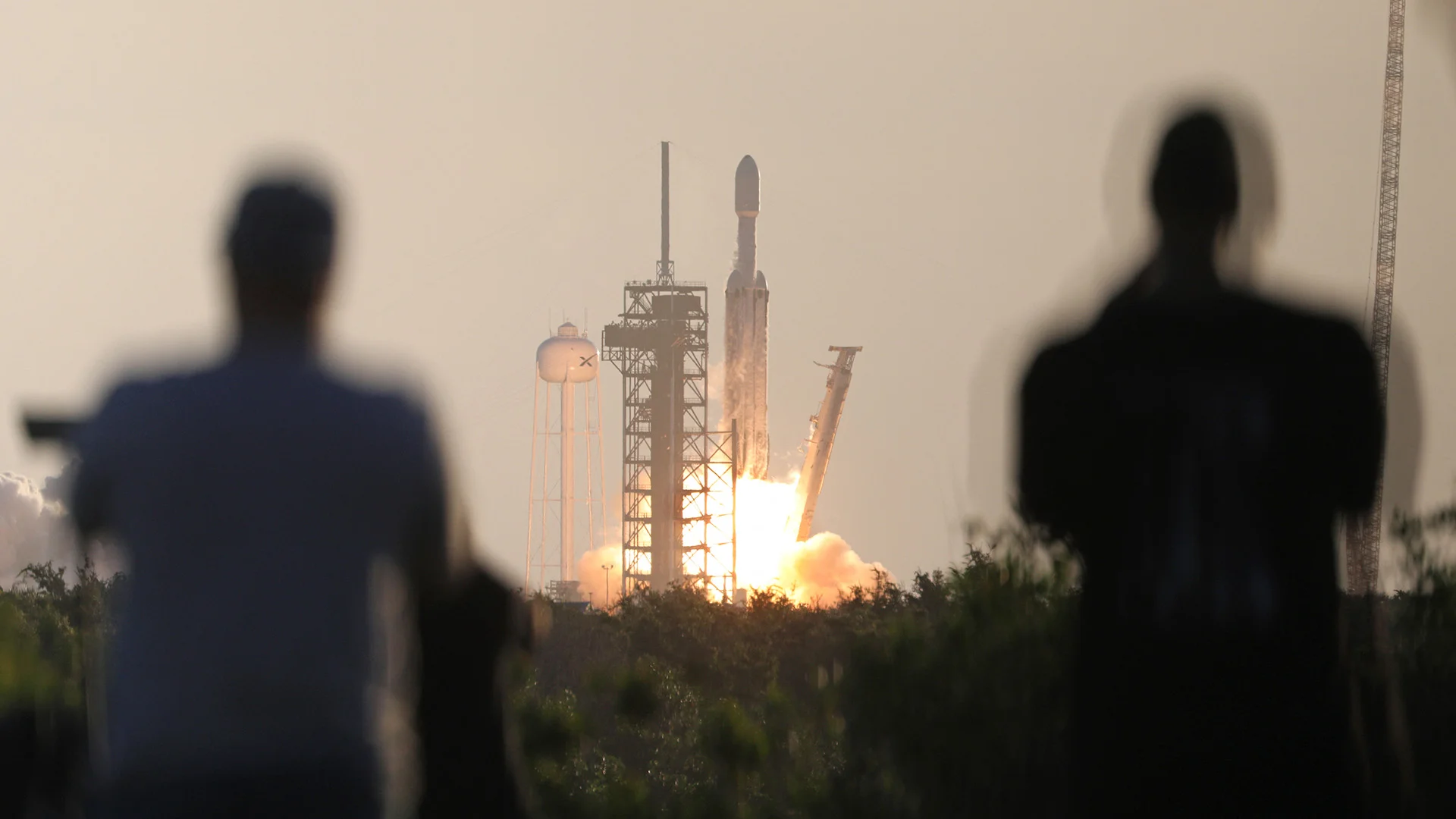
For years, skepticism surrounded Elon Musk’s grand vision for SpaceX and its heavy-lift vehicle, Starship. Critics routinely pointed to explosive early tests, regulatory hurdles, and extreme engineering complexities as insurmountable barriers. However, the narrative has fundamentally flipped. As SpaceX transitions its massive 20-story upper stage and Super Heavy booster stack from iterative experimental flights toward active orbital deployment—including the delivery of live next-generation Starlink payloads—the global aerospace industry is witnessing a structural transformation.
For institutional investors, venture capitalists, and enterprise leaders, this evolution signifies much more than just a technological milestone for private space exploration. It marks the dawn of a new economic paradigm where payload capacity, launch frequency, and rapid reusability redefine what is economically feasible in low-Earth orbit and beyond.
Economic Implications and Market Disruption
The core financial thesis driving SpaceX's current valuation explosion rests on drastically lowered cost-per-kilogram metrics for orbital delivery. Traditional launch providers and government bodies have historically operated under high-cost, low-cadence models. Starship's architecture—designed for full and rapid reusability with turnaround times measured in hours—fundamentally shatters these legacy cost structures.
- Massive Cost Reductions: Cheaper access to space allows defense and commercial entities to redirect capital away from expensive launch services and into advanced satellite manufacturing and onboard data processing.
- Accelerated AI and Compute Integration: With Musk signaling plans to deploy heavy high-performance computing systems, such as Nvidia-powered architecture, directly into space, the commercial justification for orbital data centers is rapidly shifting from theory to reality.
- Pressure on Legacy Defense Contractors: Aerospace incumbents face mounting pressure to modernize or risk obsolescence as SpaceX scales its disruptive launch cadence and expands its market dominance.
What Investors Need to Watch
As SpaceX cements its status as a cornerstone of modern technological infrastructure, market participants must monitor several critical vectors over the coming quarters. First, the timeline for achieving full upper-stage catch-and-reuse capability via launch tower infrastructure will dictate how quickly operating margins expand.
Second, observers should track regulatory approvals and international spectrum coordination as the sheer density of mega-constellations increases. Finally, the integration of space-based artificial intelligence infrastructure will create entirely new sectors within the tech economy, altering revenue models for semiconductor giants, cloud providers, and telecommunications leaders alike.
Ultimately, the commercialization of Starship is not merely an engineering triumph; it is a macroeconomic catalyst. Investors who fail to account for the velocity of commercial space integration risk missing one of the most significant structural transformations of the modern era.
Continue reading
Related coverage in Business
nytimes.com
David Ellison Targets CNN Leadership Continuity in Paramount Merger Talks
David Ellison is currently negotiating to retain CNN CEO Mark Thompson without oversight from CBS editor in chief Bari Weiss as parent companies navigate merger plans.
2 min read
bbc.com
Decoding Nike’s Slump: How Strategic Missteps Cost the Sportswear Titan Its Edge
Explore the factors behind Nike's dramatic market decline. Industry analysts dissect the self-inflicted strategic errors that shook the sportswear giant.
3 min read
bbc.com
Treasury Committee Directs HMRC to Investigate Tax Implications of Manchester City Case
The UK Treasury Committee has called on HMRC to closely examine potential tax ramifications arising from the high-profile Manchester City legal verdict.
3 min read
nytimes.com
US Imposes Sanctions on Russian Firm A7 Over Global Shell Company Evasion Schemes
The United States targets Russian financial firm A7 with new sanctions following reports of utilizing global shell companies to bypass existing economic restrictions.
3 min read