Inside Domino’s Masterclass Strategy: Why Fast-Food Receipts From Rivals Are Worth Pure Gold
Domino’s latest marketing campaign trades free personal pizzas for competitor receipts, turning rival fast-food data into a high-powered customer acquisition tool.
Source image: inc.com
inc.comDecoding the Strategy Behind Domino’s Rival Receipt Campaign
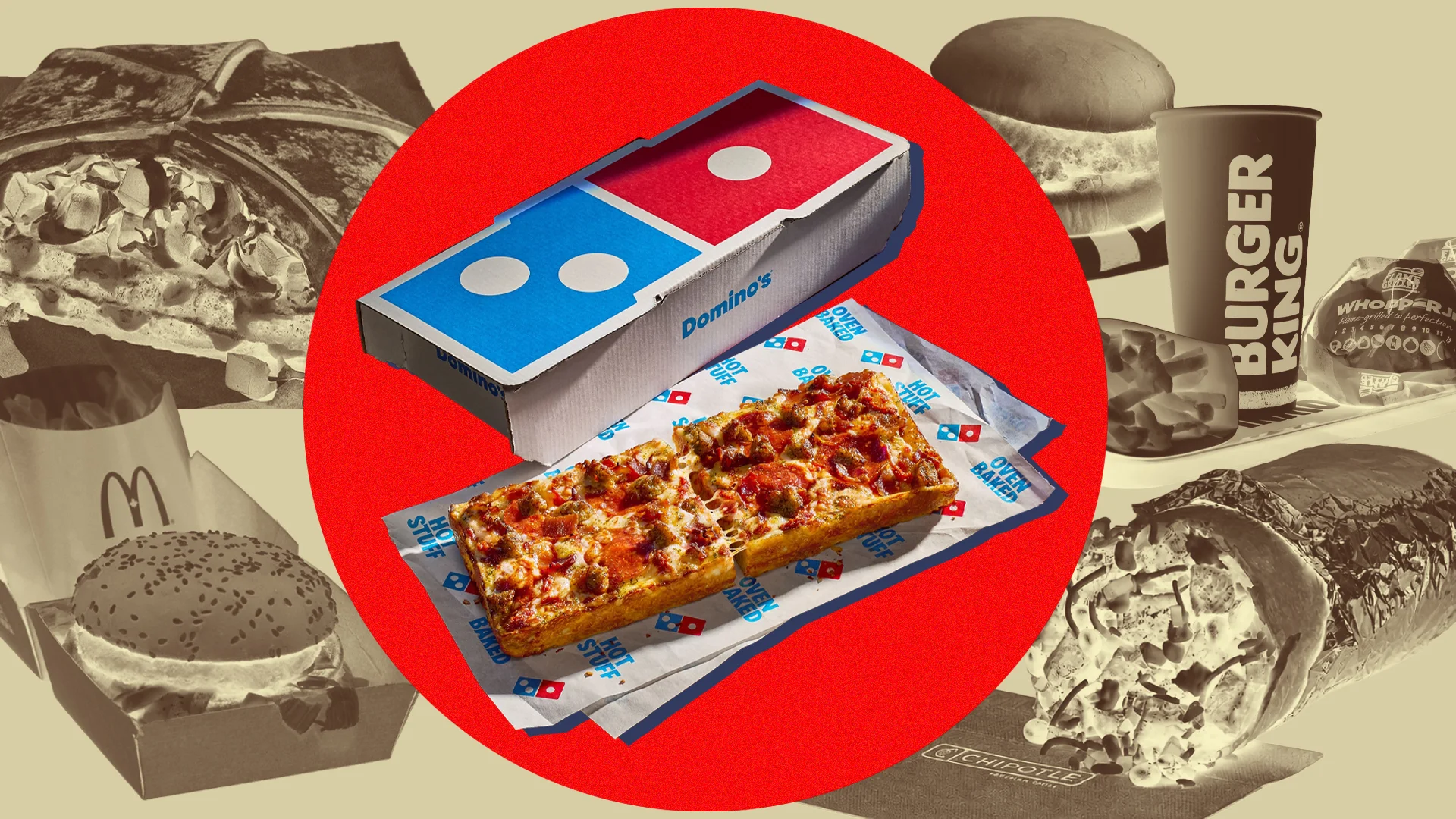
In a landscape where quick-service restaurant (QSR) marketing often relies on predictable discount codes or standard BOGO structures, Domino’s Pizza has introduced a masterclass in aggressive consumer acquisition. The chain's "Is the Domino Worthy?" campaign invites customers to secure a free, single-serve Detroit-style rectangular pizza—appropriately named 'The Domino'—by first uploading a valid receipt proving the purchase of a major competitor's flagship product.
To qualify, consumers must buy an established fast-food staple: a McDonald’s Big Mac, a Burger King Whopper, a Taco Bell Crunchwrap Supreme, a Chick-fil-A Chicken Sandwich, or a Chipotle burrito. While giving away up to $1 million worth of product may look like a generous trial-heavy stunt on the surface, retail strategists view it as a razor-sharp maneuver designed to solve one of the industry's most persistent data challenges.
The Real Objective: Bypassing Third-Party Data Black Boxes
For executive leadership and savvy investors, the value of this campaign is not measured in the cost of dough and cheese, but in data capture. As third-party food delivery aggregators like DoorDash and Uber Eats command larger shares of market traffic, restaurants increasingly find themselves locked out of direct consumer relationships. These platforms act as intermediaries, hoarding valuable customer purchasing insights.
By demanding a physical proof-of-purchase receipt from a competing establishment, Domino’s executes several tactical objectives:
- Verified Category Spend: Unlike traditional digital ads that rely on probabilistic targeting or search behavior, a competitor's receipt represents guaranteed, active intent within the fast-food dining market.
- Direct First-Party Acquisition: Participants must visit the promotion's web portal and submit verifiable information, allowing Domino's to bypass aggregator middlemen and build a direct line of communication with the consumer.
- Product Positioning: By explicitly pairing its new single-serve format against heavyweights like the Big Mac and the Whopper, Domino's is strategically repositioning pizza away from a shared group meal and into the realm of individual, on-the-go fast-food consumption.
Market Implications and Competitive Pressures
The broader QSR sector is currently grappling with compressed consumer discretionary budgets and category-wide growth normalization, with overall industry expansion hovering near 1%. In this tightening environment, customer acquisition costs have surged. Domino’s creative pivot turns its primary rivals' transactions into acquisition funnels, forcing competing brands to inadvertently subsidize consumer awareness for Domino's latest menu expansion.
However, financial analysts emphasize that conversion economics remain critical. Skeptics note that promotional deep-dives risk attracting transient bargain hunters rather than long-term brand loyalists. The ultimate test for Domino’s equity value will rest on its ability to transition these receipt-scanning interlopers into repeat, full-price digital app users once the promotion concludes.
What Investors Should Watch
As this multi-week campaign unfolds across the U.S. market, institutional investors and sector analysts should monitor key performance metrics to gauge its true ROI:
- Digital App Engagement and Retention: Track whether the influx of promotional traffic translates into sustained monthly active users (MAUs) on Domino’s proprietary ordering platform.
- Single-Serve Menu Margins: Evaluate how effectively 'The Domino' scales across unit economics, particularly concerning labor efficiency and ingredient costs relative to traditional round pies.
- Competitor Counter-Strategy: Observe whether major QSR players adjust their own cross-promotional defensive spending or accelerate loyalty incentives to stanch customer leakage.
Ultimately, Domino's continues to demonstrate why it remains a benchmark for marketing innovation in the global restaurant space. By weaponizing rival transactions, the company is effectively rewriting the playbook on how legacy food enterprises secure market share in a digitized economy.
Continue reading
Related coverage in Business
nytimes.com
David Ellison Targets CNN Leadership Continuity in Paramount Merger Talks
David Ellison is currently negotiating to retain CNN CEO Mark Thompson without oversight from CBS editor in chief Bari Weiss as parent companies navigate merger plans.
2 min read
bbc.com
Decoding Nike’s Slump: How Strategic Missteps Cost the Sportswear Titan Its Edge
Explore the factors behind Nike's dramatic market decline. Industry analysts dissect the self-inflicted strategic errors that shook the sportswear giant.
3 min read
bbc.com
Treasury Committee Directs HMRC to Investigate Tax Implications of Manchester City Case
The UK Treasury Committee has called on HMRC to closely examine potential tax ramifications arising from the high-profile Manchester City legal verdict.
3 min read
nytimes.com
US Imposes Sanctions on Russian Firm A7 Over Global Shell Company Evasion Schemes
The United States targets Russian financial firm A7 with new sanctions following reports of utilizing global shell companies to bypass existing economic restrictions.
3 min read