Geopolitical Shockwaves: Trump’s Endorsement of a Unified Ireland Reshapes Transatlantic Markets
Donald Trump's recent comments endorsing a unified Ireland have sparked intense transatlantic debate, carrying profound implications for UK-EU relations and cross-border commerce.
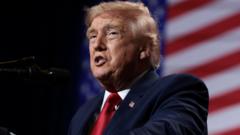
Source image: bbc.com
bbc.comGeopolitical Shifts and Transatlantic Diplomacy
The recent remarks made by US President Donald Trump regarding the political future of Northern Ireland have sent immediate shockwaves through diplomatic channels in London, Dublin, and Washington. Speaking during his visit to Ireland, Trump asserted that a unified Ireland would be a positive development and predicted that reunification is ultimately inevitable. This commentary marks a significant departure from the historical US stance of strict neutrality concerning the constitutional status of Northern Ireland, introducing an unpredictable variable into European geopolitical stability.
For global investors and corporate executives, diplomatic interventions of this magnitude cannot be viewed in isolation. Foreign policy pronouncements from major economic superpowers frequently ripple across currency markets, sovereign debt valuations, and regional equities. While the remarks were welcomed by nationalist leaders like Sinn Féin's Mary Lou McDonald, they triggered sharp pushback from unionist representatives and Downing Street officials who emphasized that Northern Ireland's constitutional framework remains strictly governed by the 1998 Good Friday Agreement.
Economic and Market Implications for the Region
A hypothetical political reunification of the island of Ireland carries immense economic and structural complexities. Integrating two distinct regulatory, tax, and healthcare systems would require extensive fiscal restructuring. Key economic considerations for institutional investors include:
- Sovereign Debt and Risk Premiums: Heightened political discourse surrounding border polls and constitutional changes can introduce volatility into UK gilts and Irish government bonds.
- Cross-Border Trade Flows: The Republic of Ireland operates within the European Union single market, whereas Northern Ireland occupies a unique dual-market status under post-Brexit arrangements. Any systemic shift in sovereignty would radically redefine regional supply chains.
- Foreign Direct Investment (FDI): Multinational corporations utilizing Ireland and the UK as dual gateways to European and global markets rely heavily on regulatory predictability. Prolonged constitutional uncertainty could prompt corporations to re-evaluate capital allocation strategies.
Corporate Strategy and Investor Outlook
For executive leadership teams and asset managers, navigating this evolving landscape requires a dual focus on macroeconomic indicators and micro-level political risks. Although a near-term border poll remains legally and politically constrained by current UK leadership parameters, the vocal backing of a major US administration elevates the topic from a domestic constitutional debate to a prominent international agenda item.
Investors should maintain a defensive posture regarding localized assets directly tied to Northern Irish infrastructure and cross-border retail sectors until clearer regulatory signals emerge. Furthermore, multinational entities with extensive exposure to both the UK and EU markets must stress-test their operational models against potential future shifts in trade compliance and tariff structures.
Key Indicators to Watch
As this diplomatic narrative develops, market participants should monitor several critical milestones:
- Shifts in public opinion polling across both jurisdictions regarding constitutional preferences.
- Formal policy responses from incoming administrations in Westminster concerning the threshold criteria for border referendums.
- Legislative updates from Dublin detailing economic preparedness studies for potential integration scenarios.
- Transatlantic trade dialogue and diplomatic communications between US and UK officials.
Ultimately, while financial markets have largely priced in short-term political posturing, the long-term investment case for the British Isles will be heavily shaped by how effectively regional leaders manage economic stability amidst rising geopolitical friction.
Continue reading
Related coverage in Economy
aljazeera.com
Funeral Held in Occupied West Bank Amid Ongoing Regional Economic Pressures
A funeral was held in the occupied West Bank for a Palestinian man recently killed, highlighting ongoing regional tensions impacting local stability and markets.
2 min read
aljazeera.com
Kenyan Filmmaker Challenges Legacy Tea Plantations in New Documentary
A new documentary by a Kenyan filmmaker sheds light on the historical legacies and ongoing systemic issues within Kenya's colonial-era tea plantations.
2 min read
aljazeera.com
ICC Terminates French Insurer Contract Amid US Sanctions Threat
The International Criminal Court has ended its agreement with French insurer Axa following mounting US criticism and looming financial restrictions.
2 min read
aljazeera.com
Analysis of Palestinian Children in Israeli Military Detention and Economic Impact
An examination of Palestinian children in Israeli military detention, highlighting its humanitarian context and broader geopolitical and economic implications.
2 min read