Gen Z Redefines Higher Education: Why College Students Are Pivoting Careers Due to AI
A surge of college students are fundamentally altering their academic majors and career tracks out of fear of artificial intelligence disruption. Industry leaders analyze whether this panic is justified.
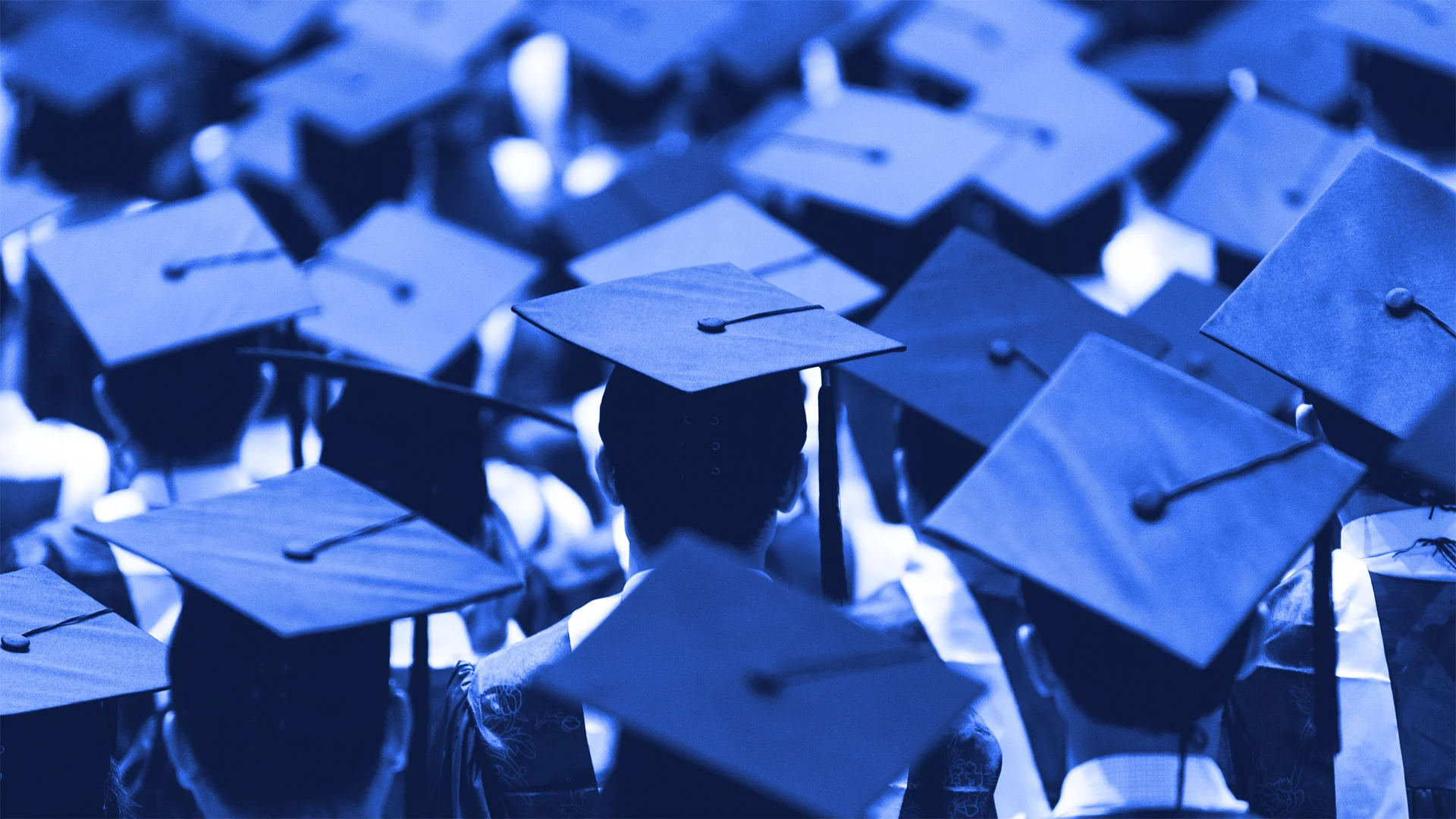
Source image: inc.com
inc.comThe Great Academic Pivot: How Artificial Intelligence is Reshaping Gen Z Career Choices
The rapid integration of generative artificial intelligence across global industries is no longer just altering corporate workflows—it is actively redesigning the educational blueprints of the next generation. Recent comprehensive surveys, including data compiled by CNBC and SurveyMonkey alongside findings from the Lumina Foundation and Gallup, highlight a profound psychological shift among current undergraduates. Nearly 31 percent of surveyed college students report altering their career plans directly because of artificial intelligence, while roughly 39 percent have actively considered changing their academic major. For unemployed students, that anxiety spikes even higher.
This widespread apprehension marks a distinct historical moment. Rarely has a technological evolution unfolded swiftly enough for students mid-degree to reevaluate the long-term viability of their chosen professions. Traditional entry-level domains—ranging from junior software engineering and routine coding to graphic design, content generation, and entry-level data analytics—are facing immediate structural scrutiny as large language models and automated systems demonstrate baseline competency in basic tasks.
The Core Dilemma: Are Students Fleeing the Right Fields?
While the anxiety driving Gen Z to reevaluate their prospects is entirely rational given the velocity of workplace automation, business leaders and labor economists caution against reactionary major-hopping. Fleeing technical disciplines en masse may create secondary market imbalances, particularly as industries demand hybrid talent that understands both domain-specific frameworks and how to leverage machine learning tools effectively.
- The Software Engineering Paradox: While automated code generation tools handle foundational programming scripts, overall enterprise demand for sophisticated systems architects and specialized technical talent remains robust outside of big tech monopolies.
- The Re-emergence of the Humanities: Forward-thinking executives and founders increasingly point out that liberal arts curricula—traditionally designed to instill critical thinking, rhetorical precision, and deep analytical reasoning—offer unique defensive moats against algorithmic substitution.
- The Premium on Adaptability: The half-life of specific technical skills is shrinking rapidly, making cognitive agility and continuous learning far more valuable assets than any single undergraduate credential.
What the Data Tells Us About Market Implications
For corporate executives and institutional investors, this student-led pivot carries significant implications for future talent pipelines. As higher education institutions scramble to update syllabi, corporate recruiters are recalibrating what they look for in entry-level candidates. Experience and theoretical mastery alone are taking a back seat to verified AI literacy and proof of human-centric problem-solving capabilities.
Furthermore, research demonstrates that human traits like unstructured creativity and empathy consistently outperform automated models in complex environments. When researchers test human cognitive adaptability against current machine architectures, human capacity for contextual leaps remains unmatched. Consequently, the future workforce will likely reward individuals who treat artificial intelligence as a powerful leverage multiplier rather than an existential career threat.
Strategic Outlook: What Investors and Executives Should Watch
As this academic shift ripples outward toward the broader labor market, stakeholders across the corporate landscape must monitor several key indicators:
- University Curriculum Evolution: Track how rapidly traditional universities integrate ethical AI deployment, prompt engineering, and human-machine collaboration across non-technical majors.
- Recruiting Metric Shifts: Observe whether major corporations begin prioritizing verified project portfolios and adaptability metrics over institutional prestige and static GPAs.
- Emerging Skill Gaps: Identify sectors where over-reliance on automation creates a vacuum for high-touch, emotionally intelligent leadership and governance roles.
Ultimately, the students positioned for long-term career resilience are those who look past short-term panic over specific job titles. By focusing on durable, uniquely human capabilities while mastering emerging technological toolsets, the incoming workforce can navigate structural economic shifts and secure a competitive advantage in the modern corporate ecosystem.
Continue reading
Related coverage in Business
nytimes.com
David Ellison Targets CNN Leadership Continuity in Paramount Merger Talks
David Ellison is currently negotiating to retain CNN CEO Mark Thompson without oversight from CBS editor in chief Bari Weiss as parent companies navigate merger plans.
2 min read
bbc.com
Decoding Nike’s Slump: How Strategic Missteps Cost the Sportswear Titan Its Edge
Explore the factors behind Nike's dramatic market decline. Industry analysts dissect the self-inflicted strategic errors that shook the sportswear giant.
3 min read
bbc.com
Treasury Committee Directs HMRC to Investigate Tax Implications of Manchester City Case
The UK Treasury Committee has called on HMRC to closely examine potential tax ramifications arising from the high-profile Manchester City legal verdict.
3 min read
nytimes.com
US Imposes Sanctions on Russian Firm A7 Over Global Shell Company Evasion Schemes
The United States targets Russian financial firm A7 with new sanctions following reports of utilizing global shell companies to bypass existing economic restrictions.
3 min read