From $350 Billion to $4.5 Trillion: Inside Tim Cook’s Legacy and Apple’s Next Era
As Tim Cook transitions to executive chairman after 15 transformative years, incoming CEO John Ternus inherits a $4.5 trillion tech titan facing fresh structural tests.
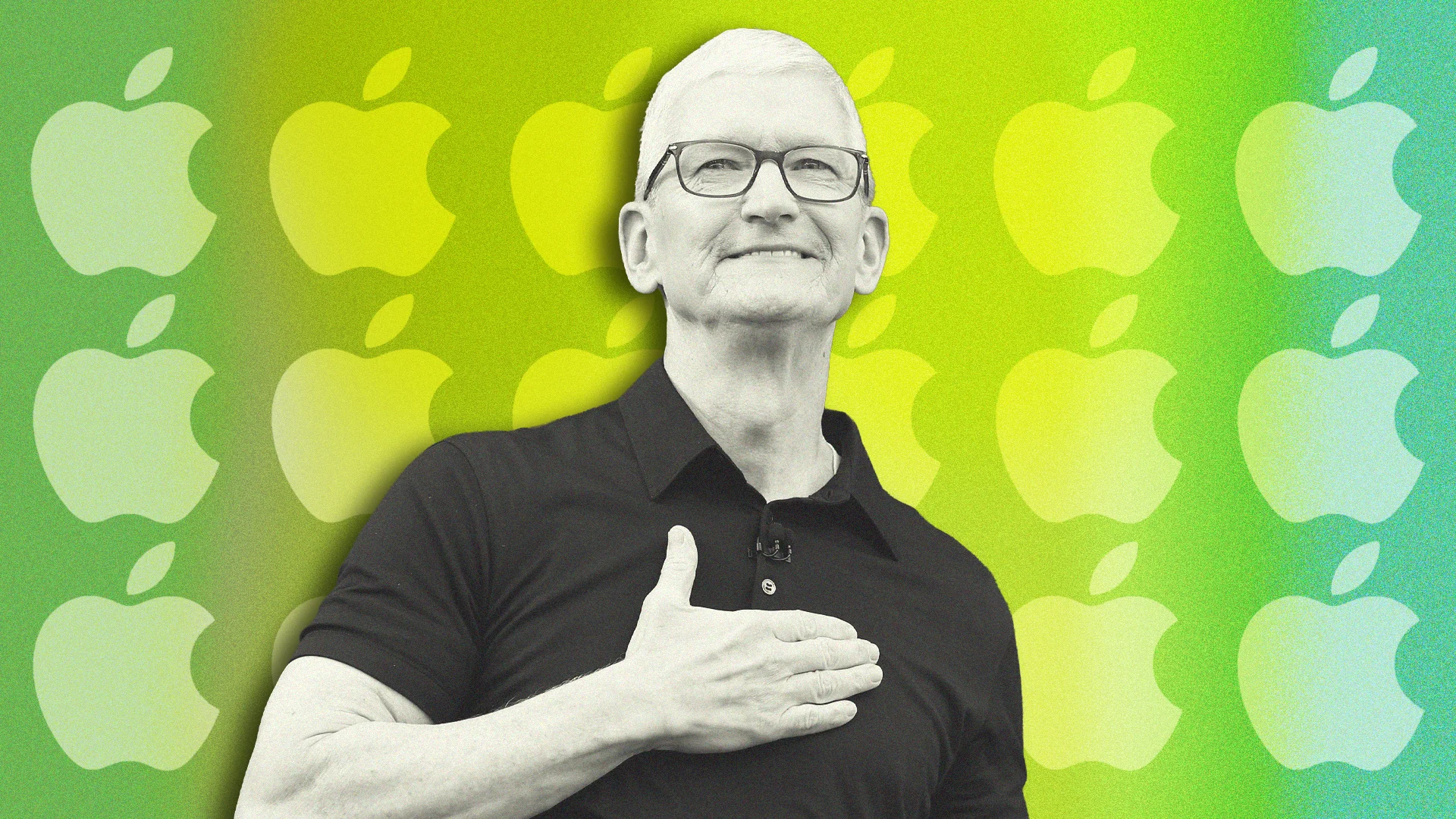
Source image: inc.com
inc.comThe End of an Era at Cupertino
When Steve Jobs stepped down as chief executive officer on a quiet August evening in 2011, Wall Street was gripped by anxiety. Apple was fundamentally viewed as a product company, and handing the world's most valuable consumer brand to an operations specialist like Tim Cook provoked widespread skepticism. Critics questioned whether a supply-chain savant could maintain Apple's unmatched cultural relevance and design supremacy. Fifteen years later, those doubts have been thoroughly erased by history. As Tim Cook transitions from the chief executive office into the role of executive chairman, he leaves behind an economic empire valued at nearly $4.6 trillion.
Cook's final fiscal year at the helm closed with staggering financials, generating $416.2 billion in revenue and $112 billion in net income—a dramatic expansion from the $108 billion in revenue recorded during fiscal 2011. While the iPhone remained the bedrock of Apple's financial engine, scaling from $47.1 billion to over $209 billion, Cook's true genius lay in ecosystem diversification. By turning services like iCloud, Apple Music, and the App Store into a $109 billion powerhouse alongside a dominant wearables segment, Cook systematically insulated Apple from hardware saturation cycles.
The Succession Playbook: Shifting from Operations to Product
In selecting John Ternus as the next chief executive, Apple's board chose a familiar path: hiring directly against the profile of the outgoing leader. Just as Jobs replaced himself with an operational maestro, Cook is handing the operational juggernaut to a career product and hardware engineer. Ternus, who joined Apple's product design team in 2001 and rose to senior vice president of hardware engineering, takes command at age 50—the exact age Cook was when he assumed the CEO title. This deliberate pivot signals a renewed corporate emphasis on core hardware innovation, deepening Apple's mastery over proprietary silicon and next-generation form factors.
Simultaneously, the corporate hierarchy is being recalibrated to ensure structural continuity. Johny Srouji, the architect behind Apple's revolutionary custom silicon initiative, has been elevated to chief hardware officer. Meanwhile, Cook will retain a vital diplomatic footprint as executive chairman, managing delicate, high-stakes relationships with regulatory bodies and manufacturing partners across Washington and Beijing. For institutional investors, this dual-pronged approach ensures that while internal product development gets a fresh, engineering-first perspective, Apple’s geopolitical shields remain firmly intact under seasoned leadership.
Market Implications and Financial Resilience
The transition from Cook to Ternus arrives at a fascinating juncture for global technology markets. Unlike the seismic market jitters that accompanied Jobs' departure in 2011, Wall Street greeted Ternus' appointment with calculated composure. This muted reaction reflects immense institutional confidence in Apple's executive depth and financial discipline. Key drivers to watch include:
- Ecosystem Monetization: The continued expansion of high-margin services revenue, which now acts as Apple's structural financial cushion.
- Silicon Superiority: The ongoing evolution of Apple silicon across Mac, iPad, and potential ambient computing devices, spearheaded by Johny Srouji.
- Geopolitical Agility: How Cook manages international supply chain migration and regulatory compliance in his capacity as executive chairman.
- Next-Gen Hardware Formats: Ternus' ability to incubate and scale entirely new consumer categories following the foundational success of the Apple Watch.
What Investors Should Watch Next
As Ternus officially takes the reins, executive leadership and institutional investors must monitor how Apple balances iterative hardware improvements with breakthroughs in artificial intelligence and ambient computing. Cook proved that operational excellence and disciplined shareholder returns could compound wealth at an unprecedented scale. Ternus must now prove that an engineering-led culture can reignite consumer hardware excitement while protecting the company's enviable operating margins. For the markets, Apple remains the ultimate bellwether—stable, immensely cash-generative, and poised for its next chapter of structural evolution.
Continue reading
Related coverage in Business
nytimes.com
David Ellison Targets CNN Leadership Continuity in Paramount Merger Talks
David Ellison is currently negotiating to retain CNN CEO Mark Thompson without oversight from CBS editor in chief Bari Weiss as parent companies navigate merger plans.
2 min read
bbc.com
Decoding Nike’s Slump: How Strategic Missteps Cost the Sportswear Titan Its Edge
Explore the factors behind Nike's dramatic market decline. Industry analysts dissect the self-inflicted strategic errors that shook the sportswear giant.
3 min read
bbc.com
Treasury Committee Directs HMRC to Investigate Tax Implications of Manchester City Case
The UK Treasury Committee has called on HMRC to closely examine potential tax ramifications arising from the high-profile Manchester City legal verdict.
3 min read
nytimes.com
US Imposes Sanctions on Russian Firm A7 Over Global Shell Company Evasion Schemes
The United States targets Russian financial firm A7 with new sanctions following reports of utilizing global shell companies to bypass existing economic restrictions.
3 min read