Fed Chair Kevin Warsh Delivers Hawkish Signal at Jackson Hole Amid Persistent Inflation Pressures
Federal Reserve Chair Kevin Warsh warned at Jackson Hole that the central bank faces mandatory work on interest rates if underlying inflation fails to reach the 2% target.
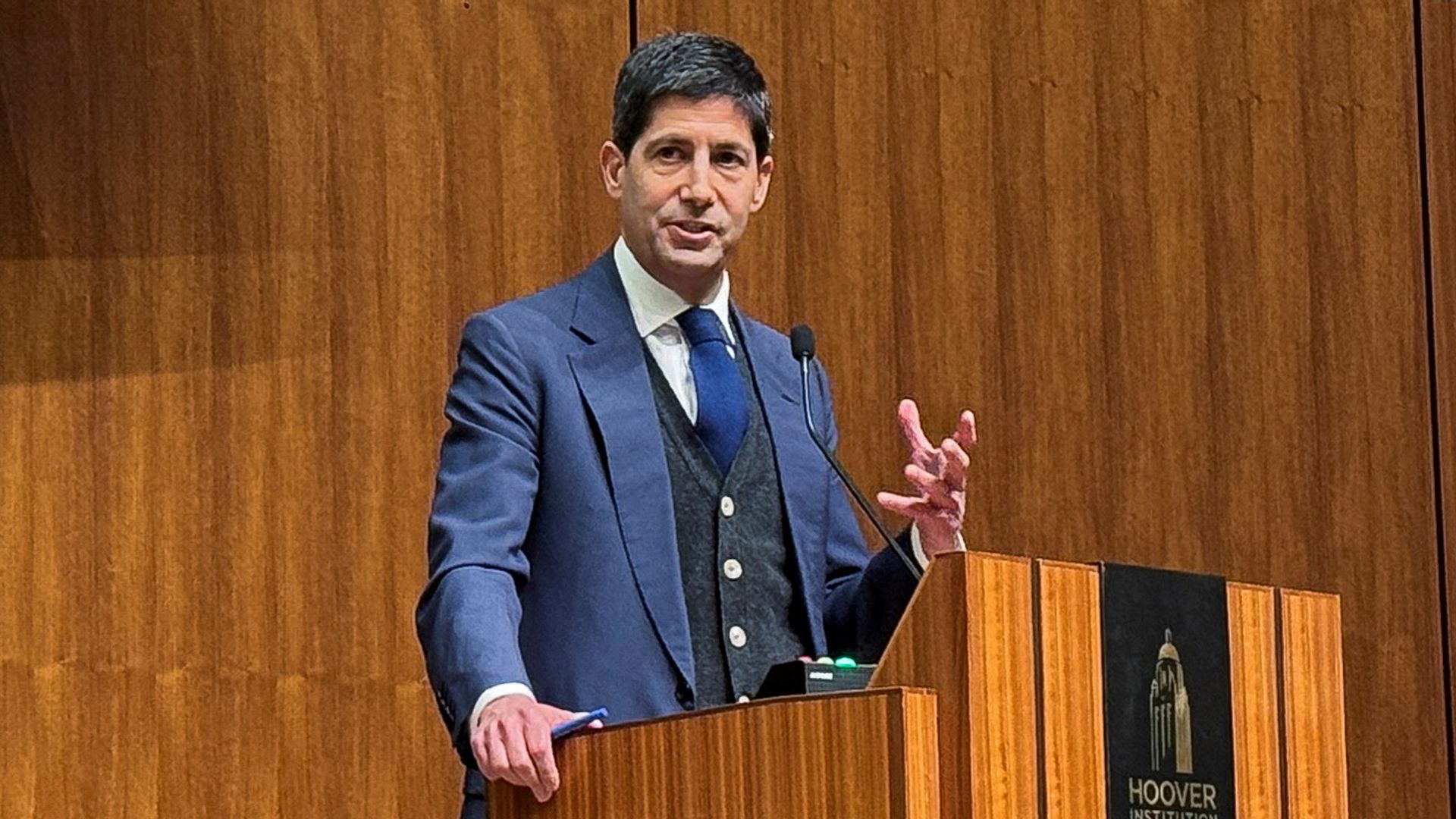
Source image: skynews.com
skynews.comFederal Reserve Chair Breaks Silence on Inflation Trajectory
Federal Reserve Chair Kevin Warsh used his high-profile address at the annual Jackson Hole Economic Policy Symposium to deliver his most definitive assessment of the U.S. economy to date. Facing intense scrutiny from financial markets and institutional economists over his minimalist communication strategy, Warsh made it clear that persistent price growth remains a formidable threat to macroeconomic stability.
While acknowledging that headline inflation figures have shown some marginal cooling over recent months, Warsh asserted that the underlying structural trends have not sufficiently improved. Highlighting that the central bank has spent over five years missing its target, he emphasized that the Federal Reserve must possess absolute confidence that price growth is descending toward its 2% objective in a clear, timely fashion.
Weighing the Risk of Further Monetary Tightening
The centerpiece of Warsh's commentary centered on the potential necessity for additional monetary tightening. By stating that the central bank still has "work to do" should price pressures refuse to subside, he effectively pushed back against dovish market assumptions and validated concerns that borrowing costs could trend higher.
- Underlying Price Pressures: Warsh noted that a substantial share of consumer and producer items continue to track well above the central bank's targeted threshold.
- Economic Resilience: Pointing to robust corporate capital expenditures—particularly in artificial intelligence infrastructure—and resilient consumer demand, Warsh suggested that current interest rates may not be restrictive enough to fully suppress excess demand.
- Skepticism of Forward Guidance: Reinforcing his distinct operational style, Warsh doubled down on his refusal to offer explicit forward guidance, arguing that rigid commitments compromise the central bank's strategic flexibility.
Market Implications and Executive Takeaways
Global financial markets reacted swiftly to the address. Short-term U.S. Treasury yields climbed sharply following the speech, reflecting an immediate recalibration of monetary policy expectations among institutional fixed-income traders. Meanwhile, the U.S. dollar appreciated against major international currency baskets as foreign exchange markets digested the decidedly hawkish undertones.
For corporate executives, institutional investors, and entrepreneurs, Warsh's message signals that capital will likely remain expensive for a prolonged duration. Organizations must prepare for a tighter liquidity environment where central bank intervention to curb inflation takes precedence over growth accommodation.
What Investors Should Monitor Moving Forward
As market participants look ahead to the upcoming Federal Open Market Committee (FOMC) meetings, several key indicators will dictate the path of monetary policy:
- Upcoming Personal Consumption Expenditures (PCE) inflation prints to gauge momentum toward the 2% target.
- Employment data and wage growth metrics to assess ongoing labor market tightness.
- Shifts in short-term Treasury yields and broader debt capital market conditions.
Ultimately, Warsh has drawn a definitive line in the sand. While he has preserved his administrative discretion by avoiding precise meeting-by-meeting roadmaps, his Jackson Hole address ensures that the threat of higher interest rates remains a central pillar of the macroeconomic landscape.
Continue reading
Related coverage in Business
nytimes.com
David Ellison Targets CNN Leadership Continuity in Paramount Merger Talks
David Ellison is currently negotiating to retain CNN CEO Mark Thompson without oversight from CBS editor in chief Bari Weiss as parent companies navigate merger plans.
2 min read
bbc.com
Decoding Nike’s Slump: How Strategic Missteps Cost the Sportswear Titan Its Edge
Explore the factors behind Nike's dramatic market decline. Industry analysts dissect the self-inflicted strategic errors that shook the sportswear giant.
3 min read
bbc.com
Treasury Committee Directs HMRC to Investigate Tax Implications of Manchester City Case
The UK Treasury Committee has called on HMRC to closely examine potential tax ramifications arising from the high-profile Manchester City legal verdict.
3 min read
nytimes.com
US Imposes Sanctions on Russian Firm A7 Over Global Shell Company Evasion Schemes
The United States targets Russian financial firm A7 with new sanctions following reports of utilizing global shell companies to bypass existing economic restrictions.
3 min read