Disrupting the Breakfast Aisle: How Startup Backflip Outperformed Legacy Giants at Target
Only two months after launching nationwide in Target, better-for-you cereal startup Backflip has surpassed legacy breakfast brands in sales velocity.
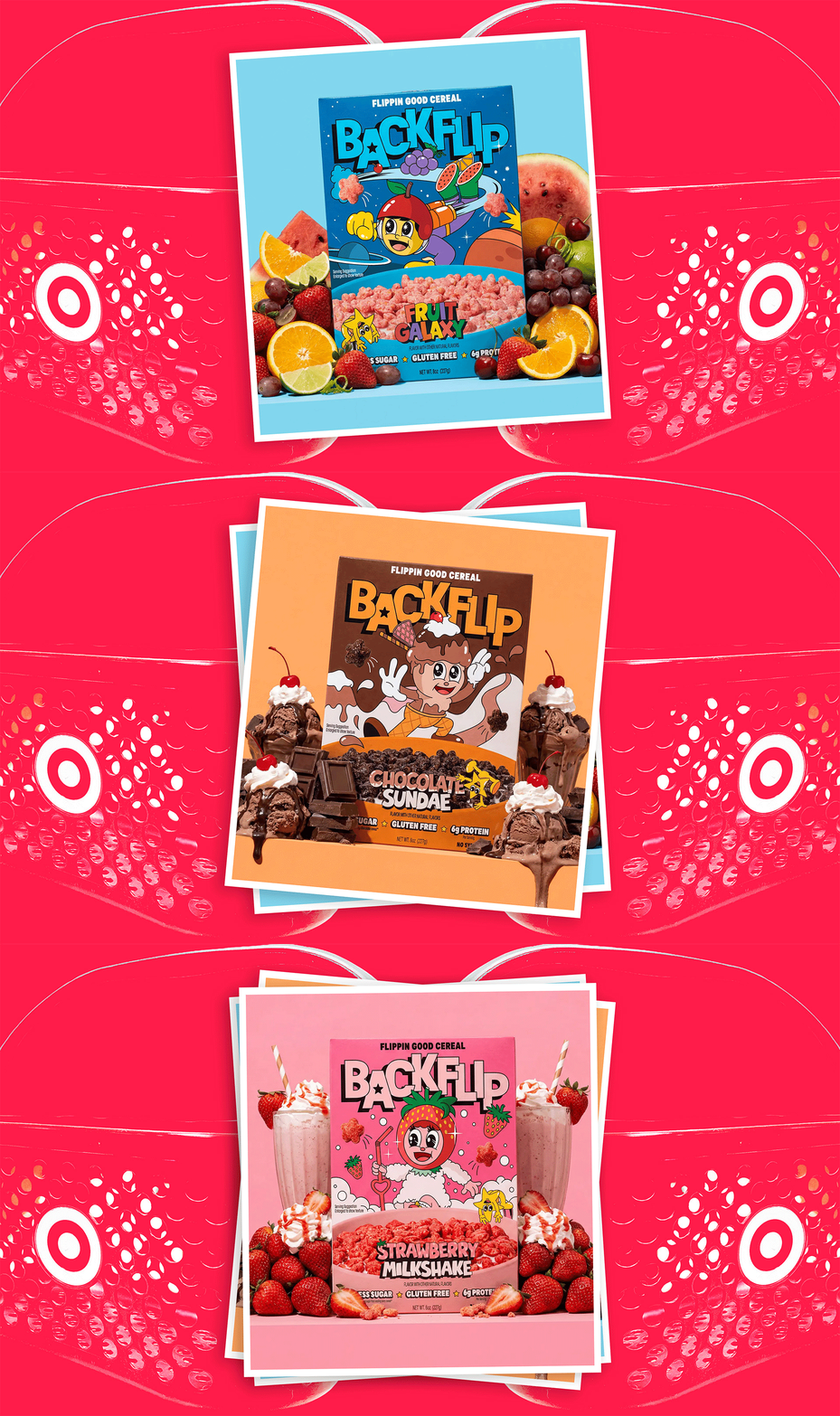
Source image: inc.com
inc.comThe Rise of a New Cereal Heavyweight
In the fiercely competitive consumer packaged goods landscape, legacy conglomerates have long maintained a stranglehold on the grocery aisle. However, the breakfast category is undergoing a radical structural transformation. Backflip, a better-for-you children’s cereal startup that debuted nationally on Target shelves just two months ago, has officially been crowned by the retail giant as its most productive brand in the breakfast category.
According to co-founder Shaun Neff, the brand's early sales velocity has exceeded even the most aggressive internal projections. By challenging legacy staples across both revenue and unit movement—outperforming everything from traditional breakfast cereals to toaster pastries—Backflip has demonstrated the immense commercial viability of modern, health-conscious product positioning tailored for younger demographics.
Strategic Alignment: Health Meets Nostalgia
The secret behind Backflip's immediate market penetration lies in its calculated synthesis of nutritional reform and nostalgic branding. Modern parents increasingly scrutinize grocery labels, pushing back against synthetic additives, excessive refined sugars, and inflammatory ingredients. Backflip addresses these pain points directly by offering a product completely free of synthetic dyes, seed oils, gluten, and GMOs, while containing roughly half the sugar of traditional market leaders alongside boosted levels of protein and fiber.
However, the founders recognized that winning over parents means nothing if children refuse to eat the product. To bridge this gap, Backflip borrowed heavily from the playbook of historical incumbents. Each box features vibrant mascot branding and collectible elements like trading cards, marrying Saturday-morning nostalgia with clean-label transparency.
- Nutritional Profile: Zero synthetic dyes, zero seed oils, gluten-free, and significantly reduced sugar content.
- Brand Positioning: Direct appeal to children aged 6 through 12 using playful mascots and interactive box elements.
- Flavor Lineup: Initial SKUs include Cinnamon Magic, Chocolate Sundae, Fruit Galaxy, and the standout consumer favorite, Strawberry Milkshake.
The Creator-Led Distribution Model
A critical catalyst behind Backflip's unprecedented velocity is its unique equity and marketing structure. Co-founded by Shaun Neff—a CPG veteran renowned for building high-profile consumer brands alongside celebrities—the company teamed up with 24-year-old digital creator Ben Azelart, whose multi-million-subscriber footprint offers an organic, high-engagement marketing engine.
Rather than burning through traditional, capital-intensive media acquisition budgets, Backflip leveraged Azelart's direct line to the exact target demographic. This creator-led distribution model bypasses traditional advertising friction, driving immediate foot traffic to Target stores nationwide and creating viral loop effects across social media platforms.
Market Implications for Institutional Investors
For institutional investors and venture capitalists tracking the consumer sector, Backflip’s trajectory offers a masterclass in modern brand scaling. Traditional food conglomerates are steadily losing market share to agile, digitally native brands that can iterate rapidly and build authentic consumer communities before ever stepping foot into traditional retail.
The success of Backflip signals that the "better-for-you" trend is no longer a niche grocery category; it is rapidly becoming the baseline consumer expectation. Legacy brands sluggishly reforming their portfolios risk losing shelf space entirely as major retailers like Target increasingly favor high-velocity, disruptive newcomers that maximize revenue per square foot.
What Investors and Market Watchers Should Monitor
As Backflip prepares to introduce additional SKUs to its product line, market participants should closely observe several key operational metrics:
- Retail Expansion: Watch for announcements regarding distribution agreements beyond Target into other major national grocers and club stores.
- Supply Chain Scalability: Assess whether the startup can maintain inventory levels and quality control amid explosive, viral demand.
- Portfolio Diversification: Monitor how effectively the brand can expand beyond cereal into adjacent breakfast and snacking categories without diluting its core value proposition.
Ultimately, Backflip's explosive debut serves as a stark warning to legacy consumer goods giants: agility, aligned digital-native marketing, and uncompromised product formulation are rewriting the rules of retail dominance.
Continue reading
Related coverage in Business
nytimes.com
David Ellison Targets CNN Leadership Continuity in Paramount Merger Talks
David Ellison is currently negotiating to retain CNN CEO Mark Thompson without oversight from CBS editor in chief Bari Weiss as parent companies navigate merger plans.
2 min read
bbc.com
Decoding Nike’s Slump: How Strategic Missteps Cost the Sportswear Titan Its Edge
Explore the factors behind Nike's dramatic market decline. Industry analysts dissect the self-inflicted strategic errors that shook the sportswear giant.
3 min read
bbc.com
Treasury Committee Directs HMRC to Investigate Tax Implications of Manchester City Case
The UK Treasury Committee has called on HMRC to closely examine potential tax ramifications arising from the high-profile Manchester City legal verdict.
3 min read
nytimes.com
US Imposes Sanctions on Russian Firm A7 Over Global Shell Company Evasion Schemes
The United States targets Russian financial firm A7 with new sanctions following reports of utilizing global shell companies to bypass existing economic restrictions.
3 min read