Burger King’s $3.99 Nugget Purse Sparks Secondary Market Frenzy and Fandom Frustration
Burger King's limited-edition Le Nugguette micro-purse debuted for $3.99, triggering rapid sellouts and subsequent $400 reseller listings.
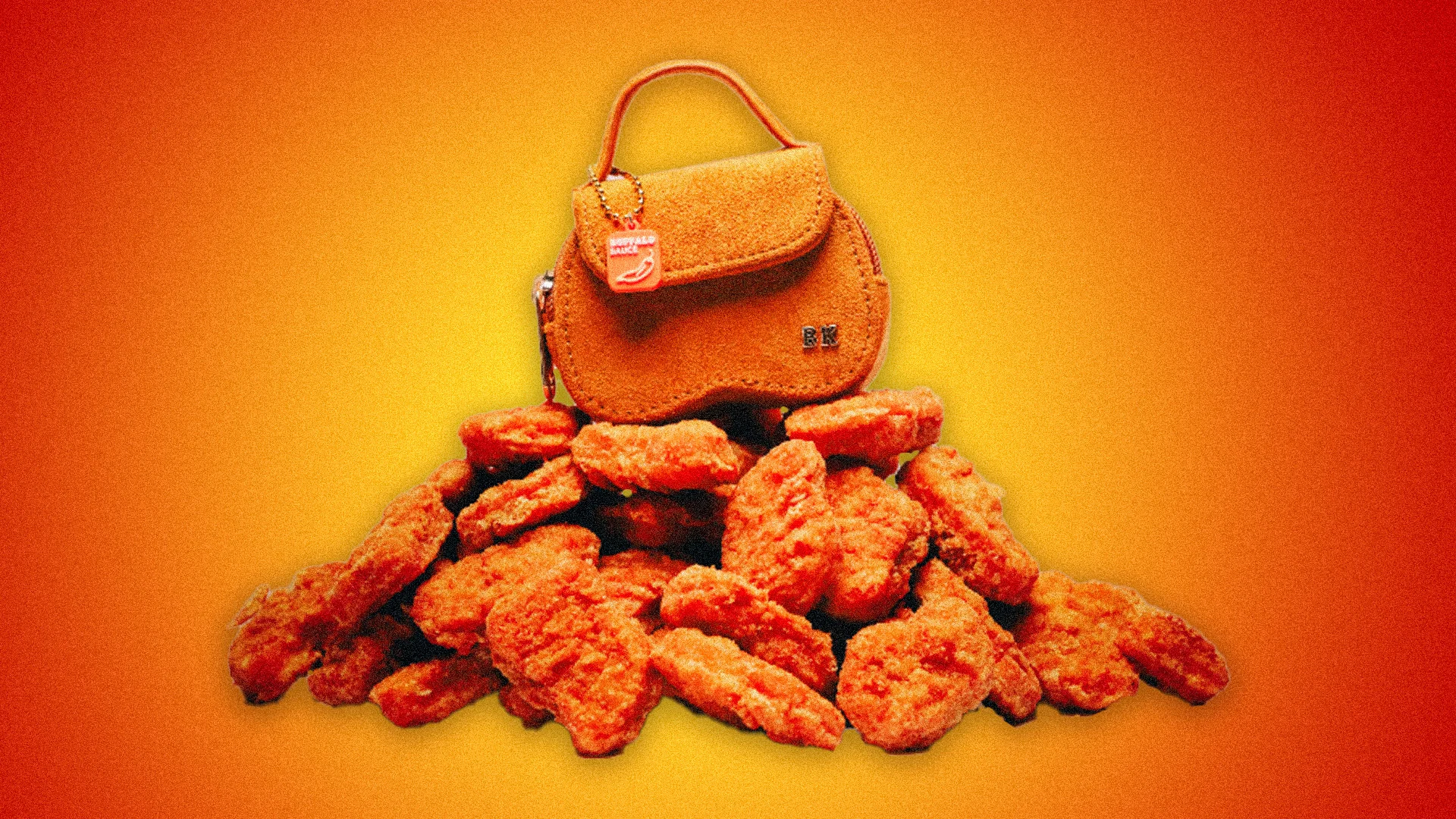
Source image: inc.com
inc.comThe Anatomy of a Fast-Food Fashion Stunt
In an era where traditional advertising competes with an overwhelming volume of digital noise, major consumer brands are increasingly forced to look outside the conventional playbook. Burger King, a subsidiary of Restaurant Brands International, executed one of the most talked-about promotional crossovers by diving headfirst into the luxury fashion zeitgeist. Timed precisely to coincide with New York Fashion Week, the fast-food titan unveiled Le Nugguette—a micro-purse meticulously designed to mimic the golden-brown, irregular contours of a standard breaded chicken nugget.
Priced intentionally at $3.99 to match the retail cost of a standard four-piece order of the chain's newly overhauled chicken nuggets, the accessory came complete with a zipper compartment, a miniature handle, and a randomized dipping-sauce charm. Additionally, each purchase bundled a digital code redeemable for actual food, seamlessly blending physical novelty merchandise with core menu promotion.
Manufacturing Scarcity and Engineering FOMO
The core mechanic driving the campaign was a hyper-controlled scarcity model. Rather than flooding the market to maximize initial transaction volume, Burger King opted to release a meager 100 units per day over a five-day span, capping total inventory at a paltry 500 items. Every daily drop vanished within seconds, leaving thousands of digitally queued consumers empty-handed.
While borrowed directly from the streetwear and sneaker sectors—where artificial scarcity regularly drives immense secondary market valuations—applying this high-stakes hype model to quick-service restaurant (QSR) merchandise produced volatile side effects. Consumers quickly took to social media platforms like Reddit and X to voice intense frustration, with some comparing the digital queue experience unfavorably to high-demand ticketing platforms.
The Secondary Market Markup and Brand Backlash
As predicted by retail analysts, the severe supply-demand imbalance immediately activated opportunistic arbitrageurs. Within hours of the initial drops, units began appearing on peer-to-peer marketplaces like eBay with asking prices as high as $400—representing a staggering 9,900% markup over the original retail price.
This extreme valuation spread quickly ignited consumer resentment, transforming a lighthearted brand activation into a focal point for debates over modern marketing ethics. Key friction points from the campaign include:
- Extreme Inventory Constraints: Capping a nationwide promotional push at just 500 units alienated a vast majority of engaged digital consumers.
- Arbitrage Exploitation: Rapid flipping on secondary channels overshadowed the core menu item the campaign was intended to highlight.
- Goodwill Erosion: While initial social media reception praised the creativity of the design, subsequent stockouts converted organic amusement into active consumer alienation.
Broader Market Implications for QSR Branding
For investors and sector analysts, the Le Nugguette phenomenon offers a vital case study in modern brand marketing. Fast-food conglomerates are increasingly relying on lifestyle marketing, cross-industry collaborations, and digital-first stunts to capture younger, highly connected demographic cohorts. However, the Burger King experiment demonstrates the thin line between viral success and brand fatigue.
When novelty campaigns lean too heavily into artificial scarcity, they risk prioritizing short-term social media impressions over long-term customer satisfaction. While the overarching goal was to draw attention to Burger King's wider menu quality improvements—specifically an aggressive recipe overhaul designed to fix historical customer complaints regarding texture and taste—the overwhelming oxygen consumed by the purse drop threatened to eclipse the food itself.
What Investors Should Watch
As consumer brands continue to experiment with cross-vertical merchandising and hype-drop drops, market participants should monitor several key performance indicators:
- Menu-to-Merchandise Conversion: Whether novelty stunts successfully drive sustained comparable-store sales and core menu adoption rather than isolated, short-lived digital buzz.
- Consumer Sentiment Metrics: Tracking digital sentiment shifts to ensure that aggressive scarcity tactics do not result in lasting brand alienation or consumer backlash.
- Supply Chain Scalability: Analyzing how major chains balance exclusive luxury aesthetics with accessible supply volumes to satisfy broad consumer bases without destroying collector value.
Ultimately, while Le Nugguette succeeded in capturing global headlines during one of the busiest weeks in the fashion calendar, it serves as a sharp reminder that engineering artificial scarcity in the food service sector requires a delicate balance between driving excitement and managing consumer expectations.
Continue reading
Related coverage in Business
nytimes.com
David Ellison Targets CNN Leadership Continuity in Paramount Merger Talks
David Ellison is currently negotiating to retain CNN CEO Mark Thompson without oversight from CBS editor in chief Bari Weiss as parent companies navigate merger plans.
2 min read
bbc.com
Decoding Nike’s Slump: How Strategic Missteps Cost the Sportswear Titan Its Edge
Explore the factors behind Nike's dramatic market decline. Industry analysts dissect the self-inflicted strategic errors that shook the sportswear giant.
3 min read
bbc.com
Treasury Committee Directs HMRC to Investigate Tax Implications of Manchester City Case
The UK Treasury Committee has called on HMRC to closely examine potential tax ramifications arising from the high-profile Manchester City legal verdict.
3 min read
nytimes.com
US Imposes Sanctions on Russian Firm A7 Over Global Shell Company Evasion Schemes
The United States targets Russian financial firm A7 with new sanctions following reports of utilizing global shell companies to bypass existing economic restrictions.
3 min read