Brazilian Banking Giants Scale Up Digital Asset Portfolios Amid Maturing Regulations
Major Brazilian financial institutions including Itaú, Nubank, and Banco do Brasil have significantly scaled up their retail cryptocurrency offerings.
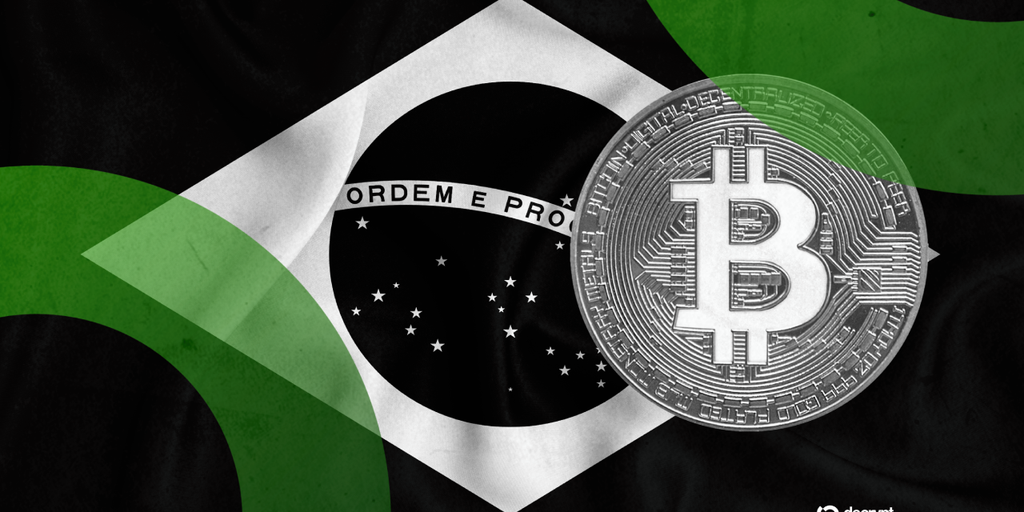
Source image: decrypt.co
decrypt.coInstitutional Integration Without Balance Sheet Risk
Brazil’s financial sector is deepening its integration with the digital asset economy. Prominent institutions such as Itaú Unibanco, digital banking titan Nubank, and state-controlled heavyweight Banco do Brasil have substantially broadened their cryptocurrency lineups for retail investors. Despite offering extensive menus that rival dedicated digital asset exchanges—with Itaú listing 15 tokens and Nubank supporting 28—these traditional financial giants are meticulously insulating their own balance sheets from direct crypto volatility.
Data compiled from regulatory filings underscores this deliberate structural strategy. Official assessments confirm that Brazilian commercial banks hold precisely zero virtual assets on their proprietary balance sheets. Instead, these institutions are acting exclusively as trusted brokers and custodians, facilitating client-driven transactions while capitalizing on burgeoning fee-based revenue streams. For instance, Banco do Brasil's direct entry into Bitcoin and Ethereum trading services has already processed millions in transaction volume since its inception, proving robust retail appetite for bank-intermediated crypto exposure.
The Catalyst: A Maturing Regulatory Landscape
The rapid expansion of crypto access across mainstream Brazilian banks is directly tied to the establishment of regulatory clarity. Following the foundational Virtual Asset Legal Framework and subsequent resolutions rolled out by the Central Bank of Brazil, virtual asset service providers face rigorous compliance benchmarks. These mandates encompass strict capitalization minimums, mandatory asset segregation, and robust know-your-customer (KYC) protocols.
Rather than pushing traditional finance away, these institutional guardrails have given compliance officers and executive boards the legal certainty required to embrace digital assets. By operating within an officially sanctioned regulatory perimeter, banks can safely service a market that witnessed hundreds of billions of reais in total transfer volume, capturing a lucrative segment of retail and corporate capital that previously bypassed traditional banking channels.
Market Implications and Macro Significance
The institutionalization of retail crypto access in Latin America's largest economy carries profound implications for global fintech and digital asset adoption. Key market takeaways include:
- Mainstream Normalization: Embedding tokens like Bitcoin, Ethereum, and major stablecoins directly inside everyday banking applications normalizes digital assets as a legitimate, mainstream asset class.
- Risk Mitigation Model: The strict separation between customer portfolios and bank balance sheets establishes a secure framework that protects traditional financial stability from digital asset drawdowns.
- Surging Volume: With corporate and retail digital asset transfers reaching staggering heights across the nation, bank-backed platforms are positioned to capture substantial market share from offshore exchanges.
- Regulatory Benchmark: Brazil is rapidly becoming a global blueprint for how emerging markets can successfully integrate decentralized assets into centralized, regulated banking systems.
What Investors Should Watch Closely
As this financial paradigm shift continues to unfold, market participants, institutional investors, and fintech entrepreneurs should monitor several critical indicators:
- Upcoming Compliance Deadlines: Track how smaller regional institutions adapt to upcoming regulatory milestones and enforcement cutoffs set by the Central Bank of Brazil.
- Asset Expansion Velocity: Observe whether banks begin incorporating broader categories of digital assets, such as tokenized real-world assets (RWAs) and decentralized finance (DeFi) yield products, into their retail applications.
- Custody Partnerships: Analyze the underlying technology and third-party custody providers that traditional lenders rely on to secure client assets, as these relationships dictate operational scalability and security.
- Cross-Border Payment Integration: Monitor how stablecoin adoption within Brazilian banking channels impacts traditional foreign exchange and international remittance corridors.
Ultimately, Brazil’s banking sector has proven that traditional finance and digital assets can coexist profitably. By embracing regulatory compliance and shielding corporate balance sheets from direct risk, Brazilian institutions are effectively transforming themselves into the ultimate gatekeepers of the nation's digital wealth revolution.
Continue reading
Related coverage in Crypto
cointelegraph.com
Trump Schedules Third Memecoin Holder Dinner Amid Growing Corruption Scrutiny
President Trump is set to host his third exclusive memecoin dinner for top token holders at his Washington, DC golf club, drawing renewed ethical and market scrutiny.
3 min read
cointelegraph.com
50,000 Europeans Petition EU to Relax MiCA Stablecoin Reward Restrictions
A new 50,000-letter campaign is urging Brussels to ease stablecoin rewards restrictions during the MiCA review, aligning with broader central bank pushes.
2 min read
cryptonews.com
Dogecoin Eyes $1 Milestone as DogeOS Testnet Launch Sparks Utility Speculation
Dogecoin trades at $0.09447 as the DogeOS testnet goes live. Traders eye the $0.098 resistance and psychological $0.10 mark amid fresh utility potential.
2 min read
decrypt.co
Bitcoin Enters 'Uptober' Amid Fed Rate Hike Pressures and 5.3% Treasury Yields
Bitcoin enters its historically strongest month following a record September, yet rising Federal Reserve rate hike fears and 5.3% Treasury yields present major hurdles.
2 min read