Beyond the $17.8 Million Bid: How Paul Newman’s Rolex Daytona Redefined Alternative Asset Classes
Revisiting the historic 12-minute auction of Paul Newman's Rolex Daytona, which fetched $17.8 million and permanently altered the luxury collector's market.
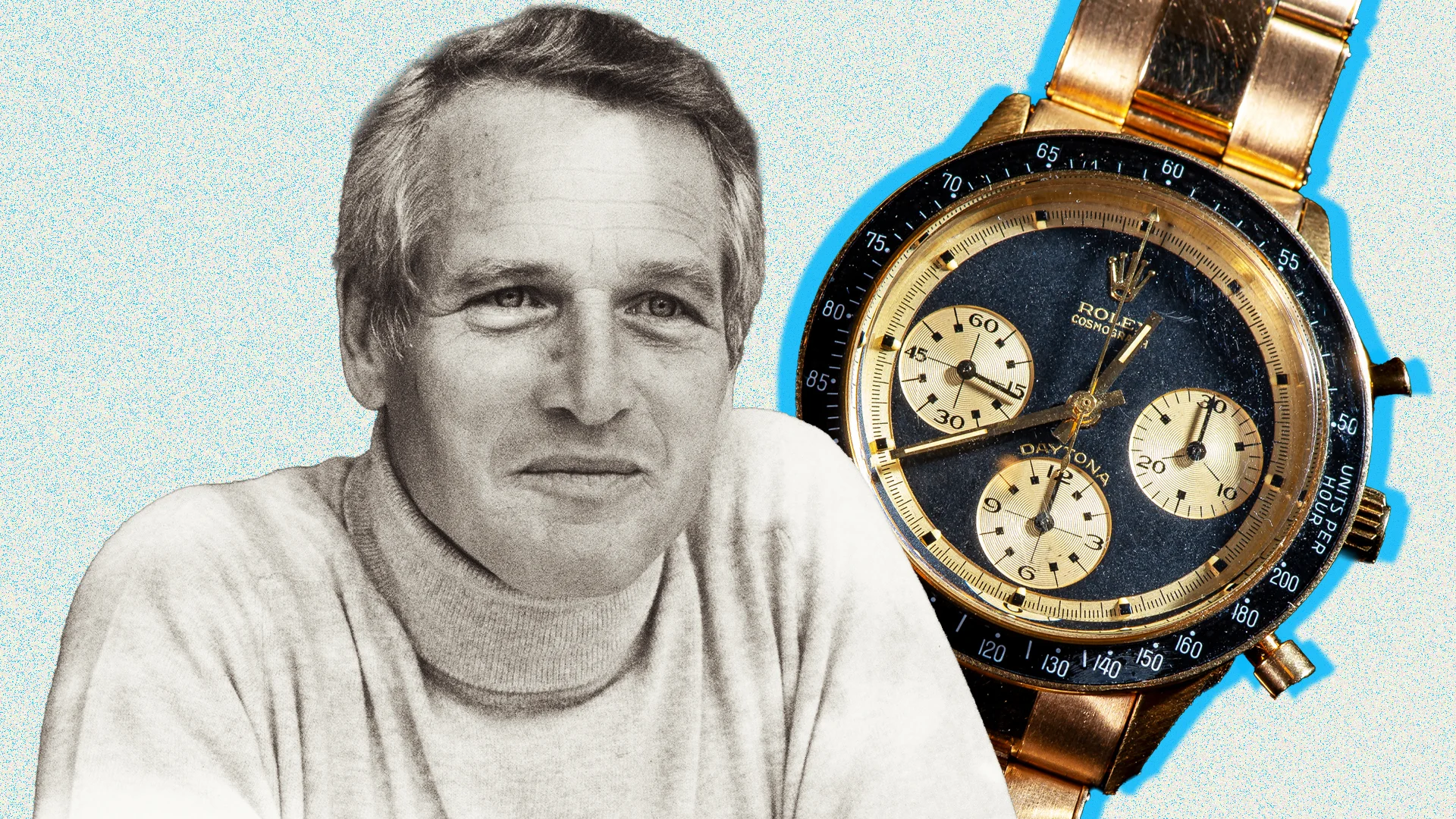
Source image: inc.com
inc.comThe Anatomy of a Record-Breaking Auction
When the hammer dropped at Phillips auction house in New York, closing a breathtaking 12-minute contest, Paul Newman's personal Rolex Daytona achieved a staggering final price of $17,752,500 including buyer's premiums. What shocked financial analysts and seasoned horological experts alike was not just the sheer magnitude of the figure, but the velocity of the transaction. An opening bid instantly leaped tenfold to $10 million, signaling to the room that this was no ordinary acquisition. It was a cultural watershed moment that permanently altered the landscape of alternative asset classes.
Transforming Market Sentiment Through Provenance
Before the cultural association with legendary actor, entrepreneur, and philanthropist Paul Newman, the Rolex Daytona reference 6239 was ironically considered a commercial laggard. Retailers struggled to move the chronographs, finding their stark dials and racing-inspired aesthetics too polarizing for mainstream mid-century buyers. However, Newman's adoption of the watch—engraved with the poignant warning "Drive Carefully Me" by his wife Joanne Woodward—shifted the narrative entirely. It proved a vital economic lesson for investors: provenance and authentic personal connection can completely invert consumer demand, turning an undesirable product into the most coveted status symbol on earth.
The Blueprint for Alternative Asset Valuation
The reverberations of the $17.8 million sale extended far beyond the niche world of watch collecting, establishing a new paradigm for alternative investments. Wealth managers and family offices increasingly view high-end collectibles not merely as passion assets, but as sophisticated financial instruments capable of hedging against macroeconomic volatility. Key factors highlighted by the Newman Daytona sale include:
- Impeccable Documentation: The presence of original ownership paper trails and physical evidence verifies authenticity, mitigating counterfeit risk.
- Cultural Resonance: Items tied to epochal figures carry intrinsic narrative value that transcends raw material costs.
- Liquidity in Elite Tiers: Ultra-high-net-worth demand ensures that top-tier trophy assets retain robust liquidity during market downturns.
Market Implications and Investor Outlook
For modern investors and entrepreneurs allocating capital into luxury assets, the Newman Daytona serves as both an inspiration and a cautionary tale. While the returns on tier-one cultural artifacts have outperformed many traditional equities over the past decade, the market has simultaneously bifurcated. Ordinary vintage pieces experience standard cyclical fluctuations, whereas "unicorn" assets backed by undeniable historical provenance continue to command astronomical premiums. Institutionalization is creeping into spaces once governed purely by hobbyists, introducing professional appraisal standards and structured liquidity options.
What Investors Should Watch Moving Forward
As the alternative investment ecosystem matures, stakeholders must monitor several critical indicators. Watch for shifts in macroeconomic interest rates, which directly impact the cost of capital for speculative luxury purchases. Furthermore, observe how auction houses adapt digital authentication technologies to protect buyers of high-value provenance pieces. For savvy investors, the enduring legacy of Paul Newman's Rolex is a reminder that scarcity, storytelling, and immaculate timing remain the ultimate drivers of extraordinary wealth creation in the physical asset domain.
Continue reading
Related coverage in Business
nytimes.com
David Ellison Targets CNN Leadership Continuity in Paramount Merger Talks
David Ellison is currently negotiating to retain CNN CEO Mark Thompson without oversight from CBS editor in chief Bari Weiss as parent companies navigate merger plans.
2 min read
bbc.com
Decoding Nike’s Slump: How Strategic Missteps Cost the Sportswear Titan Its Edge
Explore the factors behind Nike's dramatic market decline. Industry analysts dissect the self-inflicted strategic errors that shook the sportswear giant.
3 min read
bbc.com
Treasury Committee Directs HMRC to Investigate Tax Implications of Manchester City Case
The UK Treasury Committee has called on HMRC to closely examine potential tax ramifications arising from the high-profile Manchester City legal verdict.
3 min read
nytimes.com
US Imposes Sanctions on Russian Firm A7 Over Global Shell Company Evasion Schemes
The United States targets Russian financial firm A7 with new sanctions following reports of utilizing global shell companies to bypass existing economic restrictions.
3 min read