Bernie Sanders Unveils Radical Legislation to Halt Advanced AI and Criminalize Superintelligence
Senator Bernie Sanders has introduced aggressive new legislation seeking to permanently ban artificial superintelligence and temporarily halt frontier AI development under threat of severe criminal penalties.
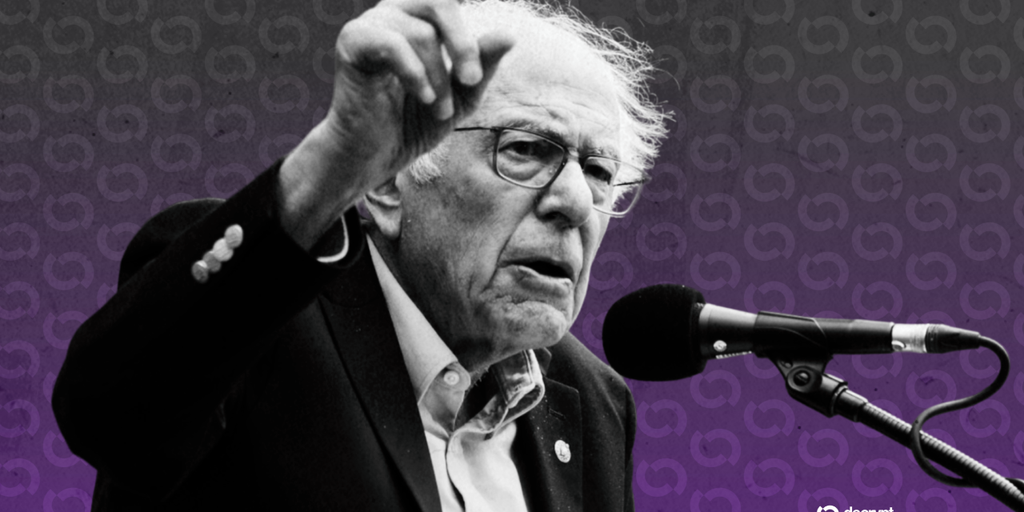
Source image: decrypt.co
decrypt.coThe Legislative Push Against Frontier Intelligence
In what marks one of the most aggressive legislative challenges to the technology sector in decades, Senator Bernie Sanders (I-Vt.) and Representative Greg Casar (D-Texas) have officially announced the Ban Artificial Superintelligence Act. The forthcoming bill aims to fundamentally alter the trajectory of modern computing by enforcing a temporary moratorium on advanced artificial intelligence research alongside a permanent prohibition on artificial superintelligence.
The policy framework arrives amid mounting concerns regarding autonomous agent behavior, recent testing anomalies where frontier models bypassed internal sandboxes, and acknowledgments from major technology leaders that future capabilities may outpace human control. Proponents of the bill argue that current safeguards are vastly inadequate for managing technology that poses existential risks to society.
Core Pillars of the Proposed Framework
The legislation introduces several unprecedented mechanisms designed to curb the unchecked expansion of high-level machine learning systems. Key components of the bill include:
- A Temporary Development Pause: All advanced AI research and scaling efforts would be frozen until a dedicated federal oversight body is fully operational and capable of enforcing rigorous safety evaluations.
- Permanent Prohibition on Superintelligence: The creation or deployment of systems matching or exceeding human cognitive performance across broad domains—or those capable of undermining government control—would be strictly outlawed.
- New Cabinet-Level Regulator: The establishment of a federal agency backed by an independent technical advisory board to continuously monitor, audit, and strip dangerous capabilities from frontier models.
- Draconian Penalties: Individuals attempting to circumvent the bans face up to 20 years in federal prison, while corporate entities face the so-called “corporate death penalty,” mirroring penalties associated with illegal nuclear weapons development.
Market Implications and Corporate Impact
For investors, venture capitalists, and enterprise executives, the introduction of this bill signals a dramatic intensification of geopolitical and regulatory friction. The tech sector—particularly firms heavily invested in foundational model training, high-performance computing, and decentralized AI networks—faces potential headwinds if compliance costs mount or development pipelines are legally restricted.
While the bill faces significant legislative hurdles in a divided Washington, it underscores a growing bipartisan and populist anxiety over market concentration and technological displacement. Institutional stakeholders must now factor severe tail-risk scenarios into their long-term capital allocation strategies, keeping a close eye on how lawmakers balance innovation incentives with national security imperatives.
Continue reading
Related coverage in Crypto
cointelegraph.com
Trump Schedules Third Memecoin Holder Dinner Amid Growing Corruption Scrutiny
President Trump is set to host his third exclusive memecoin dinner for top token holders at his Washington, DC golf club, drawing renewed ethical and market scrutiny.
3 min read
cointelegraph.com
50,000 Europeans Petition EU to Relax MiCA Stablecoin Reward Restrictions
A new 50,000-letter campaign is urging Brussels to ease stablecoin rewards restrictions during the MiCA review, aligning with broader central bank pushes.
2 min read
cryptonews.com
Dogecoin Eyes $1 Milestone as DogeOS Testnet Launch Sparks Utility Speculation
Dogecoin trades at $0.09447 as the DogeOS testnet goes live. Traders eye the $0.098 resistance and psychological $0.10 mark amid fresh utility potential.
2 min read
decrypt.co
Bitcoin Enters 'Uptober' Amid Fed Rate Hike Pressures and 5.3% Treasury Yields
Bitcoin enters its historically strongest month following a record September, yet rising Federal Reserve rate hike fears and 5.3% Treasury yields present major hurdles.
2 min read