Bab Al-Mandeb Strait Polymarket Odds Reach 18% as Traders Focus on IMF PortWatch Data
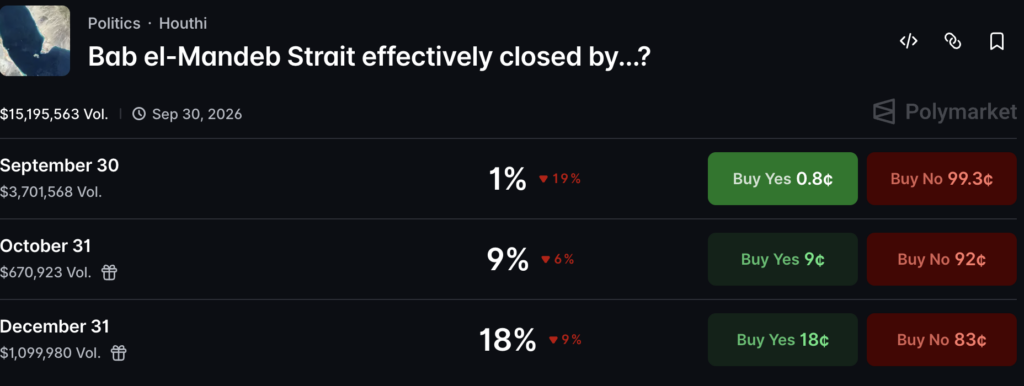
Polymarket traders price an 18% probability of a Bab Al-Mandeb Strait closure, tied directly to IMF PortWatch seven-day average tracking metrics.
Source image: cryptonews.com
cryptonews.comOverview of the Bab Al-Mandeb Polymarket Contract
Prediction markets have increasingly become a real-time barometer for geopolitical and macroeconomic risks. Recently on Polymarket, trading odds regarding the potential closure of the critical Bab Al-Mandeb Strait climbed to 18%. However, what distinguishes this specific prediction market from standard geopolitical commentary is its strict reliance on an empirical, automated data threshold rather than subjective interpretations.
According to the contract specifications, the market outcome is not determined by general news headlines or diplomatic statements. Instead, it hinges directly on a specific metric published by IMF PortWatch. Specifically, the contract dictates that the closure condition is met only if the seven-day moving average of vessel arrivals through the strait falls to 10 arrivals or fewer.
Why This Data Trigger Matters for Markets
For executives, investors, and entrepreneurs, the Bab Al-Mandeb Strait represents a vital global shipping chokepoint connecting the Red Sea to the Gulf of Aden, feeding directly into the Suez Canal. Any material restriction or total closure of this corridor forces global cargo carriers to reroute around the Cape of Good Hope, substantially extending transit times and inflating freight costs.
By tying financial speculation to the IMF PortWatch seven-day average, the Polymarket contract removes ambiguity. Market participants are forced to analyze hard shipping data rather than emotional sentiment. An 18% probability implies that while a total cessation of traffic remains a tail risk, it is being taken seriously enough by decentralized traders to command non-trivial odds.
Broader Market Implications
Supply chain vulnerabilities have a direct transmission mechanism into global inflation, energy prices, and asset valuations. When maritime routes face elevated risk profiles, the following market sectors feel the impact:
- Global Shipping and Logistics: Extended maritime routes drive up container shipping rates and strain global vessel capacity.
- Commodities and Energy: Oil and liquefied natural gas (LNG) tankers frequently traverse the Bab Al-Mandeb Strait, making transit disruptions a key catalyst for energy price volatility.
- Macroeconomic Sentiment: Rising shipping costs feed back into broader inflation metrics, influencing central bank monetary policy expectations and risk asset pricing, including digital assets.
What Executives and Investors Should Watch
To navigate this evolving risk landscape effectively, market participants should closely monitor key indicators moving forward:
- IMF PortWatch Updates: Regularly review official tracking metrics to monitor the seven-day moving average of vessel arrivals through the Bab Al-Mandeb Strait relative to the 10-arrival threshold.
- Prediction Market Liquidity: Track shifts in Polymarket odds to gauge whether institutional or retail sentiment is shifting regarding regional stability.
- Freight and Energy Benchmarks: Keep an eye on global shipping index movements and spot energy prices for early warning signs of supply chain stress.
As decentralized prediction markets continue to interface with institutional-grade datasets like IMF PortWatch, executives and entrepreneurs must leverage these tools to quantify geopolitical tail risks more accurately in their strategic planning.
Continue reading
Related coverage in Crypto
cointelegraph.com
Trump Schedules Third Memecoin Holder Dinner Amid Growing Corruption Scrutiny
President Trump is set to host his third exclusive memecoin dinner for top token holders at his Washington, DC golf club, drawing renewed ethical and market scrutiny.
3 min read
cointelegraph.com
50,000 Europeans Petition EU to Relax MiCA Stablecoin Reward Restrictions
A new 50,000-letter campaign is urging Brussels to ease stablecoin rewards restrictions during the MiCA review, aligning with broader central bank pushes.
2 min read
cryptonews.com
Dogecoin Eyes $1 Milestone as DogeOS Testnet Launch Sparks Utility Speculation
Dogecoin trades at $0.09447 as the DogeOS testnet goes live. Traders eye the $0.098 resistance and psychological $0.10 mark amid fresh utility potential.
2 min read
decrypt.co
Bitcoin Enters 'Uptober' Amid Fed Rate Hike Pressures and 5.3% Treasury Yields
Bitcoin enters its historically strongest month following a record September, yet rising Federal Reserve rate hike fears and 5.3% Treasury yields present major hurdles.
2 min read