AssetMark CEO Michael Kim Reveals Why Capacity is the Ultimate Competitive Edge for Financial Advisors
Discover how AssetMark CEO Michael Kim outlines capacity creation through outsourcing, tech, and AI as the core growth engine for modern financial advisors.
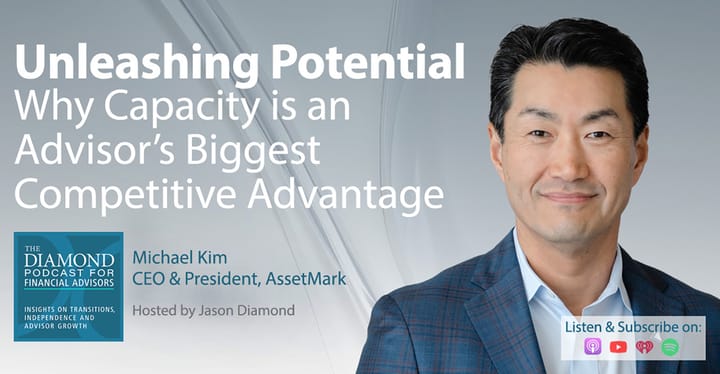
Source image: wealthmanagement.com
wealthmanagement.comUnlocking Practice Growth Through Strategic Capacity
The wealth management landscape is evolving at a rapid pace, putting immense pressure on independent financial advisors to scale efficiently. According to AssetMark CEO Michael Kim, speaking on The Diamond Podcast for Financial Advisors, the single biggest competitive advantage an advisor can secure today is operational capacity. As client demands increase and regulatory complexities mount, traditional methods of managing a practice are no longer sufficient to drive long-term growth.
Kim points out that advisory firms can no longer rely solely on sheer hustle to expand their assets under management. Instead, sustainable growth requires a fundamental redesign of daily workflows. By systematically identifying bottlenecks and operational inefficiencies, practices can free up vital hours that are currently lost to administrative friction.
The Triad of Modern Efficiency: Outsourcing, Technology, and AI
To successfully build this necessary capacity, Kim highlights three core pillars that modern financial advisors must embrace:
- Outsourcing: Delegating non-core functions such as back-office administration, compliance tracking, and routine portfolio management to specialized third-party providers.
- Technology Integration: Implementing robust software ecosystems that streamline client onboarding, financial planning, and reporting tasks.
- Artificial Intelligence (AI): Utilizing intelligent automation to handle data synthesis, initial document drafting, and client communication scheduling.
When combined, these tools act as a force multiplier for advisory teams. Rather than getting bogged down in routine execution, advisors can leverage modern platforms to handle the heavy lifting of daily operations.
Redirecting Focus to High-Value Client Engagement
The ultimate objective of creating operational capacity is not merely to save time, but to reallocate human capital where it matters most. Kim stresses that an advisor's true value lies in human-centric domains—providing behavioral coaching during market volatility, designing complex estate and tax strategies, and building deep, empathetic relationships with multi-generational clients.
When technology and outsourcing absorb the repetitive operational load, advisors are empowered to operate at the top of their license. This shift directly translates into enhanced client satisfaction, higher retention rates, and more effective referrals, which form the bedrock of elite wealth management practices.
Market Implications and Future Outlook
For executives, investors, and entrepreneurs across the financial services sector, Kim's insights signal a broader structural shift. Enterprise value in wealth management is increasingly tied to scalability and technological infrastructure. Practices that fail to adopt outsourcing and AI-driven efficiencies risk being outpaced by nimble competitors who can service clients faster and more comprehensively.
Furthermore, this trend fuels the ongoing evolution of turnkey asset management programs (TAMPs) and tech-enabled service providers. As demand for capacity-building solutions surges, companies that successfully supply these operational levers will capture substantial market share.
What Watchers and Investors Should Monitor Next
As the wealth management industry adapts to this new paradigm of capacity-driven growth, stakeholders should closely monitor several key indicators:
- The adoption rates of AI tools among independent RIAs and enterprise broker-dealers.
- M&A activity targeting technology platforms that specialize in workflow automation and practice management.
- Shifts in profit margins as advisory firms transition routine labor to outsourced partners and automated systems.
By keeping a close eye on these developments, industry leaders can better position their organizations to thrive in an increasingly competitive market environment where time and capacity dictate ultimate success. Read the original report and discussion details on WealthManagement.com.
Continue reading
Related coverage in Wealth Management
wealthmanagement.com
Orion Ascent 2027 Unveils AI-Driven Wealthtech Roadmap to Scale Advisor Growth
Discover how Orion Ascent 2027 is shaping the future of wealth management with a focus on practical AI tools, household-level personalization, and expanded operational capacity.
3 min read
wealthmanagement.com
Wealth Management CIOs Pivot to Short-Duration Bonds Amid Market Shudders
Rising yields in the bond market are prompting wealth management CIOs to seize new income opportunities at shorter durations without excessive risk.
2 min read
wealthmanagement.com
Compliance Experts Urge RIAs to Reevaluate Section 351 ETF Conversions After New IRS Guidance
Following recent IRS guidance targeting tax avoidance, compliance experts warn registered investment advisors to reconsider recommending Section 351 ETF conversions.
2 min read
wealthmanagement.com
Fidelity Elevates RIA Custody Asset Minimum to $100M: Strategic Shift Impacts Smaller Advisors
Fidelity announces a new $100 million client asset minimum for RIA custody services, requiring smaller advisors to transition off the platform by mid-2027.
3 min read